The key points are temporarily unavailable. You can still read the full Story below.
Main Points
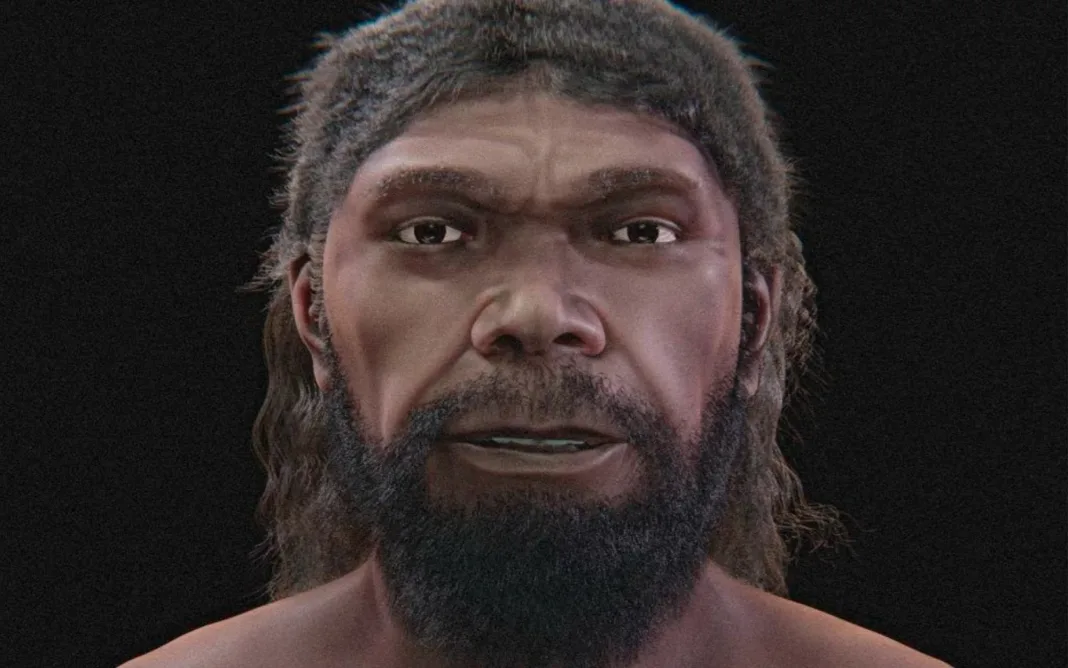
A team of researchers led by Brazilian 3‑D designer Cícero Moraes has produced a digital reconstruction of the face of the earliest known Homo sapiens, based on skeletal fragments recovered from Djabal Ighud in Morocco. The study, published in the journal Heritage, was reported by ScienceAlert. The remains were first discovered in the 1960s in a mine at Djabal Ighud. For decades they were thought to belong to a Neanderthal dated to about 40 000 years ago. In 2017 a series of detailed analyses identified the fragments as belonging to an early Homo sapiens. Radiometric dating placed the specimen at 315 000 years old, with an error margin of ±34 000 years, making it the oldest known human fossil and pushing back the estimated emergence of the species by roughly 100 000 years. Because no single complete skull was found, the team at the Max Planck Institute for Evolutionary Anthropology assembled a virtual model from several pieces that originated in the same geological layer. The cranial vault and upper facial skeleton were derived from the Irhoud 1 specimen, while the mandible and dentition were taken from a different fragment. The resulting face therefore represents a composite reconstruction rather than a portrait of a single individual. Moraes and his colleagues used advanced 3‑D modeling techniques. They created a digital mesh of the skull from photographic and tomographic data, then deformed a CT scan of a modern adult human skull in specialized software until it matched the ancient bones. Soft‑tissue thickness was estimated from contemporary anatomical databases. The final model is available in two versions: a grayscale rendering without hair and a colored version that includes skin pigmentation, hair, and beard, which Moraes described as a more artistic interpretation with fewer scientifically grounded features. The reconstructed skull has a braincase volume of 1 364 ml and a long, narrow shape that retains archaic characteristics. The facial structure, however, is already close to that of modern humans, with a slightly protruding jaw and pronounced features. Moraes noted that the individual could have blended into a crowd, but a closer examination would reveal distinctive traits such as the pronounced jaw. The study provides new insight into the morphology of early Homo sapiens and underscores the importance of re‑examining older fossil finds with modern analytical techniques. Article source: Rzeczpospolita | Image credit: Rzeczpospolita
A team of researchers led by Brazilian 3‑D designer Cícero Moraes has produced a digital reconstruction of the face of the earliest known Homo sapiens, based on skeletal fragments recovered from Djabal Ighud in Morocco. The study, published in the journal Heritage, was reported by ScienceAlert. The remains were first discovered in the 1960s in a mine at Djabal Ighud. For decades they were thought to belong to a Neanderthal dated to about 40 000 years ago. In 2017 a series of detailed analyses identified the fragments as belonging to an early Homo sapiens. Radiometric dating placed the specimen at 315 000 years old, with an error margin of ±34 000 years, making it the oldest known human fossil and pushing back the estimated emergence of the species by roughly 100 000 years. Because no single complete skull was found, the team at the Max Planck Institute for Evolutionary Anthropology assembled a virtual model from several pieces that originated in the same geological layer. The cranial vault and upper facial skeleton were derived from the Irhoud 1 specimen, while the mandible and dentition were taken from a different fragment. The resulting face therefore represents a composite reconstruction rather than a portrait of a single individual. Moraes and his colleagues used advanced 3‑D modeling techniques. They created a digital mesh of the skull from photographic and tomographic data, then deformed a CT scan of a modern adult human skull in specialized software until it matched the ancient bones. Soft‑tissue thickness was estimated from contemporary anatomical databases. The final model is available in two versions: a grayscale rendering without hair and a colored version that includes skin pigmentation, hair, and beard, which Moraes described as a more artistic interpretation with fewer scientifically grounded features. The reconstructed skull has a braincase volume of 1 364 ml and a long, narrow shape that retains archaic characteristics. The facial structure, however, is already close to that of modern humans, with a slightly protruding jaw and pronounced features. Moraes noted that the individual could have blended into a crowd, but a closer examination would reveal distinctive traits such as the pronounced jaw. The study provides new insight into the morphology of early Homo sapiens and underscores the importance of re‑examining older fossil finds with modern analytical techniques.
News Desk is the editorial publishing account for Tringlobe Media News, covering breaking news, public affairs, entertainment, community developments and regional stories across Trinidad and Tobago, the Caribbean and internationally.