The key points are temporarily unavailable. You can still read the full Story below.
Main Points
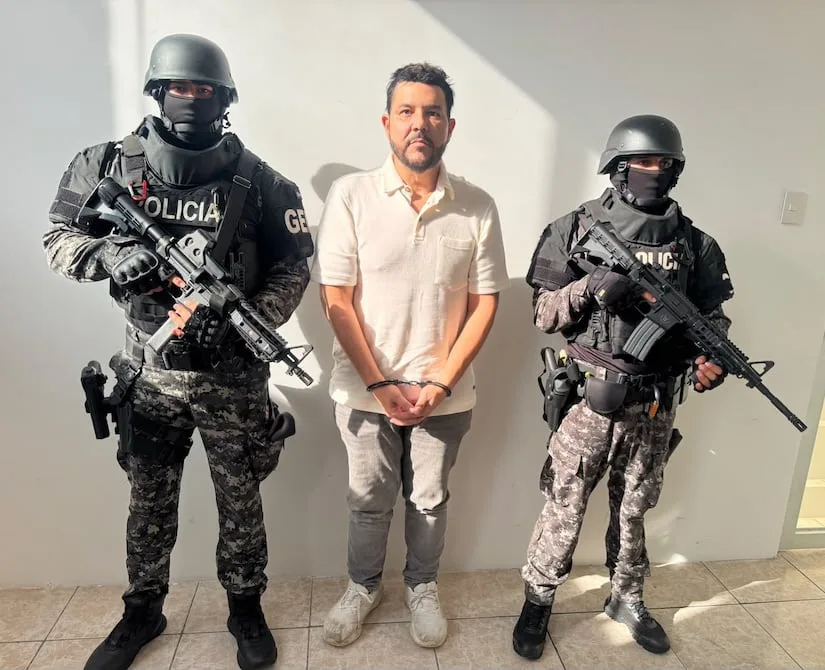
Jacobo Bucaram Pulley, son of former Ecuadorian president Abdalá Bucaram, along with William José Briones López and Geovanny Fernández Menéndez, are currently detained in Ecuador at the request of U.S. authorities. The three men have received Interpol red notices and are alleged by the United States to be involved in drug‑trafficking offenses investigated by the Drug Enforcement Administration (DEA). Interior Minister John Reimberg confirmed that the individuals are in the process of passive extradition. In this procedure, Ecuador acts as the requested state, and the final decision to hand the suspects over to the United States rests with the President of the National Court of Justice (CNJ), Marco Rodríguez. How passive extradition works in Ecuador 1. Request and verification – A formal extradition request from the United States is submitted to the CNJ. Once the CNJ verifies that all legal requirements are met, it may order the police to locate and detain the requested person. 2. Detention – If the person is arrested, a detention order is issued, and the individual is held in a correctional facility while the extradition case proceeds. This measure can be replaced by another precautionary measure if deemed appropriate. 3. First hearing – The CNJ summons the detainee for an initial appearance. The court asks whether the person is aware of the reasons for the U.S. request and whether they voluntarily consent to extradition. If the detainee consents, a simplified extradition process may be initiated. 4. Oral hearing – If the detainee objects, an oral hearing is held. The U.S. prosecutor, representing the requesting state, presents the extradition request and argues for delivery. The defense may present arguments against extradition, and the detainee may also speak. 5. Judicial decision – The CNJ must issue a ruling within three days of the oral hearing. The decision may grant or deny extradition. Either party can appeal, and the appeal is heard by a panel of CNJ judges. 6. Executive approval – If the CNJ’s ruling is final and in favor of extradition, the case is forwarded to the President of the Republic, who makes the ultimate decision on whether to hand the detainee over to the United States. Reimberg stated that the three men will be sent to the United States once the legal procedures are completed. The detentions and Interpol notices are preliminary steps; the final extradition depends on the judicial process and the executive’s approval. Article source: El Universo | Image credit: El Universo
Jacobo Bucaram Pulley, son of former Ecuadorian president Abdalá Bucaram, along with William José Briones López and Geovanny Fernández Menéndez, are currently detained in Ecuador at the request of U.S. authorities. The three men have received Interpol red notices and are alleged by the United States to be involved in drug‑trafficking offenses investigated by the Drug Enforcement Administration (DEA). Interior Minister John Reimberg confirmed that the individuals are in the process of passive extradition. In this procedure, Ecuador acts as the requested state, and the final decision to hand the suspects over to the United States rests with the President of the National Court of Justice (CNJ), Marco Rodríguez. How passive extradition works in Ecuador 1. Request and verification – A formal extradition request from the United States is submitted to the CNJ. Once the CNJ verifies that all legal requirements are met, it may order the police to locate and detain the requested person. 2. Detention – If the person is arrested, a detention order is issued, and the individual is held in a correctional facility while the extradition case proceeds. This measure can be replaced by another precautionary measure if deemed appropriate. 3. First hearing – The CNJ summons the detainee for an initial appearance. The court asks whether the person is aware of the reasons for the U.S. request and whether they voluntarily consent to extradition. If the detainee consents, a simplified extradition process may be initiated. 4. Oral hearing – If the detainee objects, an oral hearing is held. The U.S. prosecutor, representing the requesting state, presents the extradition request and argues for delivery. The defense may present arguments against extradition, and the detainee may also speak. 5. Judicial decision – The CNJ must issue a ruling within three days of the oral hearing. The decision may grant or deny extradition. Either party can appeal, and the appeal is heard by a panel of CNJ judges. 6. Executive approval – If the CNJ’s ruling is final and in favor of extradition, the case is forwarded to the President of the Republic, who makes the ultimate decision on whether to hand the detainee over to the United States. Reimberg stated that the three men will be sent to the United States once the legal procedures are completed. The detentions and Interpol notices are preliminary steps; the final extradition depends on the judicial process and the executive’s approval.
News Desk is the editorial publishing account for Tringlobe Media News, covering breaking news, public affairs, entertainment, community developments and regional stories across Trinidad and Tobago, the Caribbean and internationally.