The key points are temporarily unavailable. You can still read the full Story below.
Main Points
The International Atomic Energy Agency (IAEA) has referred Iran to the United Nations Security Council for the first time in two decades. The decision, reached on September 9 at the agency’s headquarters in Vienna, follows allegations that Tehran has failed to cooperate with a long-standing investigation into undeclared uranium traces found at various sites.
The resolution was proposed by the United States, Britain, France, and Germany. Of the 35 members of the IAEA Board of Governors, 23 voted in favor of the measure. China, Russia, and Niger voted against the resolution, while eight countries abstained. One member did not participate due to outstanding financial contributions.
Western nations have expressed concern that the discovered uranium traces may indicate past, undeclared work on a nuclear weapons program prior to 2003. Iran has consistently denied seeking nuclear weapons, maintaining that its nuclear program is intended solely for peaceful purposes.
The referral to the Security Council could theoretically lead to sanctions or the freezing of Iranian assets. However, analysts note that such actions are unlikely given that Russia and China hold veto power within the council.
Reza Najafi, Iran’s ambassador to the U.N. in Vienna, rejected the resolution, characterizing it as a political maneuver that undermines the IAEA’s credibility and impartiality. Najafi argued that Iran cannot facilitate international inspections while the country is engaged in an ongoing war with the United States and Israel. He stated that while Iran has not suspended its safeguards commitments, the current military environment makes full compliance practically impossible.
Iranian Deputy Foreign Minister Kazem Gharibabadi echoed these sentiments, accusing the United States and Israel of attacking nuclear facilities under international safeguards and subsequently using the resulting disruption of inspections as a pretext for further action against Iran.
The IAEA reports that Iran currently holds 440.9 kilograms of uranium enriched to 60 percent purity. While IAEA Director General Rafael Grossi noted that this stockpile could theoretically provide enough material for several nuclear weapons, he emphasized that the possession of enriched material does not equate to the possession of a nuclear weapon.
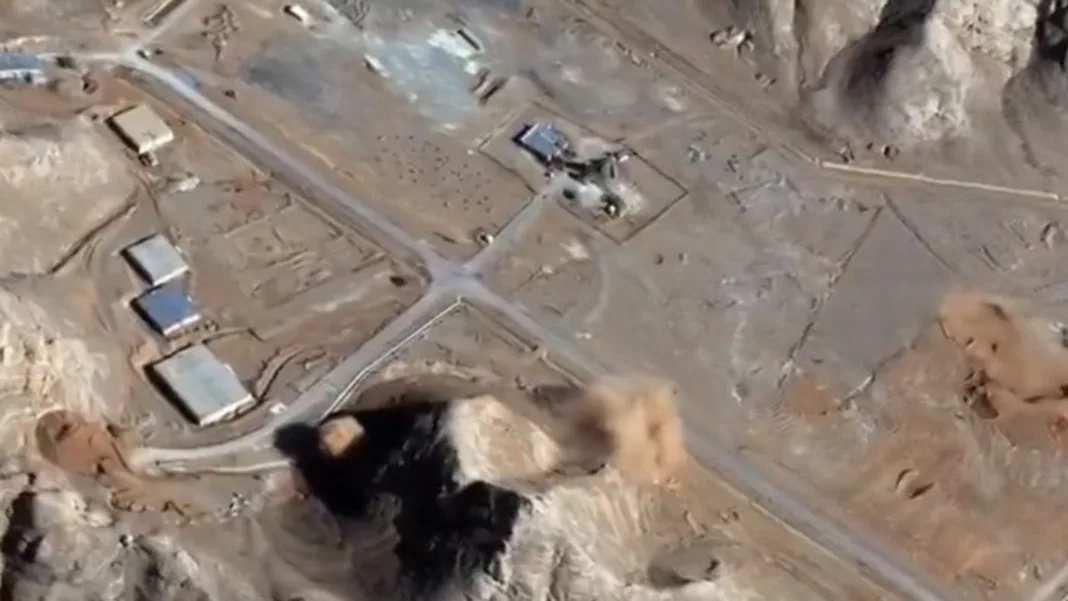
Since a 12-day conflict in June 2025, during which U.S. and Israeli forces targeted Iranian nuclear facilities, IAEA inspectors have been denied access to the affected sites. The agency stated it has been unable to independently verify the status of Iran’s enriched uranium stockpile following those strikes.
Article source: iranherald.com | Image credit: Zimbabwe Star