The key points are temporarily unavailable. You can still read the full Story below.
Main Points
An international team of researchers has discovered fossilized eggshell fragments in the Chorrillo Formation of Argentina’s Santa Cruz province, providing new insights into the reproductive strategies of titanosaur dinosaurs. The findings, published in the journal Royal Society Open Science, represent the southernmost dinosaur nesting site discovered to date.
The study was led by paleontologists from the University of Calgary in Canada, in collaboration with the Okayama University of Science in Japan and the Argentine Museum of Natural Sciences. Researchers analyzed 255 fossilized shell fragments dating back approximately 68 million years to the Late Cretaceous period. Using scanning electron microscopy and micro-computed tomography, the team examined the internal cellular structure and ventilation channels of the shells.
The analysis revealed that the eggshells ranged from 1.05 to 1.48 millimeters in thickness and featured an unusually high density of pores. According to the study, this high porosity suggests the eggs were adapted for environments with high humidity and lower oxygen levels. Researchers concluded that the eggs would have dehydrated rapidly if exposed directly to the atmosphere, indicating that the titanosaurs buried their nests under layers of substrate and organic matter.
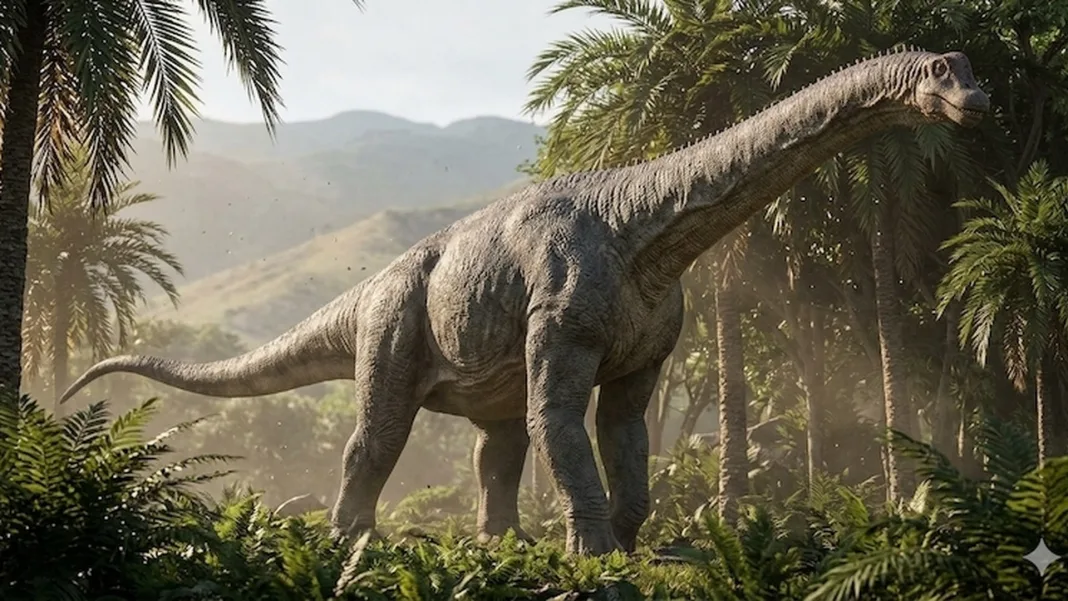
The report suggests that the heat required for incubation was likely provided by the decomposition of vegetation or the surrounding soil, a method similar to that used by modern crocodiles and megapode birds. This strategy allowed the massive adults, which could reach lengths of up to 25 meters, to reproduce without the risk of crushing their nests, as their size prevented them from sitting directly on the eggs to provide warmth.
The discovery indicates that titanosaurs were capable of colonizing and successfully reproducing in high-latitude ecosystems with temperate to cold climates. This challenges previous theories that suggested these large herbivores required tropical or high-temperature environments to thrive. The recovered eggs, estimated to hold approximately four liters of fluid, would have produced hatchlings weighing roughly four kilograms.
Article and image source: elsalvadortimes.com