The key points are temporarily unavailable. You can still read the full Story below.
Main Points
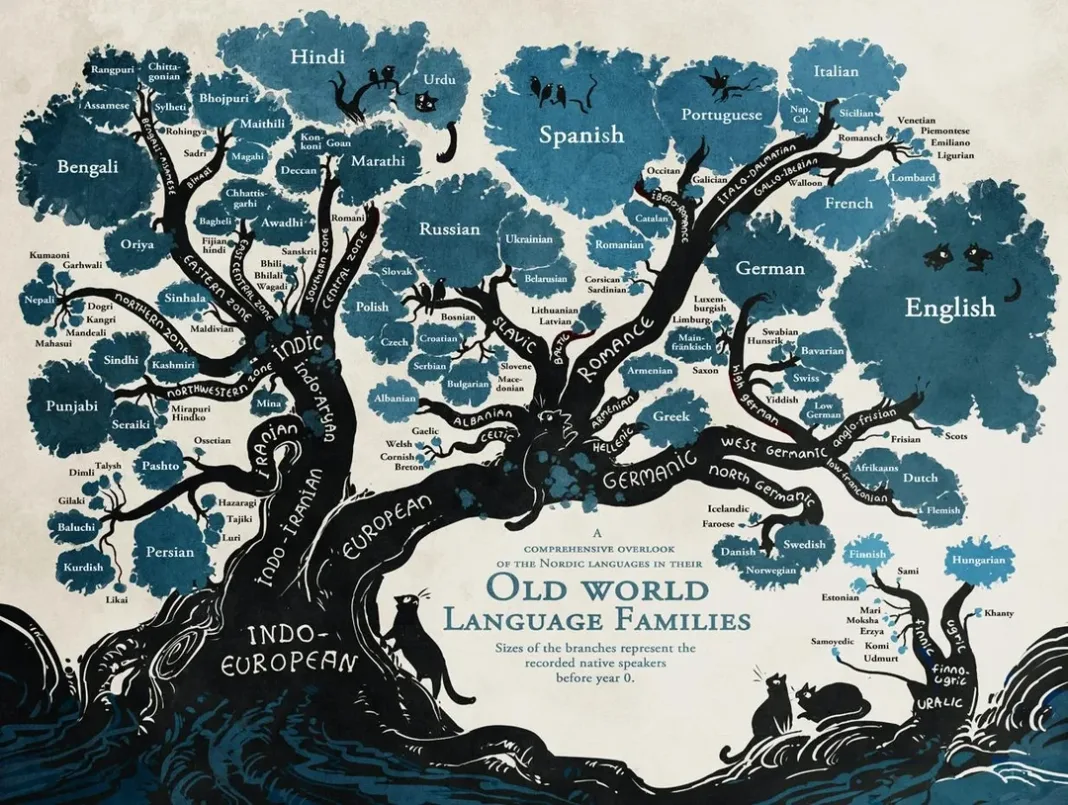
Researchers from the University of Copenhagen and the University of Leeds have published two studies in the journal Nature that combine genetic, archaeological and linguistic evidence to trace major migrations in Northern Europe. The first study analyzed the DNA of more than 4,500 ancient individuals and linked the genetic data to archaeological finds and language histories. It identified a large migration that took place roughly 4,000 years ago from the area around the Baltic Sea into Scandinavia. The newcomers, who likely originated in the Baltic region, spread rapidly across the peninsula and had a significant impact on the local population. According to the researchers, they may have brought with them early forms of Germanic languages. This finding challenges the prevailing view that the earliest Germanic languages appeared in Northern Europe about 5,000 years ago during earlier migrations. The second migration identified by the study occurred about 1,500 years ago, a few centuries before the Viking Age. People from what is now northern Germany moved into Denmark and southern Sweden, especially the island of Zealand, where they formed a substantial part of the population. This movement coincides temporally with the emergence of Old Norse, the language spoken by the Vikings, and the migrants appear to be related to the groups that later formed the Anglo‑Saxon population of Britain. A separate paper focuses on the origins of Celtic languages, which today survive mainly in Ireland, Wales, Scotland and Brittany. The authors note that around 2,500 years ago Celtic languages were widespread across a much larger area of Europe. Genetic evidence indicates a migration from Central Europe toward the west—toward France, the British Isles and the Pyrenees—about 3,000 years ago. This pattern may explain the spread of Celtic languages and casts doubt on theories that place their origins on the Atlantic coast of Europe. The authors emphasize that DNA alone cannot determine the language spoken by ancient peoples. However, the combination of genetic, archaeological and linguistic data provides a more accurate reconstruction of the migration patterns that shaped Europe’s linguistic landscape. Article source: News.am | Image credit: News.am
Researchers from the University of Copenhagen and the University of Leeds have published two studies in the journal Nature that combine genetic, archaeological and linguistic evidence to trace major migrations in Northern Europe. The first study analyzed the DNA of more than 4,500 ancient individuals and linked the genetic data to archaeological finds and language histories. It identified a large migration that took place roughly 4,000 years ago from the area around the Baltic Sea into Scandinavia. The newcomers, who likely originated in the Baltic region, spread rapidly across the peninsula and had a significant impact on the local population. According to the researchers, they may have brought with them early forms of Germanic languages. This finding challenges the prevailing view that the earliest Germanic languages appeared in Northern Europe about 5,000 years ago during earlier migrations. The second migration identified by the study occurred about 1,500 years ago, a few centuries before the Viking Age. People from what is now northern Germany moved into Denmark and southern Sweden, especially the island of Zealand, where they formed a substantial part of the population. This movement coincides temporally with the emergence of Old Norse, the language spoken by the Vikings, and the migrants appear to be related to the groups that later formed the Anglo‑Saxon population of Britain. A separate paper focuses on the origins of Celtic languages, which today survive mainly in Ireland, Wales, Scotland and Brittany. The authors note that around 2,500 years ago Celtic languages were widespread across a much larger area of Europe. Genetic evidence indicates a migration from Central Europe toward the west—toward France, the British Isles and the Pyrenees—about 3,000 years ago. This pattern may explain the spread of Celtic languages and casts doubt on theories that place their origins on the Atlantic coast of Europe. The authors emphasize that DNA alone cannot determine the language spoken by ancient peoples. However, the combination of genetic, archaeological and linguistic data provides a more accurate reconstruction of the migration patterns that shaped Europe’s linguistic landscape.
News Desk is the editorial publishing account for Tringlobe Media News, covering breaking news, public affairs, entertainment, community developments and regional stories across Trinidad and Tobago, the Caribbean and internationally.