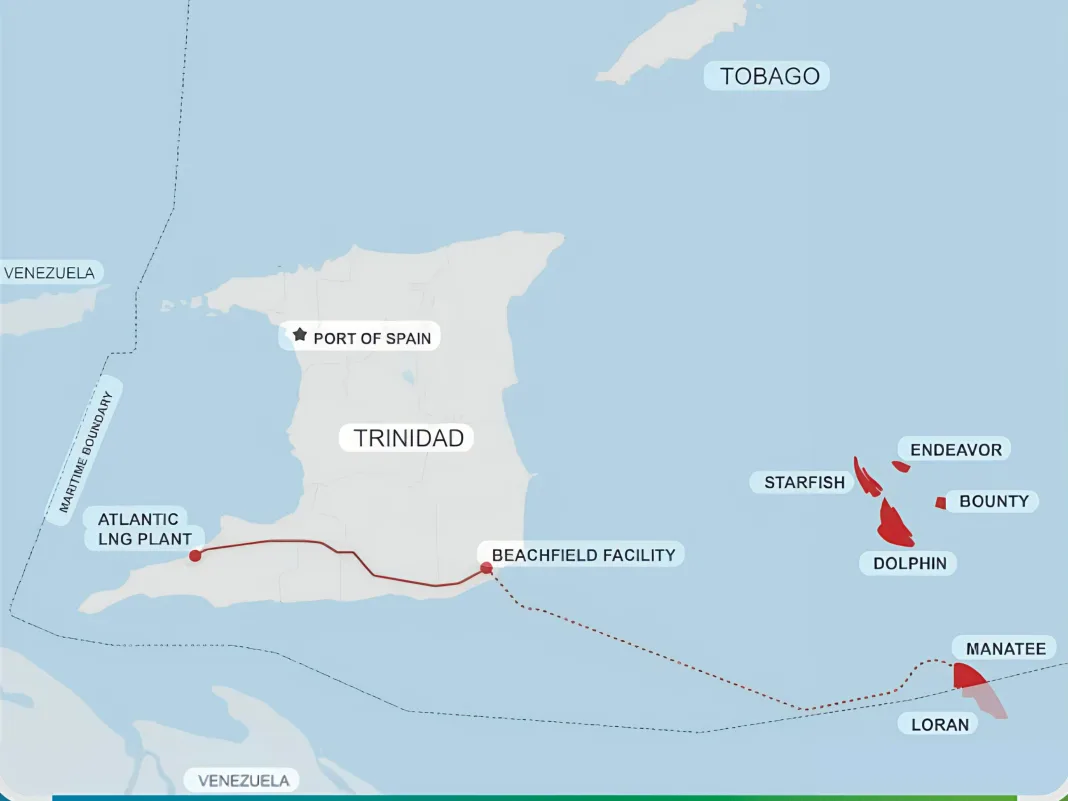
Trinidad and Tobago is grappling with mounting challenges in its negotiations over the Loran Manatee gas field, which it shares with Venezuela. The country’s influence in this landmark energy deal is reportedly dwindling, raising concerns about the future of its energy sector.
The Loran Manatee Field, discovered in 1983, has been at the center of a protracted discussion between Trinidad and Tobago and Venezuela due to its location spanning both nations’ maritime boundaries. Historically, the project has seen several agreements, including a 2007 treaty under then Prime Minister Patrick Manning and a Unitalization Treaty with Venezuela during Kamla Persad-Bissessar’s tenure.
Recently, political shifts have impacted Trinidad and Tobago’s position in negotiating future gas extraction agreements. As Dr. Rowley, the incumbent leader, and his team focus on energy deals, the country’s ability to control its energy destiny faces hurdles. Trinidad and Tobago has found itself increasingly sidelined, as international dynamics, including U.S. sanctions against Venezuela, add layers of complexity to the situation.
Historically, commitments for the gas production from Loran Manatee have targeted 2027, a timeline still in place despite the current uncertainties. However, there is growing unease that Trinidad and Tobago may have lost its seat at the negotiating table, with other entities like Shell and BP perceived to be steering discussions.
This shift in dynamics raises questions about Trinidad’s role in shaping its energy future, as the nation eagerly awaits developments and next steps in what has become a critical aspect of its economic and energy strategy.
Article and image source: facebook.com