The key points are temporarily unavailable. You can still read the full Story below.
Main Points
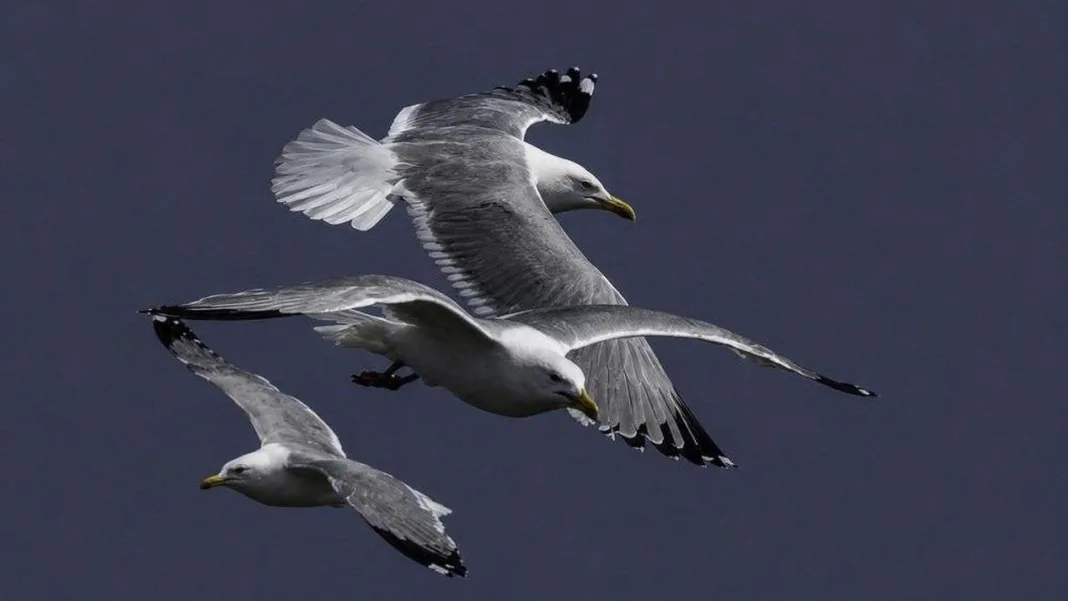
**Recent Wildlife Sightings Reported Across the Maritimes** A collection of recent wildlife observations from across the Maritimes highlights a variety of bird species, insects, and mammals, according to reports compiled by Jim Wilson, former chair of the New Brunswick Bird Records Committee. **Bird Observations** * **Herring Gulls:** Dwayne, a contributor, captured images of adult herring gulls. Wilson noted that these birds, the most common gulls in the Maritimes, require four years to reach adulthood and maintain their plumage through frequent bathing and preening. * **American Golden-Plover:** Nancy submitted a photograph of an American golden-plover. Wilson noted that the bird appears to be an adult molting out of its breeding plumage. He described the species as a long-distance migrant that winters in South America and nests in the Arctic, noting that an August sighting in the Maritimes is considered early. * **Marbled Godwit:** A photo submitted by Mélanie featured a marbled godwit, a prairie shorebird characterized by a long, upturned beak used to probe for invertebrates. Wilson identified the bird as a rare vagrant to the Maritimes, typically seen in late summer or fall. * **Ipswich Sparrow:** A submission from Sable Island featured an Ipswich sparrow, a pale subspecies of the Savannah sparrow that breeds exclusively on the island. Wilson identified the bird in the photograph as likely being a juvenile. * **Blue Jays:** Sandy reported a group of six blue jays, which Wilson suggested was likely a family unit consisting of two parents and four offspring. He noted that blue jays often move into woodlands to nest during the summer before returning to residential areas as temperatures drop. **Other Wildlife** * **Leucistic Deer:** A photograph of a white deer was identified by Wilson as a leucistic buck rather than a full albino. He noted the presence of brown or grey traces on the animal’s head, neck, and tail, distinguishing it from a true albino, which lacks all dark pigment. * **Bald-faced Hornets:** Wilson cautioned that while bald-faced hornet nests are visually distinct, they should be observed from a distance due to the insects' defensive nature and painful sting. * **Luna Moth:** A submission regarding a luna moth prompted a discussion on the species' life cycle. Wilson explained that adult luna moths do not feed and have a short lifespan of approximately one week, during which their primary activity is mating and egg-laying. The "Sightings" column is a recurring feature documenting local wildlife. Residents are encouraged to submit their observations, including their full name and community, to tjsightings@postmedia.com. Article and image source: tj.news
**Recent Wildlife Sightings Reported Across the Maritimes**
A collection of recent wildlife observations from across the Maritimes highlights a variety of bird species, insects, and mammals, according to reports compiled by Jim Wilson, former chair of the New Brunswick Bird Records Committee.
**Bird Observations**
* **Herring Gulls:** Dwayne, a contributor, captured images of adult herring gulls. Wilson noted that these birds, the most common gulls in the Maritimes, require four years to reach adulthood and maintain their plumage through frequent bathing and preening.
* **American Golden-Plover:** Nancy submitted a photograph of an American golden-plover. Wilson noted that the bird appears to be an adult molting out of its breeding plumage. He described the species as a long-distance migrant that winters in South America and nests in the Arctic, noting that an August sighting in the Maritimes is considered early.
* **Marbled Godwit:** A photo submitted by Mélanie featured a marbled godwit, a prairie shorebird characterized by a long, upturned beak used to probe for invertebrates. Wilson identified the bird as a rare vagrant to the Maritimes, typically seen in late summer or fall.
* **Ipswich Sparrow:** A submission from Sable Island featured an Ipswich sparrow, a pale subspecies of the Savannah sparrow that breeds exclusively on the island. Wilson identified the bird in the photograph as likely being a juvenile.
* **Blue Jays:** Sandy reported a group of six blue jays, which Wilson suggested was likely a family unit consisting of two parents and four offspring. He noted that blue jays often move into woodlands to nest during the summer before returning to residential areas as temperatures drop.
**Other Wildlife**
* **Leucistic Deer:** A photograph of a white deer was identified by Wilson as a leucistic buck rather than a full albino. He noted the presence of brown or grey traces on the animal’s head, neck, and tail, distinguishing it from a true albino, which lacks all dark pigment.
* **Bald-faced Hornets:** Wilson cautioned that while bald-faced hornet nests are visually distinct, they should be observed from a distance due to the insects’ defensive nature and painful sting.
* **Luna Moth:** A submission regarding a luna moth prompted a discussion on the species’ life cycle. Wilson explained that adult luna moths do not feed and have a short lifespan of approximately one week, during which their primary activity is mating and egg-laying.
The “Sightings” column is a recurring feature documenting local wildlife. Residents are encouraged to submit their observations, including their full name and community, to tjsightings@postmedia.com.
News Desk is the editorial publishing account for Tringlobe Media News, covering breaking news, public affairs, entertainment, community developments and regional stories across Trinidad and Tobago, the Caribbean and internationally.