The key points are temporarily unavailable. You can still read the full Story below.
Main Points
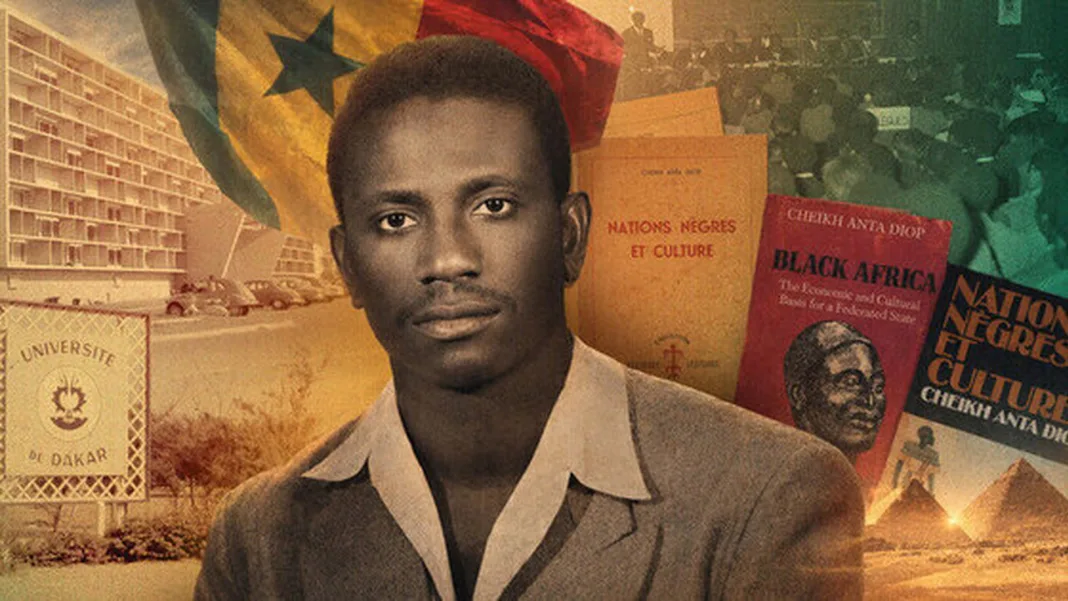
Cheikh Anta Diop (1923-1986), a Senegalese historian, philosopher, and key figure in Pan-Africanism, dedicated his career to challenging colonial narratives regarding African history and advocating for a unified, federal state of Black Africa. Born in the village of Thieytou, Senegal, during the period of French colonial rule, Diop sought to dismantle the perception of Africa as a continent without a significant civilizational past.
Diop pursued his education at the University of Dakar before moving to Paris in 1946, where he studied at the Sorbonne. His academic interests were broad, encompassing mathematics, physics, chemistry, linguistics, and Egyptology. During his time in France, he co-founded the journal Presence Africaine, which served as a platform for African scholars to engage in intellectual discourse and challenge Eurocentric perspectives.
In his 1954 work, Nations Negres et Culture, Diop argued that African civilizations, particularly that of Ancient Egypt, were foundational to human history. He posited that the population of predynastic Egypt was of Black African origin, citing linguistic and anthropological evidence to support his claims. Diop asserted that the social and technological structures of Egyptian society were developed by Black people, and he criticized colonial-era theories that characterized sub-Saharan African cultures as primitive.
Diop’s research was deeply intertwined with his political activism. He viewed the restoration of historical memory as a vital component of the national liberation struggle against colonialism. He advocated for the development of African languages and proposed a federal model for the continent, drawing inspiration from the Soviet Union’s approach to national identity and language policy. In 1960, he wrote that the history of Black Africa had been documented with little regard for the intelligence or complexity of African societies.
Throughout his life, Diop faced political challenges in Senegal. He founded the opposition Bloc of the Senegalese Masses and was imprisoned in 1962 for his opposition to the policies of then-President Leopold Senghor. Diop’s political party, The National Democratic Rally, did not receive official recognition until 1981. Diop also notably rejected the doctrine of Negritude, which was partially developed by Senghor, favoring instead an African renaissance centered on the development of indigenous languages.
Following his death, the Fundamental Institute of Black Africa was renamed Universite Cheikh Anta Diop in 1987 to honor his contributions. His work remains a subject of academic debate and continues to influence the study of African history and the development of Afrocentric intellectual concepts.
Article and image source: sierraleonetimes.com