The key points are temporarily unavailable. You can still read the full Story below.
Main Points
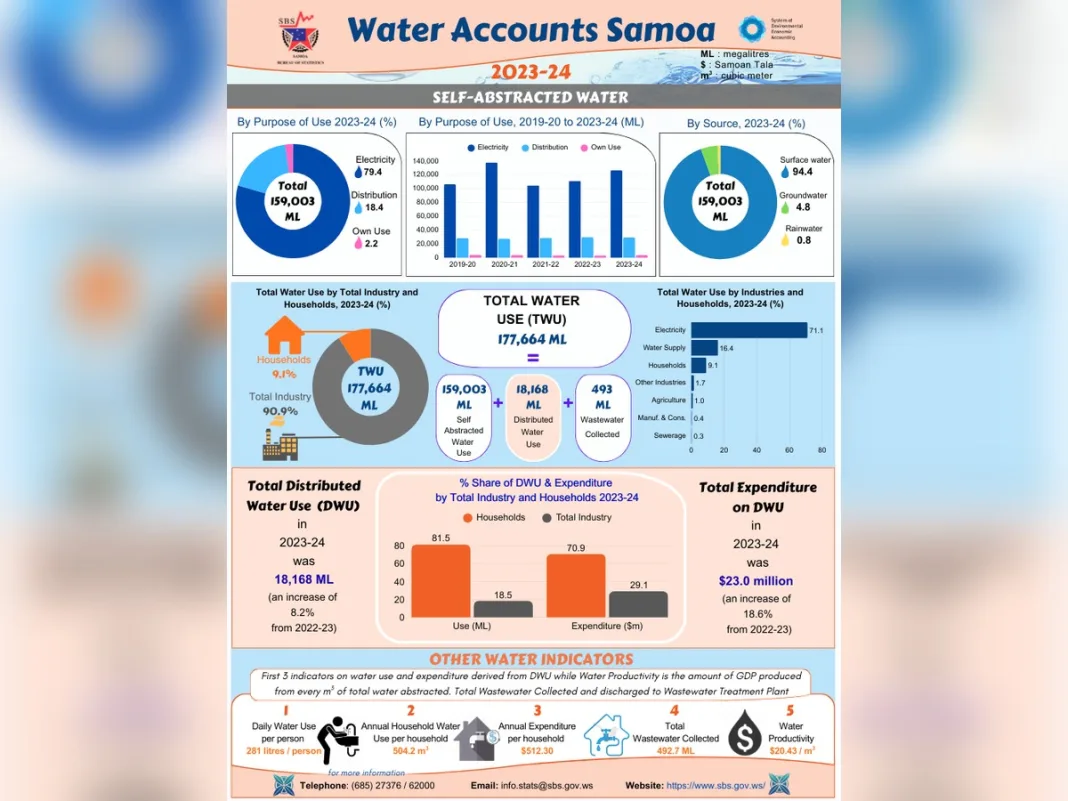
What would Samoa need to consider before stopping bottled water imports? An account of the country’s water investment masterplan highlights a central issue: the reliability and resilience of the water supplied through its own network. The Development Asia article does not assess an import ban or establish that one is planned. Instead, it describes a 2025–2035 Water Supply and Investment Masterplan developed by the Samoa Water Authority with support from the Asian Development Bank and the Ireland Trust Fund for Building Climate Change and Disaster Resilience in Small Island Developing States. The plan identifies more than 100 potential investments and proposes a staged response to existing needs and future demand. Its scope shows why the bottled water question cannot be answered simply by pointing to the availability of local water sources. According to the article, the Samoa Water Authority supplies nearly 90 per cent of the population with piped water. It draws on surface water and groundwater, using sand filtration and chlorination before distribution to Upolu, Savai‘i and smaller islands including Manono. That coverage figure describes access to the authority’s network; it does not, by itself, establish uninterrupted supply or the quality of water at every household. The article identifies several pressures on reliability. Shallow drilling and over-extraction are contributing to salinity problems in boreholes. Storm-related erosion increases sediment and turbidity in rivers, while prolonged dry periods and droughts put pressure on surface water sources. The masterplan consequently addresses boreholes, treatment plants and distribution pipelines. It also includes measures intended to protect water before it reaches treatment infrastructure. One example involves natural barriers made from coconut fibres, known as biolog filters. The article reports that the Ministry of Natural Resources and Environment successfully piloted these barriers along riverbanks to intercept storm runoff. The masterplan proposes installing them at eight river locations. These details support a discussion about strengthening domestic supply. They do not establish whether local bottlers could replace imports, what consumers would pay, how much packaging waste would be avoided or whether households trust available alternatives. The source provides no import volumes, bottling capacity figures or price comparisons. The proportionate conclusion is therefore about preparation rather than prohibition. Samoa’s masterplan documents substantial work to improve water reliability. Deciding whether imported bottled water could be removed would require additional evidence about the alternatives people could consistently obtain and afford.
What would Samoa need to consider before stopping bottled water imports? An account of the country’s water investment masterplan highlights a central issue: the reliability and resilience of the water supplied through its own network. The Development Asia article does not assess an import ban or establish that one is planned. Instead, it describes a 2025–2035 Water Supply and Investment Masterplan developed by the Samoa Water Authority with support from the Asian Development Bank and the Ireland Trust Fund for Building Climate Change and Disaster Resilience in Small Island Developing States. The plan identifies more than 100 potential investments and proposes a staged response to existing needs and future demand. Its scope shows why the bottled water question cannot be answered simply by pointing to the availability of local water sources. According to the article, the Samoa Water Authority supplies nearly 90 per cent of the population with piped water. It draws on surface water and groundwater, using sand filtration and chlorination before distribution to Upolu, Savai‘i and smaller islands including Manono. That coverage figure describes access to the authority’s network; it does not, by itself, establish uninterrupted supply or the quality of water at every household. The article identifies several pressures on reliability. Shallow drilling and over-extraction are contributing to salinity problems in boreholes. Storm-related erosion increases sediment and turbidity in rivers, while prolonged dry periods and droughts put pressure on surface water sources. The masterplan consequently addresses boreholes, treatment plants and distribution pipelines. It also includes measures intended to protect water before it reaches treatment infrastructure. One example involves natural barriers made from coconut fibres, known as biolog filters. The article reports that the Ministry of Natural Resources and Environment successfully piloted these barriers along riverbanks to intercept storm runoff. The masterplan proposes installing them at eight river locations. These details support a discussion about strengthening domestic supply. They do not establish whether local bottlers could replace imports, what consumers would pay, how much packaging waste would be avoided or whether households trust available alternatives. The source provides no import volumes, bottling capacity figures or price comparisons. The proportionate conclusion is therefore about preparation rather than prohibition. Samoa’s masterplan documents substantial work to improve water reliability. Deciding whether imported bottled water could be removed would require additional evidence about the alternatives people could consistently obtain and afford.
News Desk is the editorial publishing account for Tringlobe Media News, covering breaking news, public affairs, entertainment, community developments and regional stories across Trinidad and Tobago, the Caribbean and internationally.