The key points are temporarily unavailable. You can still read the full Story below.
Main Points
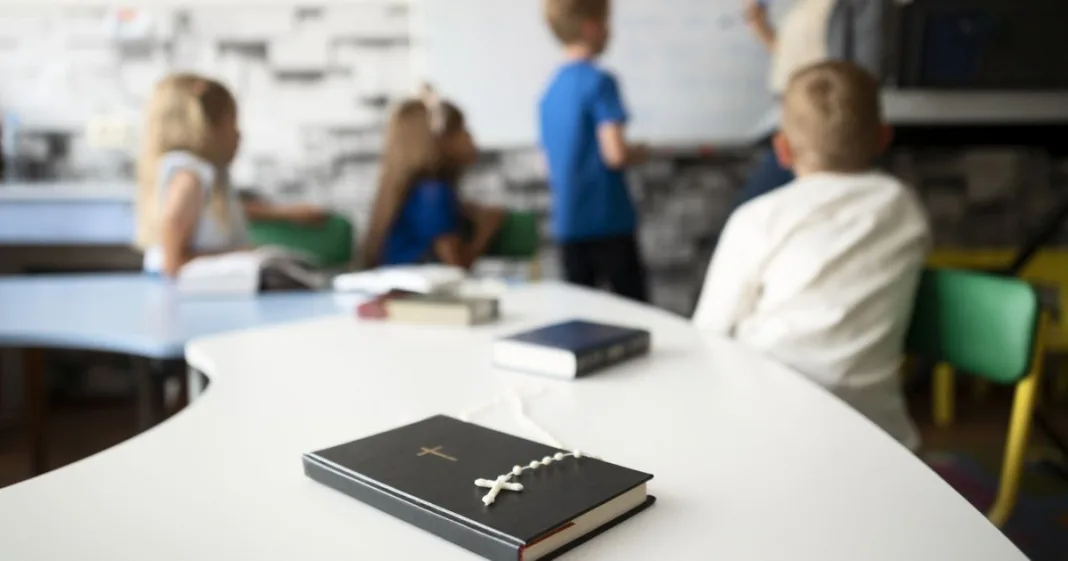
Controversy Surrounds Religious Education in Romanian Schools Religious education, a subject taught in Romanian schools since the nineteenth century, has long been a source of debate. The curriculum, which was suspended for four decades during the communist regime, has resurfaced with renewed scrutiny as teachers, students, and parents share divergent experiences. ### Divergent Student Experiences Several former students have recounted unsettling moments in religion classes. One woman, now living abroad, described a teacher who repeatedly warned that non-Orthodox classmates would go to hell and that women were inherently sinful. She also recalled the teacher discouraging Bible reading unless a priest explained it, and insisting that students should not feel joy during fasting. Another former pupil recounted an incident in which a teacher physically disciplined two students who had quarried over a cap, describing the teacher’s use of force and the lack of a safe waiting space for the student who refused to attend the class. A parent of a 2025 student reported that when she withdrew her son from religion lessons, the school insisted on a one‑month waiting period, citing concerns about academic performance and moral education. The school allegedly altered the timetable to move the class from the end of the day to the middle of the schedule and required the student to use the library during the lesson. Conversely, some students remember teachers who encouraged open discussion. One former student praised a teacher who allowed questions about faith, science, and morality, noting that such an approach helped him reconcile belief in God with acceptance of evolutionary theory. Another recalled a high‑school teacher who compared Christian perspectives with those of other religions, which helped him distance himself from faith. ### Sexuality and Moral Topics An investigation by the website “Școala 9” highlighted conflicting reports about how sexuality, contraception, and abortion were addressed. Some students claimed that teachers portrayed condom use as a greater sin than premarital sex, while others reported that explicit images of abortion were shown or that inaccurate information about sexuality was disseminated. ### New Curriculum for 2026–2027 The Ministry of Education approved a new program for the Orthodox Faith, published in the Official Gazette on 8 January 2026 (Order No. 6.930/2025). The curriculum will be introduced progressively, starting with ninth‑grade students in the 2026–2027 school year. The program emphasizes: Development of personal identity and moral conscience based on spiritual values. Ethical behavior and responsibility in personal, social, and professional life. Respect for diversity and constructive dialogue. Understanding the impact of religion on civilization and culture. Critical reflection and moral discernment. Community engagement and civic responsibility. Contemporary themes such as digitalization, ecology, human rights, migration, multiculturalism, and artificial intelligence will be incorporated. The curriculum encourages inter‑confessional dialogue, comparative presentation of religious values, and emotional intelligence development. Teaching methods are to be interactive, involving discussions, text analysis, debates, portfolios, group projects, and real‑life examples. Teachers are advised to adapt content to students’ comprehension levels and to maintain flexibility in lesson sequencing. ### International Guidance In 2007, the Organization for Security and Cooperation in Europe (OSCE) released the “Toledo Guidelines” on teaching about religions and beliefs in public schools. The guidelines recommend: Teacher training in child psychology, learning development, and empathetic pedagogy. Creation of a safe learning environment where all students feel respected and can express opinions without fear of personal criticism. Age‑appropriate lesson adaptation and use of diverse teaching methods. Management of classroom tensions arising from sensitive topics. Presentation of multiple perspectives in a balanced manner. Ensuring that withdrawal from religious instruction is possible without discrimination or stigmatization. ### Historical Context The relationship between schools and the church in Romania dates back to the Middle Ages. In Transylvania, fortified churches and associated schools served Saxon communities, while in Banat, Jesuit and other religious orders established schools in the eighteenth century. The first Romanian‑language school in Transylvania opened in Blaj in 1754, and monastic institutions such as Neamț and Putna played significant roles in education during the medieval period. In the 17th century, Vasile Lupu founded the Vasilian Academy near the Trei Ierarhi Monastery in Iași, offering instruction in Slavic, Greek, Latin, catechism, music, arithmetic, rhetoric, and philosophy. The Royal Academy of Saint Sava in Bucharest also contributed to the development of Romanian education. These historical ties illustrate the long‑standing integration of religious instruction within the Romanian educational system, a tradition that continues to evolve amid contemporary debates over curriculum content, teaching methods, and student rights. Article source: Adev&acaron;rul | Image credit: Adev&acaron;rul
Controversy Surrounds Religious Education in Romanian Schools Religious education, a subject taught in Romanian schools since the nineteenth century, has long been a source of debate. The curriculum, which was suspended for four decades during the communist regime, has resurfaced with renewed scrutiny as teachers, students, and parents share divergent experiences. ### Divergent Student Experiences Several former students have recounted unsettling moments in religion classes. One woman, now living abroad, described a teacher who repeatedly warned that non-Orthodox classmates would go to hell and that women were inherently sinful. She also recalled the teacher discouraging Bible reading unless a priest explained it, and insisting that students should not feel joy during fasting. Another former pupil recounted an incident in which a teacher physically disciplined two students who had quarried over a cap, describing the teacher’s use of force and the lack of a safe waiting space for the student who refused to attend the class. A parent of a 2025 student reported that when she withdrew her son from religion lessons, the school insisted on a one‑month waiting period, citing concerns about academic performance and moral education. The school allegedly altered the timetable to move the class from the end of the day to the middle of the schedule and required the student to use the library during the lesson. Conversely, some students remember teachers who encouraged open discussion. One former student praised a teacher who allowed questions about faith, science, and morality, noting that such an approach helped him reconcile belief in God with acceptance of evolutionary theory. Another recalled a high‑school teacher who compared Christian perspectives with those of other religions, which helped him distance himself from faith. ### Sexuality and Moral Topics An investigation by the website “Școala 9” highlighted conflicting reports about how sexuality, contraception, and abortion were addressed. Some students claimed that teachers portrayed condom use as a greater sin than premarital sex, while others reported that explicit images of abortion were shown or that inaccurate information about sexuality was disseminated. ### New Curriculum for 2026–2027 The Ministry of Education approved a new program for the Orthodox Faith, published in the Official Gazette on 8 January 2026 (Order No. 6.930/2025). The curriculum will be introduced progressively, starting with ninth‑grade students in the 2026–2027 school year. The program emphasizes: Development of personal identity and moral conscience based on spiritual values. Ethical behavior and responsibility in personal, social, and professional life. Respect for diversity and constructive dialogue. Understanding the impact of religion on civilization and culture. Critical reflection and moral discernment. Community engagement and civic responsibility. Contemporary themes such as digitalization, ecology, human rights, migration, multiculturalism, and artificial intelligence will be incorporated. The curriculum encourages inter‑confessional dialogue, comparative presentation of religious values, and emotional intelligence development. Teaching methods are to be interactive, involving discussions, text analysis, debates, portfolios, group projects, and real‑life examples. Teachers are advised to adapt content to students’ comprehension levels and to maintain flexibility in lesson sequencing. ### International Guidance In 2007, the Organization for Security and Cooperation in Europe (OSCE) released the “Toledo Guidelines” on teaching about religions and beliefs in public schools. The guidelines recommend: Teacher training in child psychology, learning development, and empathetic pedagogy. Creation of a safe learning environment where all students feel respected and can express opinions without fear of personal criticism. Age‑appropriate lesson adaptation and use of diverse teaching methods. Management of classroom tensions arising from sensitive topics. Presentation of multiple perspectives in a balanced manner. Ensuring that withdrawal from religious instruction is possible without discrimination or stigmatization. ### Historical Context The relationship between schools and the church in Romania dates back to the Middle Ages. In Transylvania, fortified churches and associated schools served Saxon communities, while in Banat, Jesuit and other religious orders established schools in the eighteenth century. The first Romanian‑language school in Transylvania opened in Blaj in 1754, and monastic institutions such as Neamț and Putna played significant roles in education during the medieval period. In the 17th century, Vasile Lupu founded the Vasilian Academy near the Trei Ierarhi Monastery in Iași, offering instruction in Slavic, Greek, Latin, catechism, music, arithmetic, rhetoric, and philosophy. The Royal Academy of Saint Sava in Bucharest also contributed to the development of Romanian education. These historical ties illustrate the long‑standing integration of religious instruction within the Romanian educational system, a tradition that continues to evolve amid contemporary debates over curriculum content, teaching methods, and student rights.
News Desk is the editorial publishing account for Tringlobe Media News, covering breaking news, public affairs, entertainment, community developments and regional stories across Trinidad and Tobago, the Caribbean and internationally.