The key points are temporarily unavailable. You can still read the full Story below.
Main Points
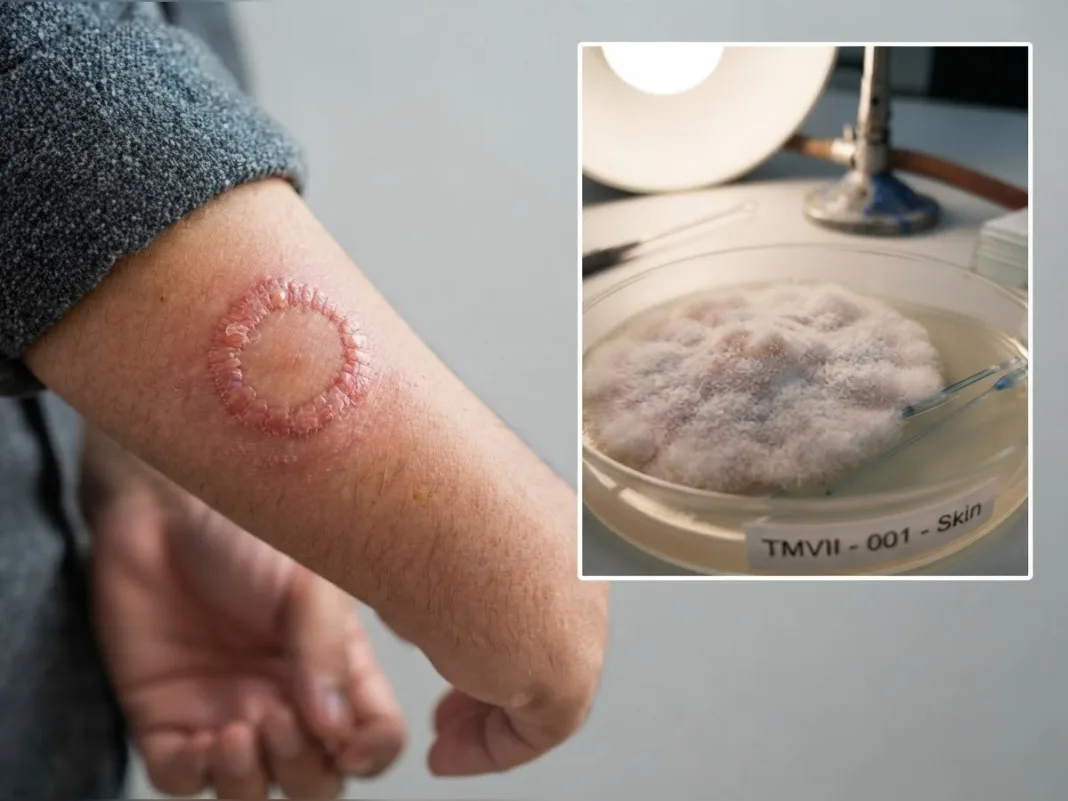
A new fungal strain, Trichophyton mentagrophytes genotype VII, has emerged as a sexually transmitted infection that looks like a skin rash rather than a classic STI. Health officials, including the CDC, are raising awareness after clusters were first identified in Europe and later reported in the United States in 2024.The infection produces red, scaly, coin‑shaped lesions on the groin, genitals, buttocks, face, or limbs. Because the rash resembles eczema, psoriasis, or an allergic reaction, many cases are misdiagnosed and treated with over‑the‑counter antifungal creams that do not work against TMVII.TMVII spreads primarily through close, intimate skin‑to‑skin contact, especially during sexual activity. While outbreaks have mainly affected gay, bisexual, and other men who have sex with men, anyone can contract the fungus. Reports from 2025 and 2026 show increasing cases across the country.Standard topical treatments fail, and steroid creams can worsen the infection. Doctors recommend prescription oral antifungals such as terbinafine or itraconazole, taken daily for several weeks to three months, to clear the rash effectively.Preventive measures include inspecting any new rash before intimacy, avoiding direct skin contact with active lesions, and refraining from sharing towels, razors, or sex toys. Condoms offer limited protection because the fungus lives on exposed skin. Early evaluation by a healthcare provider is advised if a rash is painful, spreading, or unresponsive to standard creams.
A new fungal strain, Trichophyton mentagrophytes genotype VII, has emerged as a sexually transmitted infection that looks like a skin rash rather than a classic STI. Health officials, including the CDC, are raising awareness after clusters were first identified in Europe and later reported in the United States in 2024.
The infection produces red, scaly, coin‑shaped lesions on the groin, genitals, buttocks, face, or limbs. Because the rash resembles eczema, psoriasis, or an allergic reaction, many cases are misdiagnosed and treated with over‑the‑counter antifungal creams that do not work against TMVII.
TMVII spreads primarily through close, intimate skin‑to‑skin contact, especially during sexual activity. While outbreaks have mainly affected gay, bisexual, and other men who have sex with men, anyone can contract the fungus. Reports from 2025 and 2026 show increasing cases across the country.
Standard topical treatments fail, and steroid creams can worsen the infection. Doctors recommend prescription oral antifungals such as terbinafine or itraconazole, taken daily for several weeks to three months, to clear the rash effectively.
Preventive measures include inspecting any new rash before intimacy, avoiding direct skin contact with active lesions, and refraining from sharing towels, razors, or sex toys. Condoms offer limited protection because the fungus lives on exposed skin. Early evaluation by a healthcare provider is advised if a rash is painful, spreading, or unresponsive to standard creams.
News Desk is the editorial publishing account for Tringlobe Media News, covering breaking news, public affairs, entertainment, community developments and regional stories across Trinidad and Tobago, the Caribbean and internationally.