The key points are temporarily unavailable. You can still read the full Story below.
Main Points
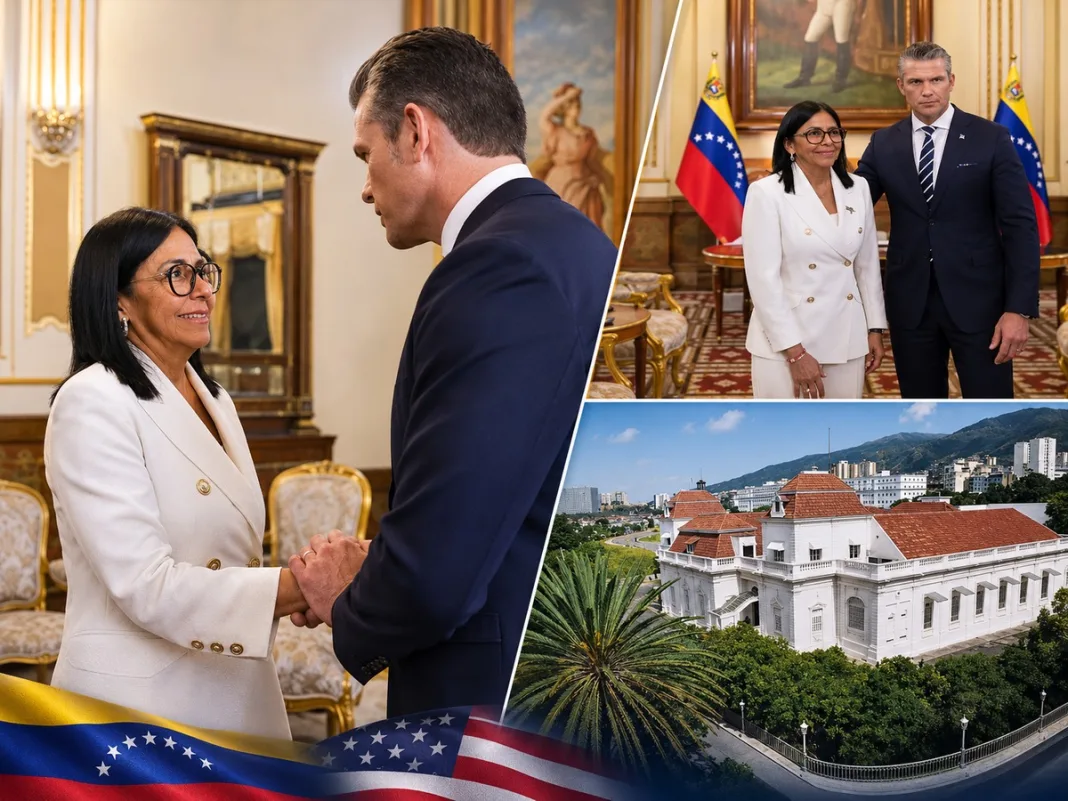
CARACAS, November 18, 2026 — Ten months ago, American special forces stormed Venezuela’s Fuerte Tiuna military complex to capture President Nicolás Maduro in an operation that left 32 Cuban military and security personnel dead, including members of his security detail. Today, in the same city, US Defence Secretary Pete Hegseth stood alongside Maduro’s former vice-president, Delcy Rodríguez, at the Miraflores Presidential Palace, announcing a new military partnership between Washington and Caracas. From military confrontation to military cooperation in just ten months. US Defence Secretary Pete Hegseth announced the agreement on Wednesday during a visit to Caracas, where he met with acting President Delcy Rodríguez at the Miraflores Presidential Palace. The agreement provides for joint military training, intelligence sharing, defence equipment cooperation and coordinated operations against drug trafficking and other security threats. Hegseth described Venezuela’s transformation from an American adversary to what he called a “compliant security partner.” The announcement represents a remarkable geopolitical shift. On January 3, 2026, American special forces captured Maduro during a military operation in Caracas. Today, Washington is rebuilding military ties with the very government that emerged following his removal. Rodríguez, who served as Maduro’s vice-president, welcomed the agreement, saying cooperation would help both nations confront common security threats. But the military partnership is only part of a much larger development. The Trump administration has also expanded American involvement in Venezuela’s oil industry, securing major energy arrangements and strengthening Washington’s economic influence in the South American nation. Hegseth linked Venezuela’s energy resources to American security interests, arguing that access to Venezuelan oil could reduce the Western Hemisphere’s vulnerability to disruptions in Middle Eastern energy supplies. However, significant questions remain unanswered. Neither government has publicly disclosed the full terms of the military agreement, including the extent of intelligence sharing, the equipment involved or whether American personnel will have an expanded operational presence in Venezuela. For Trinidad and Tobago and the wider Caribbean, the development carries particular significance. Venezuela is Trinidad and Tobago’s closest continental neighbour, and the expansion of American military cooperation with Caracas could reshape regional security arrangements, particularly concerning maritime operations, border security and drug trafficking. What began in January with an American military operation to remove Venezuela’s president has now evolved into formal military cooperation with his former vice-president. The question is no longer whether Washington and Caracas can cooperate, but how far this new military relationship will extend. Photo: Miraflores Presidential Press Office.
CARACAS, November 18, 2026 — Ten months ago, American special forces stormed Venezuela’s Fuerte Tiuna military complex to capture President Nicolás Maduro in an operation that left 32 Cuban military and security personnel dead, including members of his security detail.
Today, in the same city, US Defence Secretary Pete Hegseth stood alongside Maduro’s former vice-president, Delcy Rodríguez, at the Miraflores Presidential Palace, announcing a new military partnership between Washington and Caracas.
From military confrontation to military cooperation in just ten months.
US Defence Secretary Pete Hegseth announced the agreement on Wednesday during a visit to Caracas, where he met with acting President Delcy Rodríguez at the Miraflores Presidential Palace.
The agreement provides for joint military training, intelligence sharing, defence equipment cooperation and coordinated operations against drug trafficking and other security threats.
Hegseth described Venezuela’s transformation from an American adversary to what he called a “compliant security partner.”
The announcement represents a remarkable geopolitical shift. On January 3, 2026, American special forces captured Maduro during a military operation in Caracas. Today, Washington is rebuilding military ties with the very government that emerged following his removal.
Rodríguez, who served as Maduro’s vice-president, welcomed the agreement, saying cooperation would help both nations confront common security threats.
But the military partnership is only part of a much larger development.
The Trump administration has also expanded American involvement in Venezuela’s oil industry, securing major energy arrangements and strengthening Washington’s economic influence in the South American nation.
Hegseth linked Venezuela’s energy resources to American security interests, arguing that access to Venezuelan oil could reduce the Western Hemisphere’s vulnerability to disruptions in Middle Eastern energy supplies.
However, significant questions remain unanswered.
Neither government has publicly disclosed the full terms of the military agreement, including the extent of intelligence sharing, the equipment involved or whether American personnel will have an expanded operational presence in Venezuela.
For Trinidad and Tobago and the wider Caribbean, the development carries particular significance.
Venezuela is Trinidad and Tobago’s closest continental neighbour, and the expansion of American military cooperation with Caracas could reshape regional security arrangements, particularly concerning maritime operations, border security and drug trafficking.
What began in January with an American military operation to remove Venezuela’s president has now evolved into formal military cooperation with his former vice-president.
The question is no longer whether Washington and Caracas can cooperate, but how far this new military relationship will extend.
News Desk is the editorial publishing account for Tringlobe Media News, covering breaking news, public affairs, entertainment, community developments and regional stories across Trinidad and Tobago, the Caribbean and internationally.