The key points are temporarily unavailable. You can still read the full Story below.
Main Points
Little Tobago is now known as an important seabird sanctuary, but the island was once the setting for an ambitious attempt to establish birds of paradise from New Guinea in the Caribbean. The National Library and Information System Authority records that British businessman and politician Sir William Ingram brought birds of paradise to the uninhabited island. Ingram owned Little Tobago and hoped the remote setting would give the imported birds a protected home. The experiment made the island famous among naturalists and visitors. The brightly coloured birds survived and bred for a time, creating a population thousands of kilometres from their native range. In 1958, a National Geographic team visited Little Tobago and captured rare footage of a male performing its courtship display. That documentation became an important record of a population that was later no longer reported on the island. The disappearance of the introduced birds did not end Little Tobago's importance. Its cliffs and forest support nesting colonies of native seabirds, including red-billed tropicbirds, terns, boobies and magnificent frigatebirds. Visitors commonly reach the sanctuary by glass-bottomed boat from Speyside. The island's present value rests on those native species and the surrounding marine environment. From cliffside viewpoints, people can observe birds using the air currents and nesting sites while also seeing Goat Island, Tyrrel's Bay and nearby reefs. The birds-of-paradise episode remains a fascinating part of the island's history, but it also reflects an earlier period when moving wildlife between distant ecosystems was treated very differently. Modern conservation places greater emphasis on protecting native habitats and avoiding introductions that can create unintended consequences. Little Tobago therefore carries two connected stories. One concerns an unusual experiment that briefly placed New Guinea birds in the southern Caribbean. The other is the continuing protection of an island whose native seabirds depend on secure nesting ground. Together, those histories explain why Little Tobago is more than a scenic excursion. It is a living conservation site and a reminder of how ideas about wildlife management have changed.
Little Tobago is now known as an important seabird sanctuary, but the island was once the setting for an ambitious attempt to establish birds of paradise from New Guinea in the Caribbean.
The National Library and Information System Authority records that British businessman and politician Sir William Ingram brought birds of paradise to the uninhabited island. Ingram owned Little Tobago and hoped the remote setting would give the imported birds a protected home.
The experiment made the island famous among naturalists and visitors. The brightly coloured birds survived and bred for a time, creating a population thousands of kilometres from their native range.
In 1958, a National Geographic team visited Little Tobago and captured rare footage of a male performing its courtship display. That documentation became an important record of a population that was later no longer reported on the island.
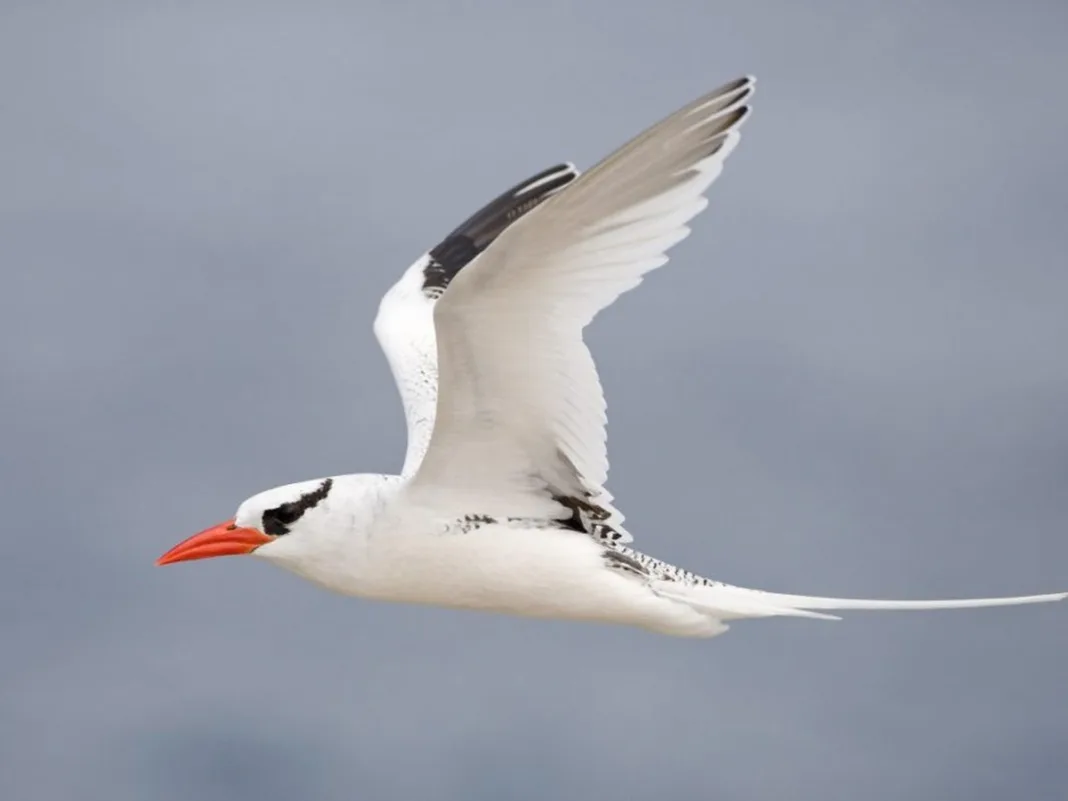
The disappearance of the introduced birds did not end Little Tobago’s importance. Its cliffs and forest support nesting colonies of native seabirds, including red-billed tropicbirds, terns, boobies and magnificent frigatebirds. Visitors commonly reach the sanctuary by glass-bottomed boat from Speyside.
The island’s present value rests on those native species and the surrounding marine environment. From cliffside viewpoints, people can observe birds using the air currents and nesting sites while also seeing Goat Island, Tyrrel’s Bay and nearby reefs.
The birds-of-paradise episode remains a fascinating part of the island’s history, but it also reflects an earlier period when moving wildlife between distant ecosystems was treated very differently. Modern conservation places greater emphasis on protecting native habitats and avoiding introductions that can create unintended consequences.
Little Tobago therefore carries two connected stories. One concerns an unusual experiment that briefly placed New Guinea birds in the southern Caribbean. The other is the continuing protection of an island whose native seabirds depend on secure nesting ground.
Together, those histories explain why Little Tobago is more than a scenic excursion. It is a living conservation site and a reminder of how ideas about wildlife management have changed.
News Desk is the editorial publishing account for Tringlobe Media News, covering breaking news, public affairs, entertainment, community developments and regional stories across Trinidad and Tobago, the Caribbean and internationally.