The key points are temporarily unavailable. You can still read the full Story below.
Main Points
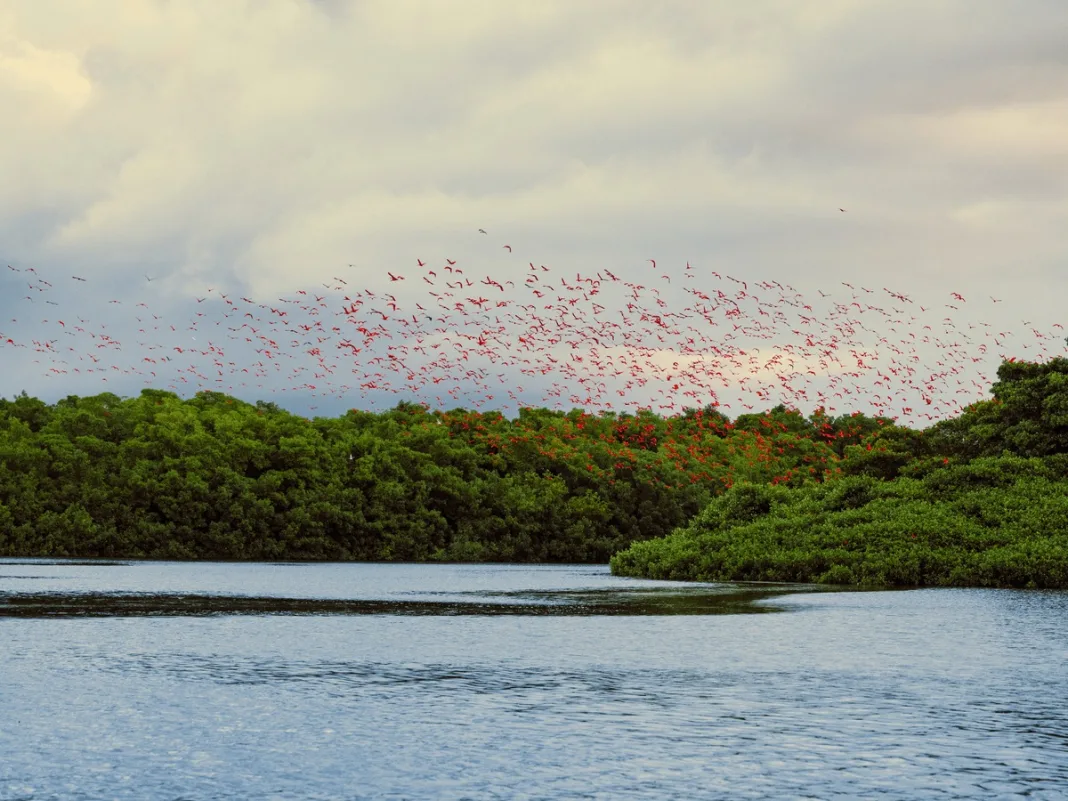
The evening flight of scarlet ibis across Caroni Swamp is now one of Trinidad's best-known natural spectacles, but its protection was strengthened by years of advocacy from a family closely connected to the wetland. Tourism Trinidad credits Simon Oudit Nanan and his son Winston Nanan with petitioning the government for the area to be protected. Their work helped draw attention to the importance of the mangrove habitat and the birds that depend on it. The swamp lies on Trinidad's west coast and contains mangrove channels, mudflats and brackish-water habitat. It supports scarlet ibis, herons, egrets, snakes, crabs and many other species. The scarlet ibis, one of Trinidad and Tobago's national birds, is especially associated with the wetland's evening roosts. The Nanan family also helped generations of visitors understand the area through guided boat tours. Moving quietly through the channels allowed people to see the swamp as a functioning ecosystem instead of an empty or unusable tract of land. That public experience mattered. Wetlands were often dismissed as wastelands, even though they help shelter coastlines, store carbon, filter water and provide nurseries for marine life. Caroni's wildlife offered a visible reason to protect those less obvious ecological services. In June 2015, the sanctuary was renamed the Winston Nanan Caroni Bird Sanctuary, recognising his contribution to conservation and tourism. The scarlet ibis remains vulnerable to disturbance and illegal hunting, so legal protection alone does not settle every threat. Responsible tour practices, habitat management and enforcement are still necessary to preserve the roosting areas. Caroni Swamp's modern identity was therefore shaped by more than its birds. It was also shaped by people who understood the wetland, argued for its protection and introduced others to its value. The sight of hundreds of red birds crossing the evening sky is the most dramatic part of a visit. Behind it is a quieter conservation story about persistence, local knowledge and the decision to treat a wetland as national heritage.
The evening flight of scarlet ibis across Caroni Swamp is now one of Trinidad’s best-known natural spectacles, but its protection was strengthened by years of advocacy from a family closely connected to the wetland.
Tourism Trinidad credits Simon Oudit Nanan and his son Winston Nanan with petitioning the government for the area to be protected. Their work helped draw attention to the importance of the mangrove habitat and the birds that depend on it.
The swamp lies on Trinidad’s west coast and contains mangrove channels, mudflats and brackish-water habitat. It supports scarlet ibis, herons, egrets, snakes, crabs and many other species. The scarlet ibis, one of Trinidad and Tobago’s national birds, is especially associated with the wetland’s evening roosts.
The Nanan family also helped generations of visitors understand the area through guided boat tours. Moving quietly through the channels allowed people to see the swamp as a functioning ecosystem instead of an empty or unusable tract of land.
That public experience mattered. Wetlands were often dismissed as wastelands, even though they help shelter coastlines, store carbon, filter water and provide nurseries for marine life. Caroni’s wildlife offered a visible reason to protect those less obvious ecological services.
In June 2015, the sanctuary was renamed the Winston Nanan Caroni Bird Sanctuary, recognising his contribution to conservation and tourism.
The scarlet ibis remains vulnerable to disturbance and illegal hunting, so legal protection alone does not settle every threat. Responsible tour practices, habitat management and enforcement are still necessary to preserve the roosting areas.
Caroni Swamp’s modern identity was therefore shaped by more than its birds. It was also shaped by people who understood the wetland, argued for its protection and introduced others to its value.
The sight of hundreds of red birds crossing the evening sky is the most dramatic part of a visit. Behind it is a quieter conservation story about persistence, local knowledge and the decision to treat a wetland as national heritage.
News Desk is the editorial publishing account for Tringlobe Media News, covering breaking news, public affairs, entertainment, community developments and regional stories across Trinidad and Tobago, the Caribbean and internationally.