The key points are temporarily unavailable. You can still read the full Story below.
Main Points
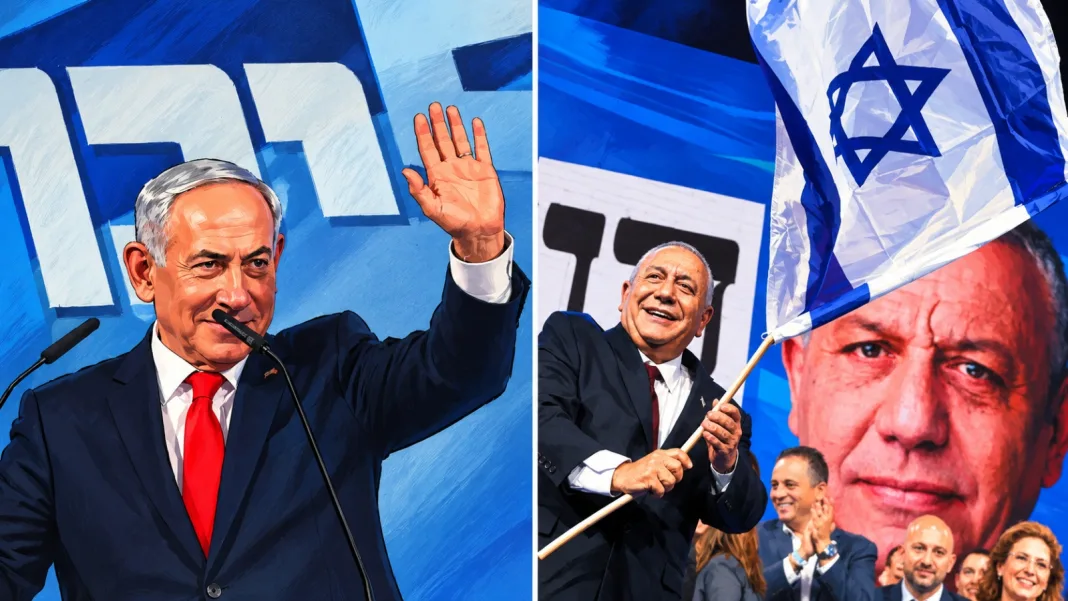
Israel’s recent parliamentary election has resulted in a political deadlock, with neither Prime Minister Benjamin Netanyahu’s ruling coalition nor the opposition alliance led by Gadi Eisenkot securing the 61 seats required to form a government in the 120-member Knesset. According to figures from The Times of Israel, Netanyahu’s coalition currently holds 53 seats, while Eisenkot’s opposition alliance holds 48. Arab parties, including the Joint List and Ra’am, hold 19 seats. While counting has concluded for most polling stations, absentee ballots from Israel Defense Forces (IDF) soldiers and diplomatic representatives abroad remain to be tallied. The current political landscape leaves both major blocs short of a majority, necessitating either the formation of new alliances or the possibility of fresh elections. Netanyahu’s ruling alliance includes Likud, Otzma Yehudit, Shas, United Torah Judaism, and Religious Zionism. The opposition bloc comprises Yashar, The Democrats, B’Yachad, and Yisrael Beiteinu. Analysts have suggested several potential, though difficult, paths forward. One scenario involves Netanyahu attempting to persuade Eisenkot to join a "right-wing national government" by distancing himself from his current far-right and ultra-Orthodox partners. However, this outcome is considered unlikely, as Eisenkot campaigned specifically as an alternative to Netanyahu. Alternatively, the opposition could seek a coalition with the Arab parties, which have emerged as potential "kingmakers" following an unprecedented performance that saw them secure 19 seats. This surge in support followed increased participation from Palestinian voters who had previously boycotted the electoral process. Despite their newfound influence, forming such an alliance remains complex due to long-standing political tensions, the ongoing Israel-Gaza conflict, and historical reluctance from both major Jewish-led blocs to partner with Arab parties. Should both major blocs fail to secure a governing majority, Israel may face the prospect of another election. Observers note that a repeat election could pose risks for all parties involved, potentially leading to lower voter turnout and further political instability. Article source: Indian Express | Image credit: Indian Express
Israel’s recent parliamentary election has resulted in a political deadlock, with neither Prime Minister Benjamin Netanyahu’s ruling coalition nor the opposition alliance led by Gadi Eisenkot securing the 61 seats required to form a government in the 120-member Knesset. According to figures from The Times of Israel, Netanyahu’s coalition currently holds 53 seats, while Eisenkot’s opposition alliance holds 48. Arab parties, including the Joint List and Ra’am, hold 19 seats. While counting has concluded for most polling stations, absentee ballots from Israel Defense Forces (IDF) soldiers and diplomatic representatives abroad remain to be tallied. The current political landscape leaves both major blocs short of a majority, necessitating either the formation of new alliances or the possibility of fresh elections. Netanyahu’s ruling alliance includes Likud, Otzma Yehudit, Shas, United Torah Judaism, and Religious Zionism. The opposition bloc comprises Yashar, The Democrats, B’Yachad, and Yisrael Beiteinu. Analysts have suggested several potential, though difficult, paths forward. One scenario involves Netanyahu attempting to persuade Eisenkot to join a “right-wing national government” by distancing himself from his current far-right and ultra-Orthodox partners. However, this outcome is considered unlikely, as Eisenkot campaigned specifically as an alternative to Netanyahu. Alternatively, the opposition could seek a coalition with the Arab parties, which have emerged as potential “kingmakers” following an unprecedented performance that saw them secure 19 seats. This surge in support followed increased participation from Palestinian voters who had previously boycotted the electoral process. Despite their newfound influence, forming such an alliance remains complex due to long-standing political tensions, the ongoing Israel-Gaza conflict, and historical reluctance from both major Jewish-led blocs to partner with Arab parties. Should both major blocs fail to secure a governing majority, Israel may face the prospect of another election. Observers note that a repeat election could pose risks for all parties involved, potentially leading to lower voter turnout and further political instability.
News Desk is the editorial publishing account for Tringlobe Media News, covering breaking news, public affairs, entertainment, community developments and regional stories across Trinidad and Tobago, the Caribbean and internationally.