The key points are temporarily unavailable. You can still read the full Story below.
Main Points
The growth of America’s major towns was not accidental but the result of deliberate geography, transportation revolutions, and government policy. At the heart of this expansion was the belief in Manifest Destiny—the 19th-century doctrine that the United States was destined to stretch from the Atlantic to the Pacific. This ideology, first articulated by journalist John L. O’Sullivan in 1839, fueled westward migration and territorial acquisitions, including the Louisiana Purchase (1803), the annexation of Texas (1845), and conflicts with Mexico that secured vast western lands. By the mid-1800s, the U.S. had expanded from coast to coast, creating the physical space for cities to emerge. Transportation played a pivotal role in determining where these cities thrived. Before the Industrial Revolution, settlements clustered along navigable rivers—like Boston in New England or Philadelphia in the Mid-Atlantic—because waterways were the primary means of trade and travel. But the completion of the transcontinental railroad in 1869 transformed urban growth. Railroads slashed travel times, linked distant markets, and made inland cities like Chicago and Denver economic powerhouses. The gold rush in California (1849) further accelerated migration, turning San Francisco from a sleepy outpost into a bustling port city overnight. Government decisions also shaped urban landscapes. The Homestead Act of 1862, which offered 160 acres of public land to settlers willing to farm it, encouraged migration to the Great Plains, leading to the rise of cities like Omaha and Dodge City. Meanwhile, federal investments in infrastructure—such as canals, roads, and later highways—directed population flows. The Interstate Highway System, authorized in 1956, later facilitated suburban sprawl, reshaping cities like Los Angeles and Atlanta into decentralized metropolises. Cultural hearths—regions where distinct traditions formed—also influenced urban development. New England’s industrial roots spawned cities like Boston, while the Mid-Atlantic’s fertile soils and multicultural population fueled Philadelphia’s growth. The South’s plantation economy, centered on Virginia, initially kept urbanization slow, but post-Civil War industrialization later boosted cities like Atlanta and Houston. Even today, the legacy of these early patterns persists: America’s largest cities remain tied to rivers, railroads, and the ambitious spirit of expansion that defined a nation.
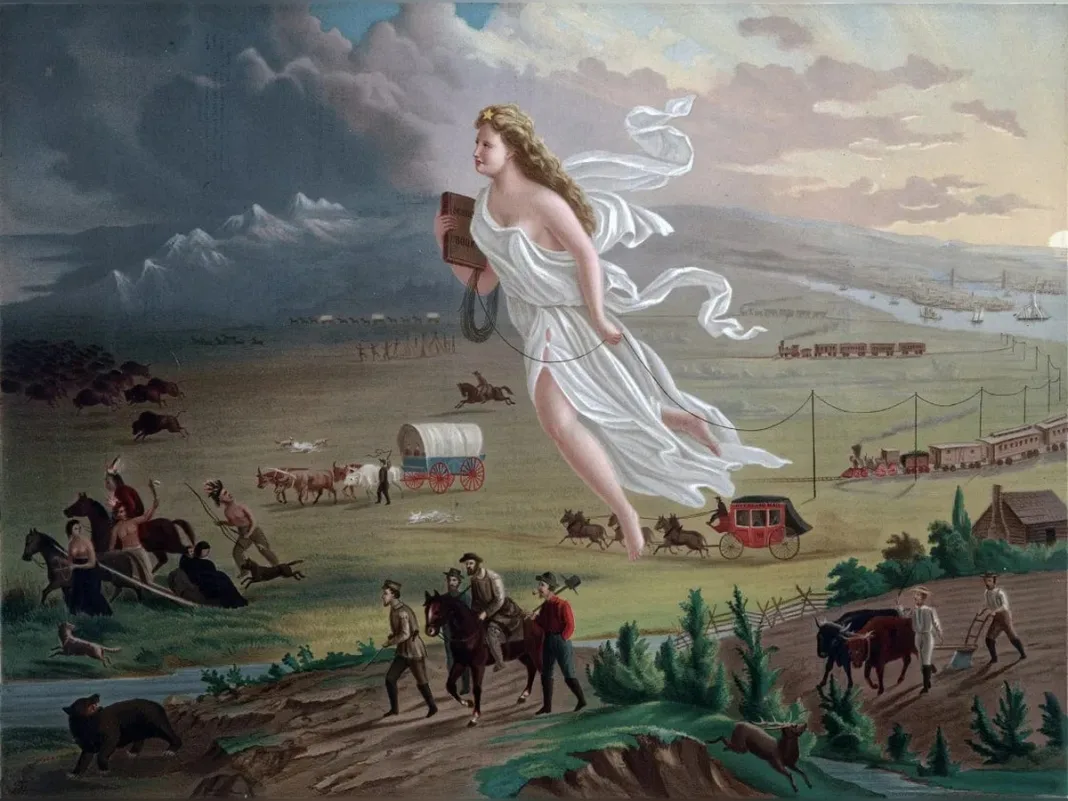
The growth of America’s major towns was not accidental but the result of deliberate geography, transportation revolutions, and government policy. At the heart of this expansion was the belief in Manifest Destiny—the 19th-century doctrine that the United States was destined to stretch from the Atlantic to the Pacific. This ideology, first articulated by journalist John L. O’Sullivan in 1839, fueled westward migration and territorial acquisitions, including the Louisiana Purchase (1803), the annexation of Texas (1845), and conflicts with Mexico that secured vast western lands. By the mid-1800s, the U.S. had expanded from coast to coast, creating the physical space for cities to emerge.
Transportation played a pivotal role in determining where these cities thrived. Before the Industrial Revolution, settlements clustered along navigable rivers—like Boston in New England or Philadelphia in the Mid-Atlantic—because waterways were the primary means of trade and travel. But the completion of the transcontinental railroad in 1869 transformed urban growth. Railroads slashed travel times, linked distant markets, and made inland cities like Chicago and Denver economic powerhouses. The gold rush in California (1849) further accelerated migration, turning San Francisco from a sleepy outpost into a bustling port city overnight.
Government decisions also shaped urban landscapes. The Homestead Act of 1862, which offered 160 acres of public land to settlers willing to farm it, encouraged migration to the Great Plains, leading to the rise of cities like Omaha and Dodge City. Meanwhile, federal investments in infrastructure—such as canals, roads, and later highways—directed population flows. The Interstate Highway System, authorized in 1956, later facilitated suburban sprawl, reshaping cities like Los Angeles and Atlanta into decentralized metropolises.
Cultural hearths—regions where distinct traditions formed—also influenced urban development. New England’s industrial roots spawned cities like Boston, while the Mid-Atlantic’s fertile soils and multicultural population fueled Philadelphia’s growth. The South’s plantation economy, centered on Virginia, initially kept urbanization slow, but post-Civil War industrialization later boosted cities like Atlanta and Houston. Even today, the legacy of these early patterns persists: America’s largest cities remain tied to rivers, railroads, and the ambitious spirit of expansion that defined a nation.
News Desk is the editorial publishing account for Tringlobe Media News, covering breaking news, public affairs, entertainment, community developments and regional stories across Trinidad and Tobago, the Caribbean and internationally.