The key points are temporarily unavailable. You can still read the full Story below.
Main Points
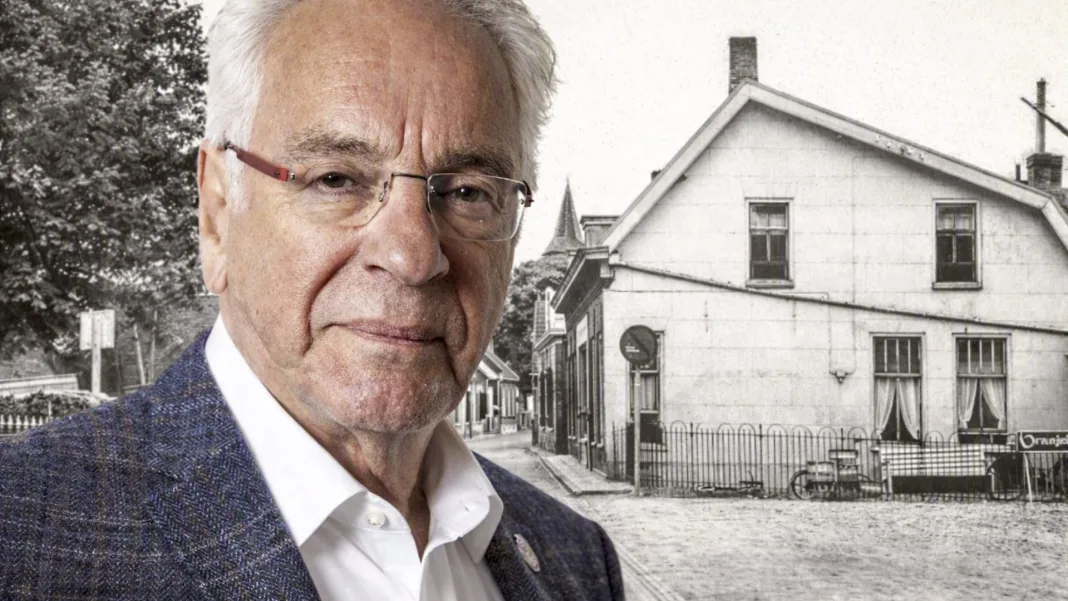
Arie Scheurwater, born on March 1, 1951, at Dorpsstraat 64A, has spent his life witnessing the transformation of his village. Growing up in a home rented from a local baker, Scheurwater recalls a childhood defined by the bustling activity of the Dorpsstraat, which served as the primary commercial hub of the community.
Scheurwater remembers the street as a collection of small, specialized businesses, including a cigar shop, a drugstore, a hardware store, and various grocery outlets. The area was also home to several bakeries, such as those operated by Maaskant, Rokus van der Schee, and Den Hoed, which functioned as central points for local residents.
Social life in the village was anchored by establishments like Café De Landbouw, which operated as a café, grocery store, and liquor shop. According to Scheurwater, the venue served as a meeting place for sports teams, local associations, and residents. Another notable location was Café Van der Linden, which Scheurwater describes as a primary source for local news. He also recalls the nearby barbershop of Toontje van der Linden, noting the informal atmosphere of the time.
Scheurwater’s personal history is closely tied to the physical evolution of the village. He attended the Prinses Margrietschool, which was located on the site where his current apartment building stands. He also spent years working at the former post office, a building that has since been demolished. Both the school and the post office were situated near the current location of De Schoof, a modern community center.
Today, Scheurwater resides in an apartment overlooking the area where he once attended school. He continues to document the history of the village through his personal recollections, serving as a link between the traditional Dorpsstraat and the modern development of the area.
Article source: www.weekbladdebrug.nl | Image credit: www.weekbladdebrug.nl