The key points are temporarily unavailable. You can still read the full Story below.
Main Points
**70,000 Moroccans Cross into Spanish‑Governed Ceuta and Melilla on Throne Day** *Ceuta, 30 July 2026* – On the day Morocco’s King Mohammed VI celebrated his 70th year on the throne, an estimated 70,000 Moroccans crossed the border into the Spanish enclaves of Ceuta and Melilla. The mass movement, which occurred within hours of the national celebration, has attracted international attention and prompted analysis of the underlying motivations. ### Context of the Migration – **Throne Day** is one of Morocco’s most important national holidays, commemorating the king’s accession to the throne. The event is marked by public ceremonies, speeches, and widespread media coverage. – **Ceuta and Melilla** are Spanish territories on the northern coast of Africa, separated from mainland Morocco by a narrow stretch of sea. They have long been destinations for Moroccan migrants seeking better economic opportunities or a different lifestyle. ### Numbers and Demographics – The 70,000 migrants represent a significant proportion of the Moroccan diaspora in Europe. Recent estimates place the Moroccan population in Spain at about one million, with similar figures in Italy, France, Belgium, the Netherlands, and a substantial community in Israel. – The majority of Morocco’s population (approximately 98%) is Muslim, and the concept of *hijra*—the Arabic term for migration—holds cultural and religious significance in the country. ### Cultural and Religious Significance of *Hijra* – The Qur’an references *hijra* 24 times, generally in a positive context. The term is associated with voluntary migration for religious or moral reasons, most notably the Prophet Muhammad’s own migration from Mecca to Medina in 622 CE, which marks the beginning of the Islamic calendar. – In Moroccan society, *hijra* is intertwined with historical narratives of migration, including the settlement of Andalusian Muslims and Jews after the fall of Granada, and earlier movements of Berber and Sahrawi peoples. ### Motivations Behind the Mass Movement Analysts note that the migration cannot be explained solely by economic or strategic factors. While unemployment, low wages, food insecurity, a strained health system, and limited freedom of expression are cited as practical drivers, the symbolic resonance of *hijra* appears to play a role in the decision to leave. – **Personal Accounts**: Some migrants reported paying substantial sums for transportation to the border, renting hotels for a few nights, or carrying significant amounts of cash. Others left wedding celebrations or other social events, indicating that the decision was not purely opportunistic. – **Symbolic Timing**: The coincidence of the migration with Throne Day suggests a deliberate choice to align the act of leaving with a national celebration, perhaps reflecting a desire to reinterpret the meaning of the holiday or to seek a new beginning. ### Academic Perspective Zakariae Azennoud, an academic specializing in corpus linguistics, critical discourse analysis, and semiotics, has examined the phenomenon. He argues that a comprehensive analysis must consider how migrants articulate their experiences, including the latent positive meanings derived from religious, historical, and collective memories of migration. ### Conclusion The mass migration of 70,000 Moroccans into Ceuta and Melilla on 30 July underscores the complex interplay of economic hardship, cultural identity, and religious symbolism. While practical concerns remain a primary factor, the event’s timing and the cultural weight of *hijra* suggest that symbolic and psychological dimensions also influence migration decisions. Article source: allafrica.com | Image credit: African Arguments
**70,000 Moroccans Cross into Spanish‑Governed Ceuta and Melilla on Throne Day**
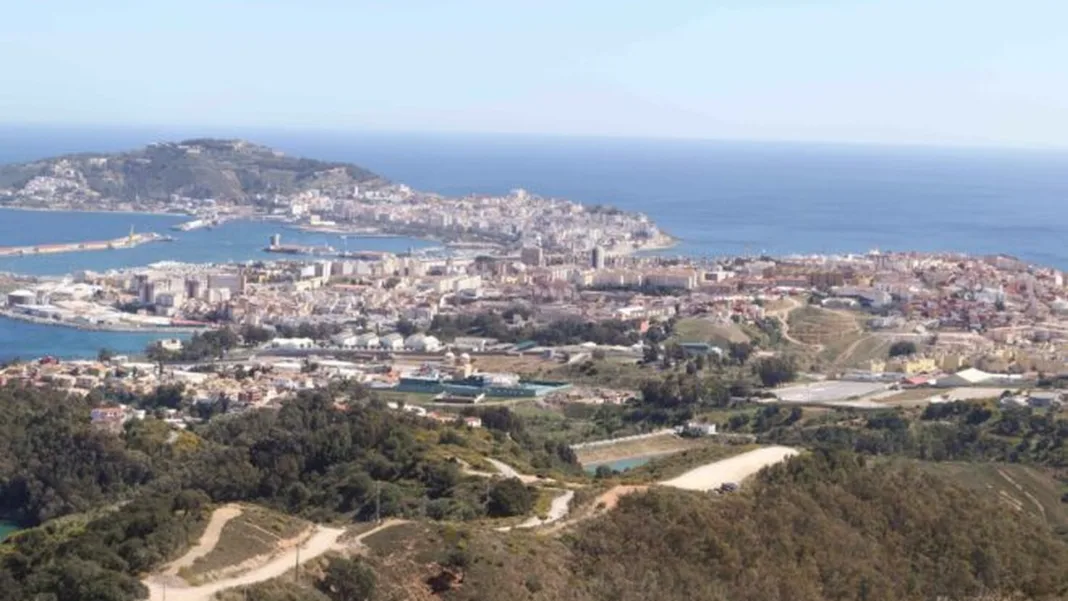
*Ceuta, 30 July 2026* – On the day Morocco’s King Mohammed VI celebrated his 70th year on the throne, an estimated 70,000 Moroccans crossed the border into the Spanish enclaves of Ceuta and Melilla. The mass movement, which occurred within hours of the national celebration, has attracted international attention and prompted analysis of the underlying motivations.
### Context of the Migration
– **Throne Day** is one of Morocco’s most important national holidays, commemorating the king’s accession to the throne. The event is marked by public ceremonies, speeches, and widespread media coverage.
– **Ceuta and Melilla** are Spanish territories on the northern coast of Africa, separated from mainland Morocco by a narrow stretch of sea. They have long been destinations for Moroccan migrants seeking better economic opportunities or a different lifestyle.
### Numbers and Demographics
– The 70,000 migrants represent a significant proportion of the Moroccan diaspora in Europe. Recent estimates place the Moroccan population in Spain at about one million, with similar figures in Italy, France, Belgium, the Netherlands, and a substantial community in Israel.
– The majority of Morocco’s population (approximately 98%) is Muslim, and the concept of *hijra*—the Arabic term for migration—holds cultural and religious significance in the country.
### Cultural and Religious Significance of *Hijra*
– The Qur’an references *hijra* 24 times, generally in a positive context. The term is associated with voluntary migration for religious or moral reasons, most notably the Prophet Muhammad’s own migration from Mecca to Medina in 622 CE, which marks the beginning of the Islamic calendar.
– In Moroccan society, *hijra* is intertwined with historical narratives of migration, including the settlement of Andalusian Muslims and Jews after the fall of Granada, and earlier movements of Berber and Sahrawi peoples.
### Motivations Behind the Mass Movement
Analysts note that the migration cannot be explained solely by economic or strategic factors. While unemployment, low wages, food insecurity, a strained health system, and limited freedom of expression are cited as practical drivers, the symbolic resonance of *hijra* appears to play a role in the decision to leave.
– **Personal Accounts**: Some migrants reported paying substantial sums for transportation to the border, renting hotels for a few nights, or carrying significant amounts of cash. Others left wedding celebrations or other social events, indicating that the decision was not purely opportunistic.
– **Symbolic Timing**: The coincidence of the migration with Throne Day suggests a deliberate choice to align the act of leaving with a national celebration, perhaps reflecting a desire to reinterpret the meaning of the holiday or to seek a new beginning.
### Academic Perspective
Zakariae Azennoud, an academic specializing in corpus linguistics, critical discourse analysis, and semiotics, has examined the phenomenon. He argues that a comprehensive analysis must consider how migrants articulate their experiences, including the latent positive meanings derived from religious, historical, and collective memories of migration.
### Conclusion
The mass migration of 70,000 Moroccans into Ceuta and Melilla on 30 July underscores the complex interplay of economic hardship, cultural identity, and religious symbolism. While practical concerns remain a primary factor, the event’s timing and the cultural weight of *hijra* suggest that symbolic and psychological dimensions also influence migration decisions.
News Desk is the editorial publishing account for Tringlobe Media News, covering breaking news, public affairs, entertainment, community developments and regional stories across Trinidad and Tobago, the Caribbean and internationally.