The key points are temporarily unavailable. You can still read the full Story below.
Main Points
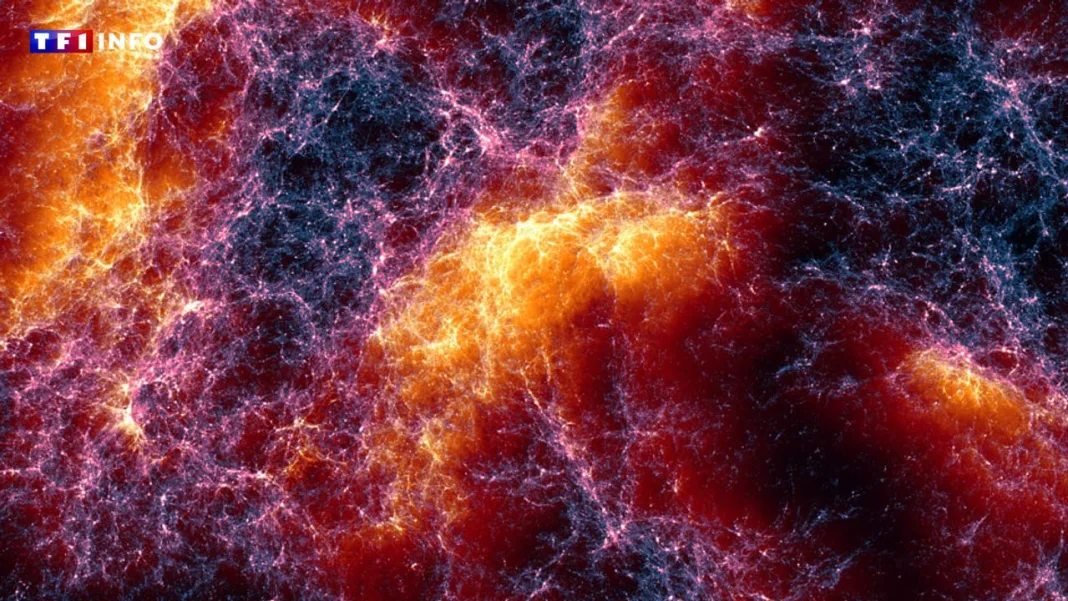
A team of scientists from Harvard’s Center for Astrophysics and the Smithsonian Institution announced on Sunday, 25 October, the release of “Lumina,” the most detailed cosmological simulation of the early Universe to date. The model was produced on the Frontier supercomputer at the Oak Ridge National Laboratory, using more than 15,000 graphics processing units over a period of roughly one year. The results were published in the Monthly Notices of the Royal Astronomical Society. Lumina traces the evolution of ordinary matter, dark matter and cosmic radiation during the first two billion years after the Big Bang. The simulated volume is a cube about 1.6 billion light‑years on a side, matching the observational window of current infrared space telescopes such as the James Webb Space Telescope (JWST) and NASA’s Nancy Grace Roman Telescope (NGRST). By comparing the simulation’s predictions with data from these instruments, astronomers hope to test whether their current understanding of the laws governing the Universe remains accurate or whether new discoveries will prompt revisions of existing theories. “Lumina reproduces how ordinary matter, dark matter, and cosmic radiation interacted during the first two billion years of the Universe, providing scientists with a powerful new tool to test hypotheses about the cosmos after the Big Bang,” said a press release from the Smithsonian Institution. Article source: LCI | Image credit: LCI
A team of scientists from Harvard’s Center for Astrophysics and the Smithsonian Institution announced on Sunday, 25 October, the release of “Lumina,” the most detailed cosmological simulation of the early Universe to date. The model was produced on the Frontier supercomputer at the Oak Ridge National Laboratory, using more than 15,000 graphics processing units over a period of roughly one year. The results were published in the Monthly Notices of the Royal Astronomical Society. Lumina traces the evolution of ordinary matter, dark matter and cosmic radiation during the first two billion years after the Big Bang. The simulated volume is a cube about 1.6 billion light‑years on a side, matching the observational window of current infrared space telescopes such as the James Webb Space Telescope (JWST) and NASA’s Nancy Grace Roman Telescope (NGRST). By comparing the simulation’s predictions with data from these instruments, astronomers hope to test whether their current understanding of the laws governing the Universe remains accurate or whether new discoveries will prompt revisions of existing theories. “Lumina reproduces how ordinary matter, dark matter, and cosmic radiation interacted during the first two billion years of the Universe, providing scientists with a powerful new tool to test hypotheses about the cosmos after the Big Bang,” said a press release from the Smithsonian Institution.
News Desk is the editorial publishing account for Tringlobe Media News, covering breaking news, public affairs, entertainment, community developments and regional stories across Trinidad and Tobago, the Caribbean and internationally.