The key points are temporarily unavailable. You can still read the full Story below.
Main Points
**Eswatini Secures Four Upgrades in Global Anti-Money Laundering Assessment** Eswatini has improved its standing regarding international financial standards, securing four upgrades in its latest assessment by the Eastern and Southern Africa Anti-Money Laundering Group (ESAAMLG). The country now holds satisfactory ratings—classified as either "compliant" or "largely compliant"—in 32 of the 40 Financial Action Task Force (FATF) recommendations. Finance Minister Neal Rijkenberg, who led the Eswatini delegation at the recent ESAAMLG meetings in Kigali, Rwanda, stated that the upgrades significantly strengthen the nation’s position against the risk of international "greylisting." Greylisting involves increased international monitoring of a country’s financial systems due to identified strategic weaknesses in combating money laundering, terrorist financing, and proliferation financing. While Eswatini is not currently on the FATF grey list, the government has been working to address technical deficiencies identified in a 2022 Mutual Evaluation Report. At that time, only 14 of the 40 recommendations were rated as compliant or largely compliant. During the Kigali meetings, the Eswatini delegation—which included Attorney General Sifiso Khumalo, Financial Intelligence Unit Director General Babhekile Matsebula, and senior officials from the Ministries of Finance and Justice—successfully defended the country’s recent legislative and regulatory reforms. Although initial objections were raised against two of the four requested upgrades, the delegation successfully argued for their approval. Minister Rijkenberg noted that while the 32 satisfactory ratings represent a major improvement, the FATF assessment process also evaluates "effectiveness"—the practical application of laws and systems by authorities. He emphasized that the recent technical upgrades help mitigate the risk of future international scrutiny. In addition to the anti-money laundering discussions, the delegation met with representatives of the Rwanda Cooperation Initiative to discuss the implementation of Eswatini’s Integrated Financial Management Information System (IFMIS). The project, which aims to digitize and modernize government financial functions, has faced delays due to implementation challenges. Rijkenberg stated that the government remains committed to the project and intends to prioritize it in the upcoming budget cycle. Article and image source: eswatiniobserver.com
**Eswatini Secures Four Upgrades in Global Anti-Money Laundering Assessment**
Eswatini has improved its standing regarding international financial standards, securing four upgrades in its latest assessment by the Eastern and Southern Africa Anti-Money Laundering Group (ESAAMLG). The country now holds satisfactory ratings—classified as either “compliant” or “largely compliant”—in 32 of the 40 Financial Action Task Force (FATF) recommendations.
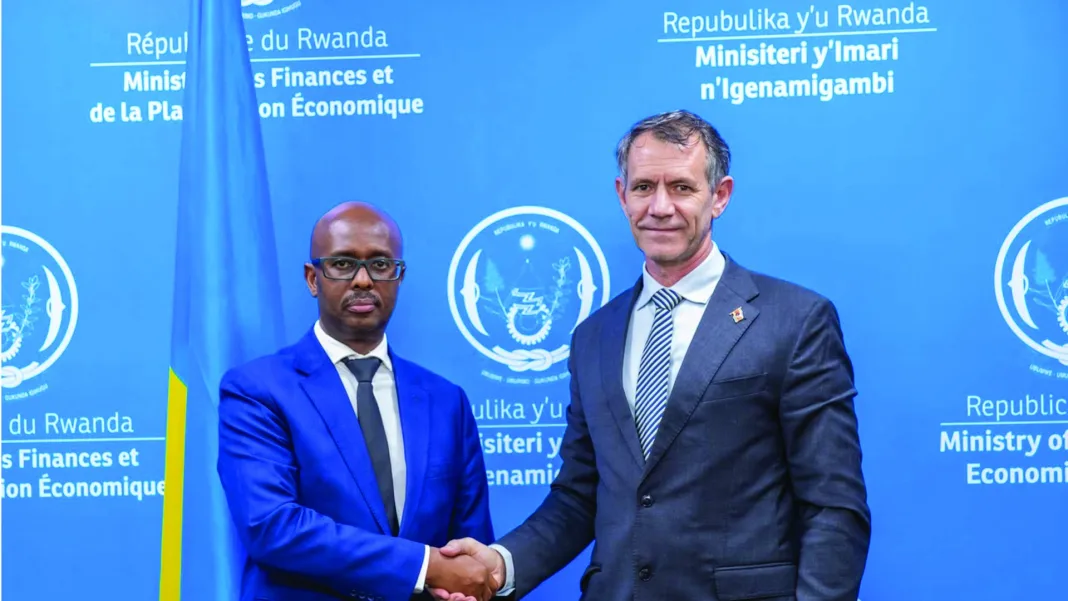
Finance Minister Neal Rijkenberg, who led the Eswatini delegation at the recent ESAAMLG meetings in Kigali, Rwanda, stated that the upgrades significantly strengthen the nation’s position against the risk of international “greylisting.” Greylisting involves increased international monitoring of a country’s financial systems due to identified strategic weaknesses in combating money laundering, terrorist financing, and proliferation financing.
While Eswatini is not currently on the FATF grey list, the government has been working to address technical deficiencies identified in a 2022 Mutual Evaluation Report. At that time, only 14 of the 40 recommendations were rated as compliant or largely compliant.
During the Kigali meetings, the Eswatini delegation—which included Attorney General Sifiso Khumalo, Financial Intelligence Unit Director General Babhekile Matsebula, and senior officials from the Ministries of Finance and Justice—successfully defended the country’s recent legislative and regulatory reforms. Although initial objections were raised against two of the four requested upgrades, the delegation successfully argued for their approval.
Minister Rijkenberg noted that while the 32 satisfactory ratings represent a major improvement, the FATF assessment process also evaluates “effectiveness”—the practical application of laws and systems by authorities. He emphasized that the recent technical upgrades help mitigate the risk of future international scrutiny.
In addition to the anti-money laundering discussions, the delegation met with representatives of the Rwanda Cooperation Initiative to discuss the implementation of Eswatini’s Integrated Financial Management Information System (IFMIS). The project, which aims to digitize and modernize government financial functions, has faced delays due to implementation challenges. Rijkenberg stated that the government remains committed to the project and intends to prioritize it in the upcoming budget cycle.
News Desk is the editorial publishing account for Tringlobe Media News, covering breaking news, public affairs, entertainment, community developments and regional stories across Trinidad and Tobago, the Caribbean and internationally.