The key points are temporarily unavailable. You can still read the full Story below.
Main Points
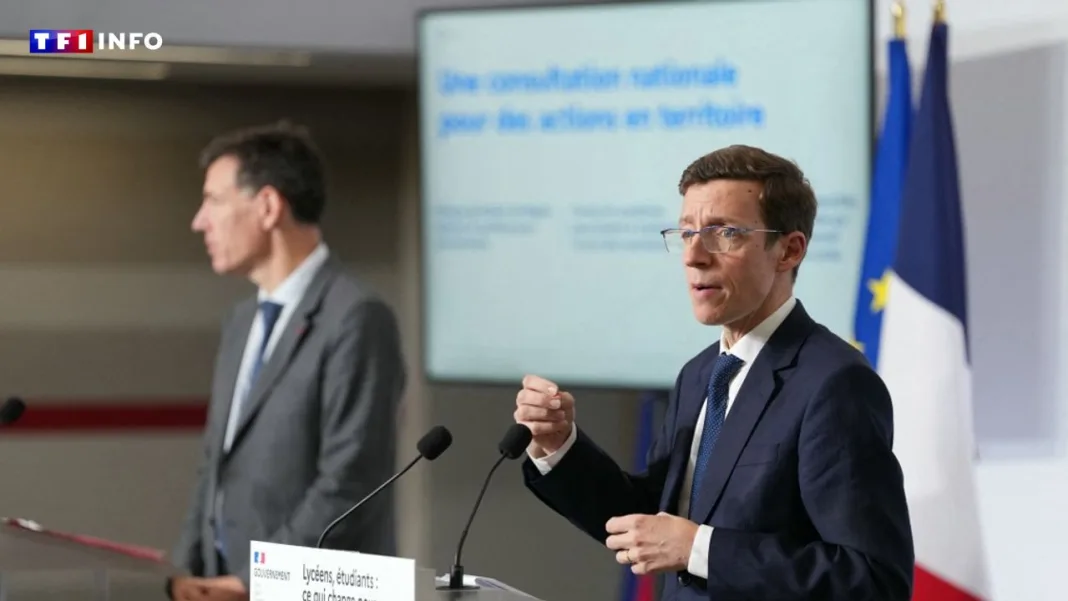
After a month of blockades and demonstrations, the French government announced a series of measures on Monday aimed at addressing the crisis in secondary and higher education. The proposals were met with mixed reactions from student and high‑school organisations, many of whom called for the mobilisation to continue. ### Key announcements Parcoursup overhaul – The national platform for university admissions will undergo a “strong evolution” starting with the 2027 academic year, with clearer algorithms and a planned replacement by 2028, which will require a new law. Higher‑education capacity – 15,000 additional places will be created, mainly in BTS and IUT programmes. Infrastructure investment – A €5 billion plan will fund renovations of high‑schools and universities, largely through low‑interest loans to local authorities. Student bursaries – Grants will be indexed to inflation. Class‑size cap – From the next school year, a maximum of 28 students per second‑year class will be introduced, prioritising the most disadvantaged schools, with a nationwide rollout by 2028. Teacher staffing – The 836 job cuts planned for the 2027 budget will be cancelled, and 500 new teaching posts will be created in public high schools. Curriculum reforms – Two “chantiers” will be launched to reduce academic pressure: one will examine the continuous assessment component of the baccalauréat, with a possible removal for first‑year students; the other will review the choice of specialities and the role of science and mathematics in the timetable. Minister of National Education Édouard Geffray told reporters that “none of the decisions” made to respond to the crisis “is a hollow promise.” The announcements were first circulated in the afternoon by education influencers who had met with Minister of State Sébastien Lecornu at the Élysée. Minister of Higher Education Philippe Baptiste confirmed the Parcoursup timeline and the additional places in higher education. ### Student and high‑school response Despite some satisfaction with the proposals, student and high‑school groups said they would keep pressing for concrete changes on the ground. Nathanaël Combary of Renouveau lycéen said the organisations would “continue the mobilisation” until they see tangible results. The Inter‑syndical Youth, which brings together student unions such as L’Union étudiante, La Fage and l’Unef, and the Union Syndicale lycéenne (USL), called for a return to the streets. The group lists ten main demands, worth an estimated €10 billion, including the end of university selection, the creation of 250,000 new university places, and a reform of bursaries. The government’s announcements came ahead of a potential new day of action called by the “gilets jaunes” on 31 October and a national strike and protest scheduled for 5 November by employee unions. The executive hoped the new measures would calm the youth front, but the student organisations remain determined to keep the pressure on. Article source: LCI | Image credit: LCI
After a month of blockades and demonstrations, the French government announced a series of measures on Monday aimed at addressing the crisis in secondary and higher education. The proposals were met with mixed reactions from student and high‑school organisations, many of whom called for the mobilisation to continue. ### Key announcements Parcoursup overhaul – The national platform for university admissions will undergo a “strong evolution” starting with the 2027 academic year, with clearer algorithms and a planned replacement by 2028, which will require a new law. Higher‑education capacity – 15,000 additional places will be created, mainly in BTS and IUT programmes. Infrastructure investment – A €5 billion plan will fund renovations of high‑schools and universities, largely through low‑interest loans to local authorities. Student bursaries – Grants will be indexed to inflation. Class‑size cap – From the next school year, a maximum of 28 students per second‑year class will be introduced, prioritising the most disadvantaged schools, with a nationwide rollout by 2028. Teacher staffing – The 836 job cuts planned for the 2027 budget will be cancelled, and 500 new teaching posts will be created in public high schools. Curriculum reforms – Two “chantiers” will be launched to reduce academic pressure: one will examine the continuous assessment component of the baccalauréat, with a possible removal for first‑year students; the other will review the choice of specialities and the role of science and mathematics in the timetable. Minister of National Education Édouard Geffray told reporters that “none of the decisions” made to respond to the crisis “is a hollow promise.” The announcements were first circulated in the afternoon by education influencers who had met with Minister of State Sébastien Lecornu at the Élysée. Minister of Higher Education Philippe Baptiste confirmed the Parcoursup timeline and the additional places in higher education. ### Student and high‑school response Despite some satisfaction with the proposals, student and high‑school groups said they would keep pressing for concrete changes on the ground. Nathanaël Combary of Renouveau lycéen said the organisations would “continue the mobilisation” until they see tangible results. The Inter‑syndical Youth, which brings together student unions such as L’Union étudiante, La Fage and l’Unef, and the Union Syndicale lycéenne (USL), called for a return to the streets. The group lists ten main demands, worth an estimated €10 billion, including the end of university selection, the creation of 250,000 new university places, and a reform of bursaries. The government’s announcements came ahead of a potential new day of action called by the “gilets jaunes” on 31 October and a national strike and protest scheduled for 5 November by employee unions. The executive hoped the new measures would calm the youth front, but the student organisations remain determined to keep the pressure on.
News Desk is the editorial publishing account for Tringlobe Media News, covering breaking news, public affairs, entertainment, community developments and regional stories across Trinidad and Tobago, the Caribbean and internationally.