The key points are temporarily unavailable. You can still read the full Story below.
Main Points
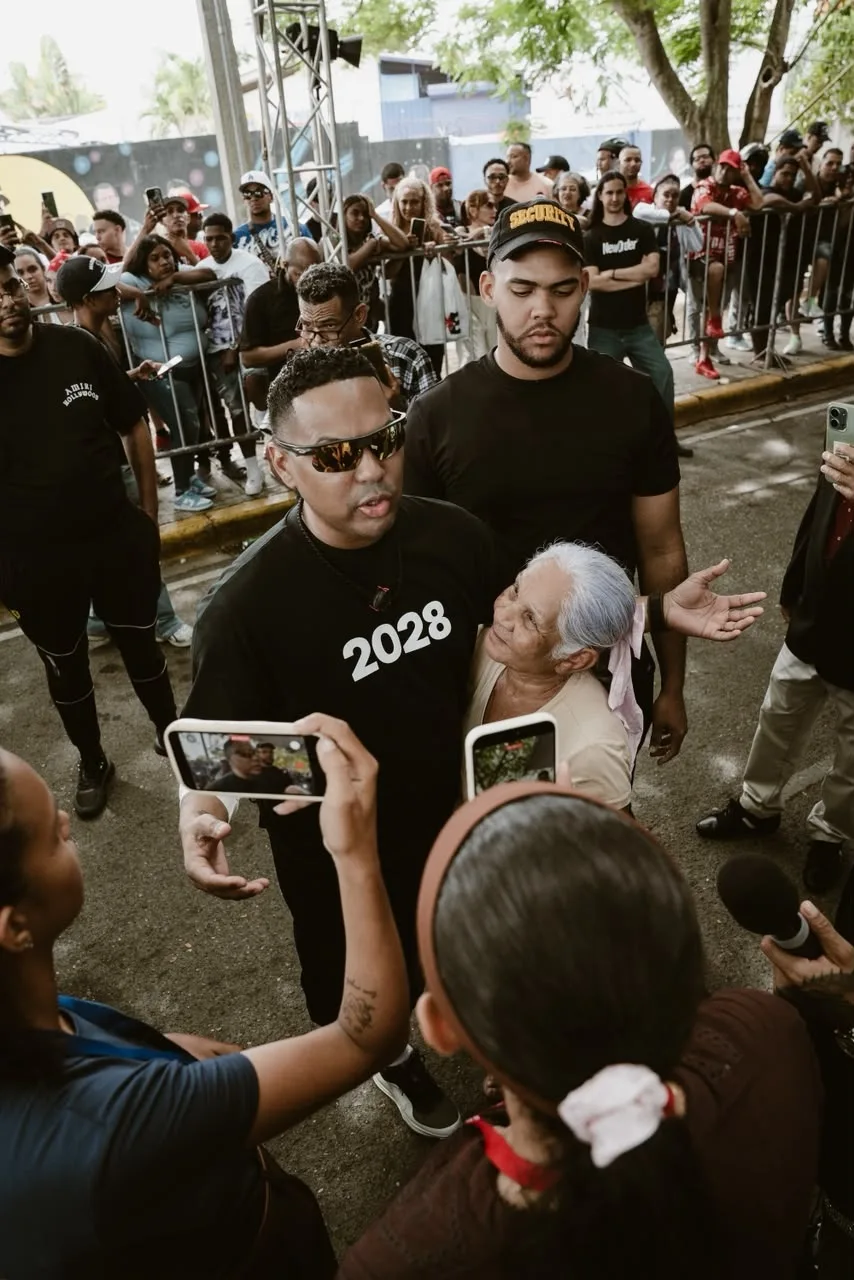
Dominicanos Primero, the political project led by Santiago Matías, is entering a critical phase as it seeks to transform the digital following it has built over the years into a territorial political organization ahead of the 2028 elections. The movement is currently collecting signatures to obtain recognition from the Central Electoral Board (JCE), a first public test of its ability to mobilize support outside social media. Matías, a lawyer and political scientist, entered politics with a level of public recognition that is uncommon for newcomers. According to Pedro Ledesma Rivera, the recognition can reduce the effort needed to introduce a candidate to voters, but it does not automatically translate into votes. Ledesma notes that the movement could pursue representation at congressional and municipal levels rather than focusing solely on a presidential bid. “Having a digital audience is a starting point, but it is not a guarantee of electoral success,” said Cristian Cabrera, a journalist and communication consultant. Cabrera emphasized that voters consider a range of factors—concerns, interests, expectations—beyond the content that attracts followers. He added that the challenge for Dominicanos Primero will be to convert online recognition into a sustained, on‑the‑ground presence with local teams and continuous engagement. The signature collection has already produced notable results. In the province of Hermanas Mirabal, the movement achieved 181 % of its target, collecting 1,900 signatures against a goal of 1,000. Other provinces have exceeded their goals as well: Monseñor Nouel (256 %), Santiago (230 %), La Altagracia (224 %), La Vega (189 %) and El Seibo (187 %). Several other provinces, including San Pedro de Macorís, Monte Cristi, Samaná, Barahona, Pedernales, María Trinidad Sánchez, La Romana, Santiago Rodríguez, Duarte, San Juan, Valverde, Santo Domingo and Puerto Plata, also surpassed their targets. Espaillat and Peravia were close to meeting their goals, at 99 % and 97 % respectively. While these figures demonstrate organizational progress, experts caution that they do not predict how signatories will vote or the movement’s strength in a national contest. The phenomenon of digital‑born political figures is not unique to the Dominican Republic. In Colombia’s 2026 legislative elections, several social‑media personalities ran for office, with some securing seats while others did not. In Brazil, a 2026 Datafolha survey found that 57 % of social‑media users had seen election‑related content in the weeks before the campaign, with 61 % of that content coming from influencers and 69 % from candidate profiles. These examples illustrate that while digital visibility can enhance a campaign’s reach, it remains distinct from the organizational and territorial structures that ultimately determine electoral outcomes. For Dominicanos Primero, the next steps will involve translating online popularity into concrete political proposals, building local party structures, and maintaining a presence beyond the fleeting moments of social‑media virality. Whether the movement can sustain this momentum and convert its digital base into votes remains to be seen as the 2028 election cycle approaches. Article source: De Ultimo Minuto | Image credit: De Ultimo Minuto
Dominicanos Primero, the political project led by Santiago Matías, is entering a critical phase as it seeks to transform the digital following it has built over the years into a territorial political organization ahead of the 2028 elections. The movement is currently collecting signatures to obtain recognition from the Central Electoral Board (JCE), a first public test of its ability to mobilize support outside social media. Matías, a lawyer and political scientist, entered politics with a level of public recognition that is uncommon for newcomers. According to Pedro Ledesma Rivera, the recognition can reduce the effort needed to introduce a candidate to voters, but it does not automatically translate into votes. Ledesma notes that the movement could pursue representation at congressional and municipal levels rather than focusing solely on a presidential bid. “Having a digital audience is a starting point, but it is not a guarantee of electoral success,” said Cristian Cabrera, a journalist and communication consultant. Cabrera emphasized that voters consider a range of factors—concerns, interests, expectations—beyond the content that attracts followers. He added that the challenge for Dominicanos Primero will be to convert online recognition into a sustained, on‑the‑ground presence with local teams and continuous engagement. The signature collection has already produced notable results. In the province of Hermanas Mirabal, the movement achieved 181 % of its target, collecting 1,900 signatures against a goal of 1,000. Other provinces have exceeded their goals as well: Monseñor Nouel (256 %), Santiago (230 %), La Altagracia (224 %), La Vega (189 %) and El Seibo (187 %). Several other provinces, including San Pedro de Macorís, Monte Cristi, Samaná, Barahona, Pedernales, María Trinidad Sánchez, La Romana, Santiago Rodríguez, Duarte, San Juan, Valverde, Santo Domingo and Puerto Plata, also surpassed their targets. Espaillat and Peravia were close to meeting their goals, at 99 % and 97 % respectively. While these figures demonstrate organizational progress, experts caution that they do not predict how signatories will vote or the movement’s strength in a national contest. The phenomenon of digital‑born political figures is not unique to the Dominican Republic. In Colombia’s 2026 legislative elections, several social‑media personalities ran for office, with some securing seats while others did not. In Brazil, a 2026 Datafolha survey found that 57 % of social‑media users had seen election‑related content in the weeks before the campaign, with 61 % of that content coming from influencers and 69 % from candidate profiles. These examples illustrate that while digital visibility can enhance a campaign’s reach, it remains distinct from the organizational and territorial structures that ultimately determine electoral outcomes. For Dominicanos Primero, the next steps will involve translating online popularity into concrete political proposals, building local party structures, and maintaining a presence beyond the fleeting moments of social‑media virality. Whether the movement can sustain this momentum and convert its digital base into votes remains to be seen as the 2028 election cycle approaches.
News Desk is the editorial publishing account for Tringlobe Media News, covering breaking news, public affairs, entertainment, community developments and regional stories across Trinidad and Tobago, the Caribbean and internationally.