The key points are temporarily unavailable. You can still read the full Story below.
Main Points
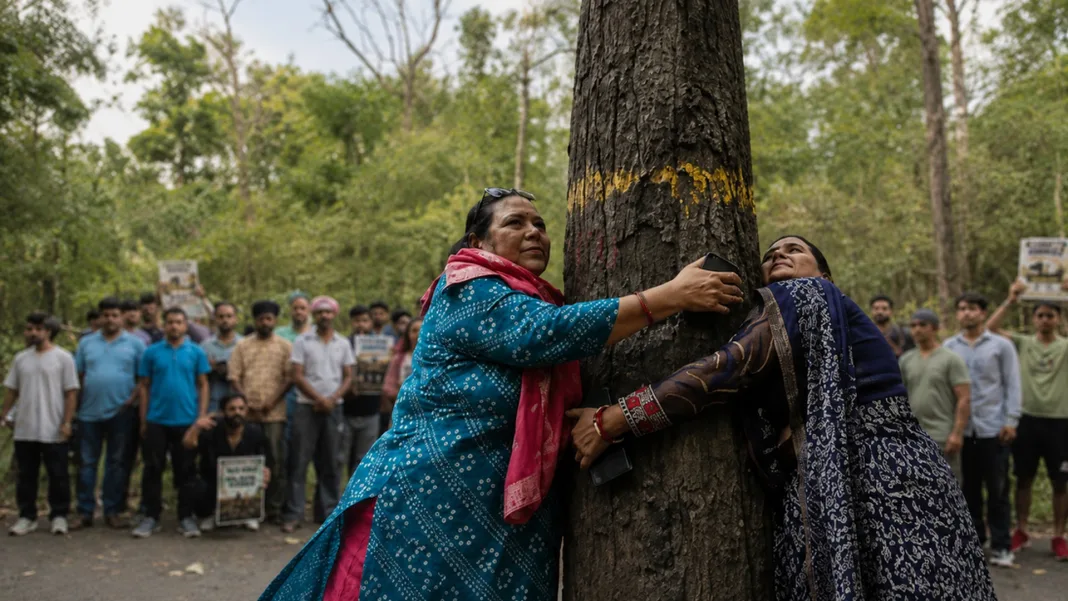
In a remarkable display of citizen action, residents of Dehradun have revived the spirit of the Chipko movement to protest the felling of century-old Sal trees for a highway widening project along National Highway 7. The stretch known as Saat Mod, between Bhaniyawala and Rishikesh, was being expanded from two lanes to four or six to accommodate increasing traffic to Jolly Grant Airport and the Char Dham Yatra route. However, the widening threatened thousands of mature Sal trees, some over a century old, and encroached on a recognised elephant corridor connecting to the Rajaji Tiger Reserve. Rather than watch the trees disappear, residents—including students, retired officials, environmentalists, and everyday citizens—began gathering daily at the site. Their methods were inspired by the iconic Chipko movement of the 1970s, which originated in the same Himalayan foothills. Protesters hugged trees earmarked for felling and tied sacred threads around trunks, a local custom marking a tree as protected. On 16 July, they observed Kala Harela (black Harela), dressing entirely in black to mourn the trees being cut during the festival celebrating greenery. Environmental researcher Anoop Nautiyal provided data showing that Uttarakhand had diverted over 46,000 hectares of forest land for development since 2000, nearly half in Dehradun district alone. While the highway project included conservation measures like a proposed 3.5 km elephant underpass and wildlife crossings, protesters sought assurance that all gentler alternatives had been explored. After days of peaceful presence, tree felling was paused and fresh consultations were opened with residents and experts. The protest proved that ordinary people, using memory and shared purpose, can still shape decisions that seem out of their hands. Article and image source: thebetterindia.com
In a remarkable display of citizen action, residents of Dehradun have revived the spirit of the Chipko movement to protest the felling of century-old Sal trees for a highway widening project along National Highway 7. The stretch known as Saat Mod, between Bhaniyawala and Rishikesh, was being expanded from two lanes to four or six to accommodate increasing traffic to Jolly Grant Airport and the Char Dham Yatra route. However, the widening threatened thousands of mature Sal trees, some over a century old, and encroached on a recognised elephant corridor connecting to the Rajaji Tiger Reserve.
Rather than watch the trees disappear, residents—including students, retired officials, environmentalists, and everyday citizens—began gathering daily at the site. Their methods were inspired by the iconic Chipko movement of the 1970s, which originated in the same Himalayan foothills. Protesters hugged trees earmarked for felling and tied sacred threads around trunks, a local custom marking a tree as protected. On 16 July, they observed Kala Harela (black Harela), dressing entirely in black to mourn the trees being cut during the festival celebrating greenery.
Environmental researcher Anoop Nautiyal provided data showing that Uttarakhand had diverted over 46,000 hectares of forest land for development since 2000, nearly half in Dehradun district alone. While the highway project included conservation measures like a proposed 3.5 km elephant underpass and wildlife crossings, protesters sought assurance that all gentler alternatives had been explored. After days of peaceful presence, tree felling was paused and fresh consultations were opened with residents and experts. The protest proved that ordinary people, using memory and shared purpose, can still shape decisions that seem out of their hands.
News Desk is the editorial publishing account for Tringlobe Media News, covering breaking news, public affairs, entertainment, community developments and regional stories across Trinidad and Tobago, the Caribbean and internationally.