The key points are temporarily unavailable. You can still read the full Story below.
Main Points
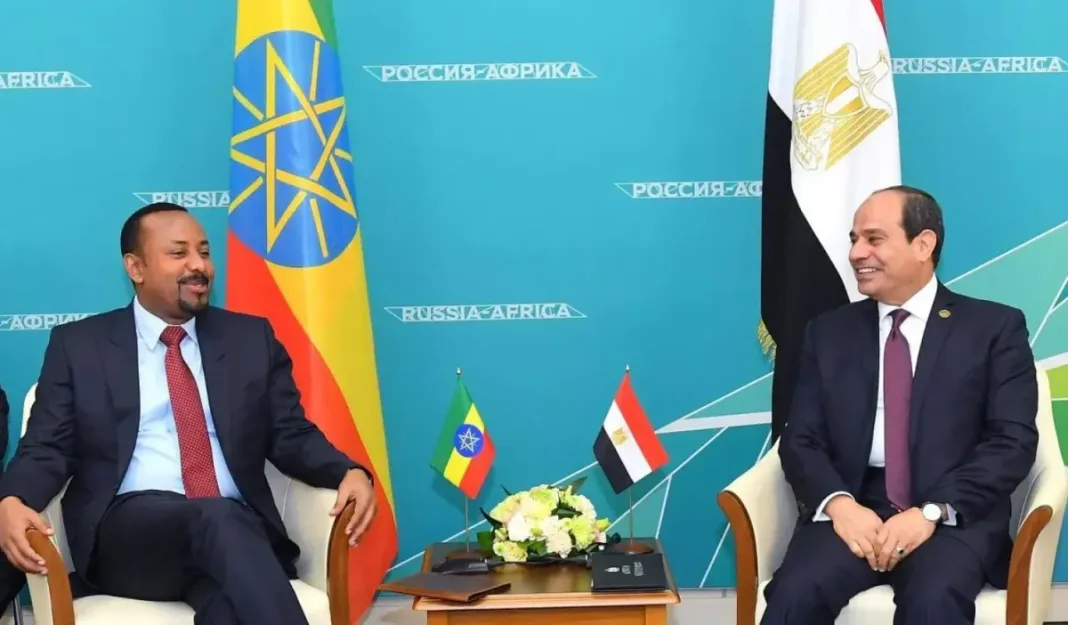
Egypt rejects Ethiopia’s demand for a sea outlet in exchange for Nile‑water talks In a statement to Al Arabiya, an Egyptian official said that Cairo is not engaging in discussions that would link a Nile‑water agreement with Ethiopia to a sea outlet for the country. The official emphasized Egypt’s firm stance that any sea access for a non‑Red‑Sea‑sharing state would be unacceptable and would undermine the sovereignty, unity and security of the countries that share the Red Sea. On Monday, ministers of foreign affairs and water from Egypt and Sudan met in Cairo. Egypt’s Badr Abdel Atey and Hany Souilem, and Sudan’s Mohiuddin Salem and Asmat Qorchi, discussed ways to deepen political, economic, water‑resource, cultural, social and humanitarian cooperation. They stressed that the water security of Sudan and Egypt is “interconnected as one body” and agreed that the Grand Renaissance Dam (GRD) poses “serious consequences” and a “continuous threat” to the Nile‑mouth states. The ministers called on Ethiopia to abandon its unilateral policy and restore cooperation. Ethiopia’s Minister of Water and Energy, Habtamu Etifa, has demanded that Egypt help finance new dams Ethiopia plans to build on Nile tributaries and has urged Cairo to support Addis Ababa’s bid for a sea outlet. In a video interview on Thursday, Etifa said: “Egypt must positively contribute to our development projects and also help build the new dams we are building.” He added that Ethiopia’s priority has shifted from dams to securing a sea outlet through peaceful means, and that Egypt should stop “media campaigns against Ethiopia” that he said would not hinder Ethiopia’s objectives. “If Egypt helps Ethiopia obtain a sea outlet, there will be an opportunity to reach an agreement on the Nile water issue,” he said. Egyptian parliamentarian Mustafa Bakry criticized the minister’s remarks as “extortion and a violation of Egypt Article source: Al Awsat | Image credit: Al Awsat
Egypt rejects Ethiopia’s demand for a sea outlet in exchange for Nile‑water talks In a statement to Al Arabiya, an Egyptian official said that Cairo is not engaging in discussions that would link a Nile‑water agreement with Ethiopia to a sea outlet for the country. The official emphasized Egypt’s firm stance that any sea access for a non‑Red‑Sea‑sharing state would be unacceptable and would undermine the sovereignty, unity and security of the countries that share the Red Sea. On Monday, ministers of foreign affairs and water from Egypt and Sudan met in Cairo. Egypt’s Badr Abdel Atey and Hany Souilem, and Sudan’s Mohiuddin Salem and Asmat Qorchi, discussed ways to deepen political, economic, water‑resource, cultural, social and humanitarian cooperation. They stressed that the water security of Sudan and Egypt is “interconnected as one body” and agreed that the Grand Renaissance Dam (GRD) poses “serious consequences” and a “continuous threat” to the Nile‑mouth states. The ministers called on Ethiopia to abandon its unilateral policy and restore cooperation. Ethiopia’s Minister of Water and Energy, Habtamu Etifa, has demanded that Egypt help finance new dams Ethiopia plans to build on Nile tributaries and has urged Cairo to support Addis Ababa’s bid for a sea outlet. In a video interview on Thursday, Etifa said: “Egypt must positively contribute to our development projects and also help build the new dams we are building.” He added that Ethiopia’s priority has shifted from dams to securing a sea outlet through peaceful means, and that Egypt should stop “media campaigns against Ethiopia” that he said would not hinder Ethiopia’s objectives. “If Egypt helps Ethiopia obtain a sea outlet, there will be an opportunity to reach an agreement on the Nile water issue,” he said. Egyptian parliamentarian Mustafa Bakry criticized the minister’s remarks as “extortion and a violation of Egypt
News Desk is the editorial publishing account for Tringlobe Media News, covering breaking news, public affairs, entertainment, community developments and regional stories across Trinidad and Tobago, the Caribbean and internationally.