The key points are temporarily unavailable. You can still read the full Story below.
Main Points
Kathmandu, 21 Kattik 2023 – The Ministry of Health and Population has approved a new set of guidelines titled “Standard for the Management of High‑Altitude Illness in the High‑Mountain and Himalayan Regions, 2083 B.S.” The standards aim to strengthen prevention, early detection, treatment and emergency evacuation of high‑altitude sickness (HAPS) for tourists, trekkers, mountaineers and local residents who travel to elevations above 2,500 m. Dr. Samir Kumar Adhikari, spokesperson for the ministry, explained that the guidelines will enhance the treatment capacity of health facilities in high‑altitude areas, ensure the availability of essential medicines and equipment, and establish a systematic emergency rescue and transfer system. He noted that at elevations of 2,500 m and above, atmospheric pressure drops and oxygen availability decreases, making HAPS a common risk. If not identified and treated promptly, the condition can progress to pulmonary edema or cerebral edema. Key provisions of the standard include: Gradual ascent and acclimatization – Travelers are advised to increase altitude progressively, allow sufficient time for acclimatization, and consume adequate fluids. Immediate descent – If HAPS symptoms appear, ascent should be halted and the patient should be moved to a lower altitude as soon as possible. Oxygen therapy – Depending on the severity, treatment may involve supplemental oxygen or a portable oxygen pressure bag. Emergency transfer – Severely ill patients must be transported promptly to an appropriate health institution. Equipment requirements – Health facilities in high‑mountain zones must be equipped with oxygen cylinders, oxygen concentrators, pulse oximeters, and hyperbaric chambers where feasible. Medicines and emergency supplies – The standard specifies the essential drugs and emergency materials needed for HAPS treatment. The guidelines also delineate responsibilities across government levels: Federal government – Policy formulation, standard setting, workforce and budget management, and monitoring. Provincial governments – Capacity building for health workers, technical support, and service management. Local governments – Expanding access to health services, ensuring availability of medicines and equipment, and maintaining a reliable patient transfer system. The new standard is intended to provide a coordinated framework for safeguarding the health of those who venture into Nepal’s high‑altitude regions. Article source: Gorkhapatra National Daily | Image credit: Gorkhapatra National Daily
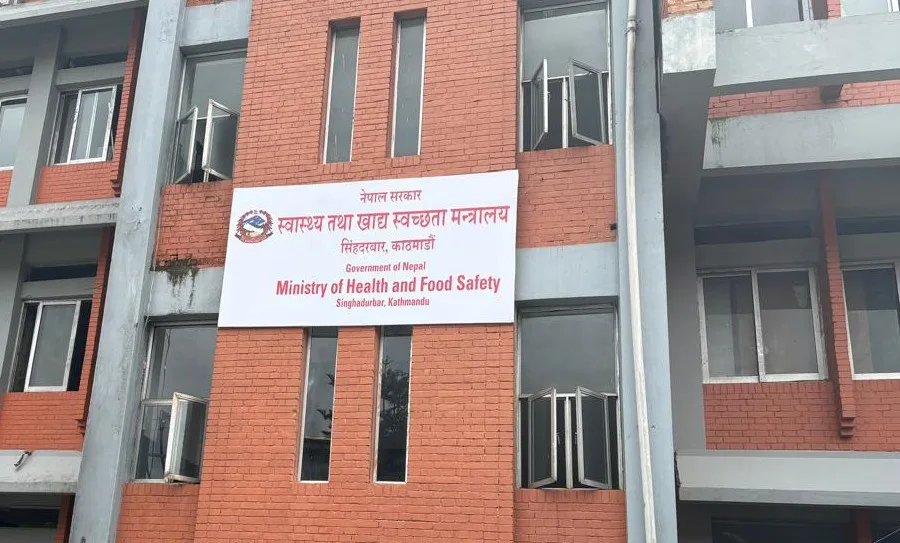
Kathmandu, 21 Kattik 2023 – The Ministry of Health and Population has approved a new set of guidelines titled “Standard for the Management of High‑Altitude Illness in the High‑Mountain and Himalayan Regions, 2083 B.S.” The standards aim to strengthen prevention, early detection, treatment and emergency evacuation of high‑altitude sickness (HAPS) for tourists, trekkers, mountaineers and local residents who travel to elevations above 2,500 m. Dr. Samir Kumar Adhikari, spokesperson for the ministry, explained that the guidelines will enhance the treatment capacity of health facilities in high‑altitude areas, ensure the availability of essential medicines and equipment, and establish a systematic emergency rescue and transfer system. He noted that at elevations of 2,500 m and above, atmospheric pressure drops and oxygen availability decreases, making HAPS a common risk. If not identified and treated promptly, the condition can progress to pulmonary edema or cerebral edema. Key provisions of the standard include: Gradual ascent and acclimatization – Travelers are advised to increase altitude progressively, allow sufficient time for acclimatization, and consume adequate fluids. Immediate descent – If HAPS symptoms appear, ascent should be halted and the patient should be moved to a lower altitude as soon as possible. Oxygen therapy – Depending on the severity, treatment may involve supplemental oxygen or a portable oxygen pressure bag. Emergency transfer – Severely ill patients must be transported promptly to an appropriate health institution. Equipment requirements – Health facilities in high‑mountain zones must be equipped with oxygen cylinders, oxygen concentrators, pulse oximeters, and hyperbaric chambers where feasible. Medicines and emergency supplies – The standard specifies the essential drugs and emergency materials needed for HAPS treatment. The guidelines also delineate responsibilities across government levels: Federal government – Policy formulation, standard setting, workforce and budget management, and monitoring. Provincial governments – Capacity building for health workers, technical support, and service management. Local governments – Expanding access to health services, ensuring availability of medicines and equipment, and maintaining a reliable patient transfer system. The new standard is intended to provide a coordinated framework for safeguarding the health of those who venture into Nepal’s high‑altitude regions.
News Desk is the editorial publishing account for Tringlobe Media News, covering breaking news, public affairs, entertainment, community developments and regional stories across Trinidad and Tobago, the Caribbean and internationally.