The key points are temporarily unavailable. You can still read the full Story below.
Main Points
Typhoon Champi caused extensive damage in Taiwan as it moved across the waters off the island’s northeastern coast from 22 to 24 October. The storm produced heavy rainfall, strong winds, sudden flooding and widespread tree damage. At least one person was reported dead, 616 were injured, and more than 340,000 households experienced power outages. According to the Taiwan Emergency Operations Center, by 5:00 p.m. on 24 October the agency had received 9,027 reports of damage. Of these, 3,287 involved fallen trees, and additional reports detailed damage to the power grid, billboards and other infrastructure. The government evacuated at least 4,960 residents from high‑risk areas, particularly zones prone to landslides from accumulated rainfall. The northeastern region of Taiwan received the highest rainfall totals, with up to 650 mm recorded between 22 and 24 October. The single fatality was a man swept out to sea by a wave near Xiaoliuqiu Island in Pingtung County, southern Taiwan. The severe weather also caused numerous flight cancellations and prompted school and workplace closures in several areas for safety reasons. Although Champi’s eye did not make landfall, the typhoon had previously reached super‑typhoon strength before weakening. Its strong winds and heavy rains affected coastal and mountainous regions, increasing the risk of landslides and flash floods. The Taiwan Meteorological Administration lifted the land‑based typhoon warning at 2:30 p.m. and the sea‑based warning at 8:30 p.m. on 24 October, after the system weakened to a tropical storm and moved southward toward Japan. Officials continue to warn residents in mountainous and sloped areas to remain alert for landslides due to the accumulated rainfall. Agencies are working to restore power, transportation and other critical infrastructure damaged by the storm. The event highlights the vulnerability of Taiwan to tropical cyclones, even when the storm’s center does not directly strike the island. Article source: Manager Online | Image credit: Manager Online
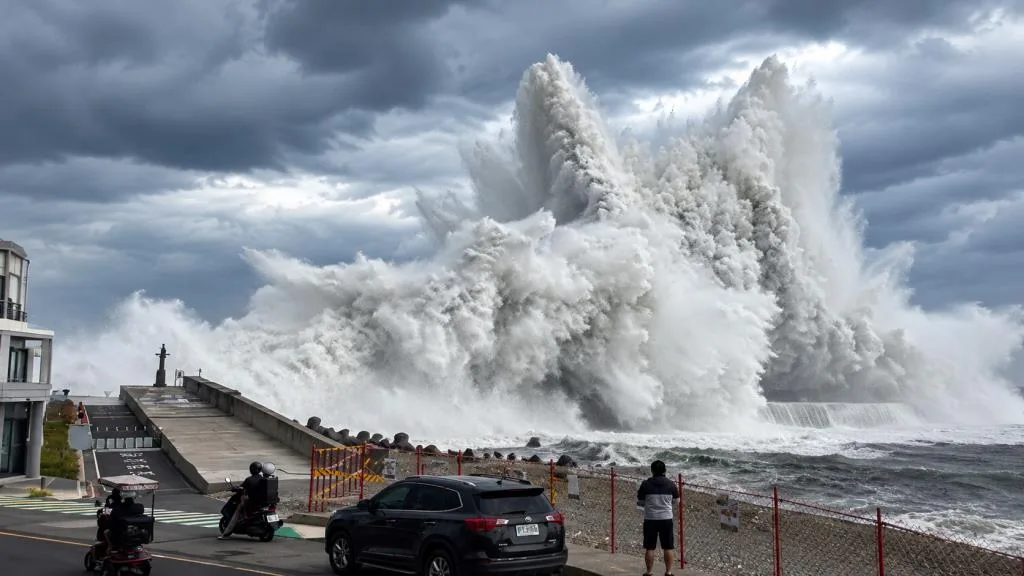
Typhoon Champi caused extensive damage in Taiwan as it moved across the waters off the island’s northeastern coast from 22 to 24 October. The storm produced heavy rainfall, strong winds, sudden flooding and widespread tree damage. At least one person was reported dead, 616 were injured, and more than 340,000 households experienced power outages. According to the Taiwan Emergency Operations Center, by 5:00 p.m. on 24 October the agency had received 9,027 reports of damage. Of these, 3,287 involved fallen trees, and additional reports detailed damage to the power grid, billboards and other infrastructure. The government evacuated at least 4,960 residents from high‑risk areas, particularly zones prone to landslides from accumulated rainfall. The northeastern region of Taiwan received the highest rainfall totals, with up to 650 mm recorded between 22 and 24 October. The single fatality was a man swept out to sea by a wave near Xiaoliuqiu Island in Pingtung County, southern Taiwan. The severe weather also caused numerous flight cancellations and prompted school and workplace closures in several areas for safety reasons. Although Champi’s eye did not make landfall, the typhoon had previously reached super‑typhoon strength before weakening. Its strong winds and heavy rains affected coastal and mountainous regions, increasing the risk of landslides and flash floods. The Taiwan Meteorological Administration lifted the land‑based typhoon warning at 2:30 p.m. and the sea‑based warning at 8:30 p.m. on 24 October, after the system weakened to a tropical storm and moved southward toward Japan. Officials continue to warn residents in mountainous and sloped areas to remain alert for landslides due to the accumulated rainfall. Agencies are working to restore power, transportation and other critical infrastructure damaged by the storm. The event highlights the vulnerability of Taiwan to tropical cyclones, even when the storm’s center does not directly strike the island.
News Desk is the editorial publishing account for Tringlobe Media News, covering breaking news, public affairs, entertainment, community developments and regional stories across Trinidad and Tobago, the Caribbean and internationally.