The key points are temporarily unavailable. You can still read the full Story below.
Main Points
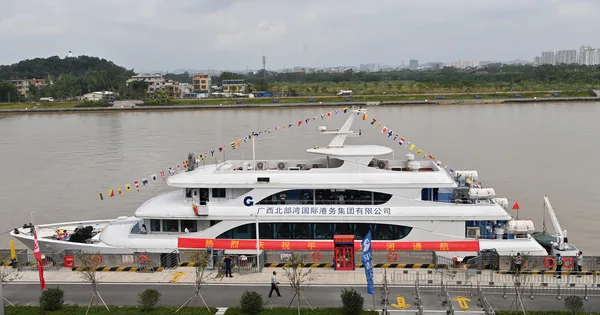
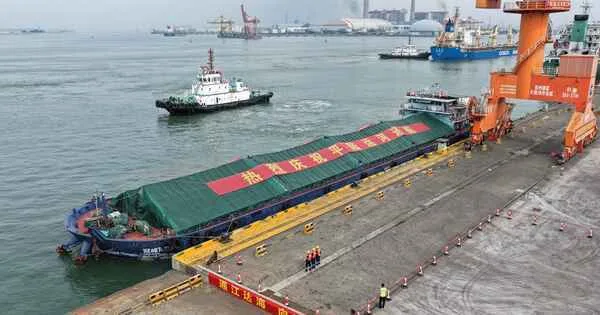
The Pinglu Canal in China’s Guangxi Zhuang Autonomous Region is being positioned as a significant economic artery intended to enhance connectivity between inland China and the Association of Southeast Asian Nations (ASEAN). Wilson Lee Flores, a columnist for The Philippine Star, described the project as a bridge for trade, tourism, and technological cooperation following a visit to the site in early September.
The 134.2-kilometer canal, which connects Hengzhou to the Beibu Gulf, was constructed at a cost of 72.7 billion yuan, approximately 10.75 billion U.S. dollars. Designed to accommodate vessels of up to 5,000 tonnes, the waterway is intended to shorten the transit distance for goods traveling from southwest China to the sea by more than 560 kilometers compared to traditional routes through Guangdong Province.
Flores stated that the canal could facilitate easier access for ASEAN companies to China’s inland markets while allowing Chinese enterprises to increase engagement with Southeast Asian economies. He noted that the project aligns with China’s 15th Five-Year Plan, which emphasizes regional development and high-standard economic opening.
According to Flores, the canal represents a physical link that may support broader economic integration between China and ASEAN, which have been each other’s largest trading partners since 2019 and 2009, respectively. He suggested that the infrastructure could provide opportunities for various sectors, including labor, agriculture, and scientific research, provided it is managed with sustainable policies.
Article source: www.shanghaisun.com | Image credit: www.shanghaisun.com