The key points are temporarily unavailable. You can still read the full Story below.
Main Points
India’s Rain-Soaked Forests Reveal Rare and Unusual Mushrooms
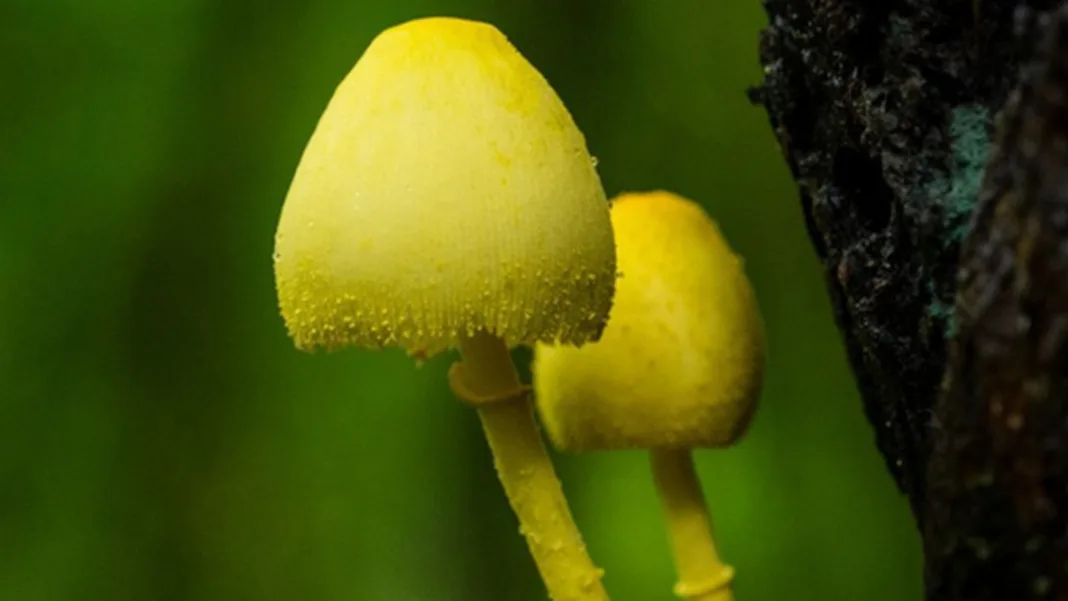
The monsoon season in India brings with it a variety of rare and unusual mushrooms that play a crucial role in the country’s forest ecosystems. These fungi, which emerge with the rains, help to recycle nutrients, feed forests, and showcase the extraordinary biodiversity of India.
One such fungus is the Fluted Bird’s Nest fungi, which grows on decaying wood after heavy rains. Resembling tiny bird nests filled with eggs, this fungus releases spore-filled packets into the surrounding forest when raindrops splash against it.
In Kerala’s Western Ghats, a rare cage-shaped fungus has been found to emerge from forest litter. This fungus has an unusual lattice structure that attracts insects, which help to carry its spores to new locations.
Other rare mushrooms found in India’s rain-soaked forests include a bright orange mushroom that carpets damp leaf litter, a fungus that grows on decaying branches in Karnataka’s moist forests, and a yellow, spoon-shaped jelly fungus that thrives on rotting logs during Goa’s rains.
A delicate mushroom discovered on bamboo in Meghalaya is known for its faint natural glow, highlighting the rich fungal diversity in rain-soaked forests. The blue pinkgill, found in Telangana during the monsoon, is one of India’s rarest mushrooms, with a striking bluish cap.
Species of Collybia have also been found on decaying leaves and woody debris across Bengaluru’s green spaces after rainfall. While they may appear modest, these fungi play an important role in decomposing forest litter.
These short-lived mushrooms may go unnoticed, but they play a vital role in keeping forest ecosystems functioning. By recycling dead wood, enriching soil, and supporting insects, fungi like these help to power India’s forests from the ground up. Every monsoon, these unusual fungi emerge, showcasing the country’s extraordinary biodiversity and highlighting the importance of preserving its natural ecosystems.
Article and image source: thebetterindia.com