The key points are temporarily unavailable. You can still read the full Story below.
Main Points
The United Kingdom’s first documented connection to what would become the modern internet traces back to the late 1960s and early 1970s, when British researchers played a crucial role in developing the foundational technologies that underpinned global networking. While the ARPANET—the precursor to the internet—was primarily a US-led project, British contributions were instrumental in its international expansion. In 1969, the Advanced Research Projects Agency (ARPA) in the US initiated the ARPANET, the world’s first packet-switched network. The technology was inspired by earlier work at the UK’s National Physical Laboratory (NPL), where computer scientist Donald Davies proposed packet switching in 1967. Davies’ ideas directly influenced the ARPANET’s design, which relied on breaking data into small packets for efficient transmission across networks. The UK’s first direct link to the ARPANET was established in 1973, when University College London (UCL) became one of the first European institutions to connect to the emerging network. This connection was facilitated by the International Network Working Group, which included British researchers collaborating with their US counterparts. By the late 1970s, UCL had developed its own packet-switching network, UKNET, which later merged with other European networks to form the European Internet. The early users of these networks were primarily academics, researchers, and government institutions. For example, CERN in Switzerland—where Tim Berners-Lee later invented the World Wide Web—used these connections to share data across Europe. The UK’s involvement ensured that British scientists and engineers could participate in the global development of internet protocols, including the Transmission Control Protocol (TCP) and Internet Protocol (IP), which were formalised in 1974. This early connection laid the groundwork for the UK’s later adoption of the internet in the 1980s and 1990s. By the time the World Wide Web was launched in 1989, the UK was already a key player in the digital revolution, with institutions like UCL and CERN leading the charge in both research and infrastructure.
The United Kingdom’s first documented connection to what would become the modern internet traces back to the late 1960s and early 1970s, when British researchers played a crucial role in developing the foundational technologies that underpinned global networking. While the ARPANET—the precursor to the internet—was primarily a US-led project, British contributions were instrumental in its international expansion.
In 1969, the Advanced Research Projects Agency (ARPA) in the US initiated the ARPANET, the world’s first packet-switched network. The technology was inspired by earlier work at the UK’s National Physical Laboratory (NPL), where computer scientist Donald Davies proposed packet switching in 1967. Davies’ ideas directly influenced the ARPANET’s design, which relied on breaking data into small packets for efficient transmission across networks.
The UK’s first direct link to the ARPANET was established in 1973, when University College London (UCL) became one of the first European institutions to connect to the emerging network. This connection was facilitated by the International Network Working Group, which included British researchers collaborating with their US counterparts. By the late 1970s, UCL had developed its own packet-switching network, UKNET, which later merged with other European networks to form the European Internet.
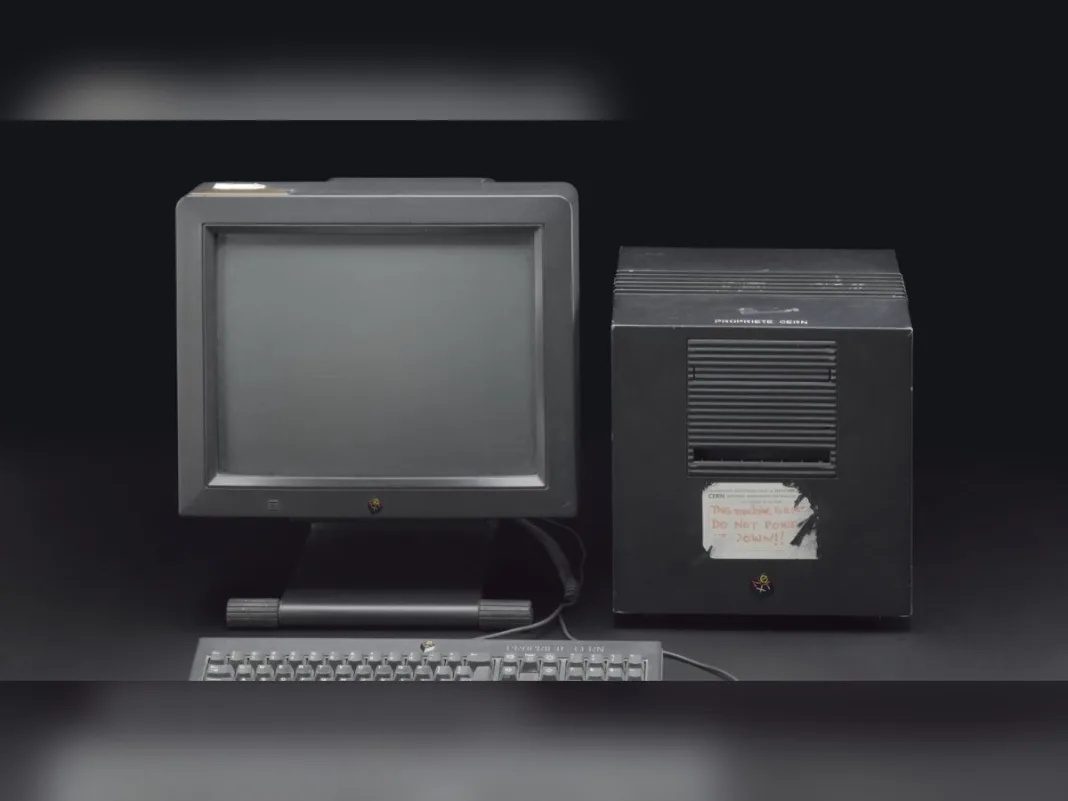
The early users of these networks were primarily academics, researchers, and government institutions. For example, CERN in Switzerland—where Tim Berners-Lee later invented the World Wide Web—used these connections to share data across Europe. The UK’s involvement ensured that British scientists and engineers could participate in the global development of internet protocols, including the Transmission Control Protocol (TCP) and Internet Protocol (IP), which were formalised in 1974.
This early connection laid the groundwork for the UK’s later adoption of the internet in the 1980s and 1990s. By the time the World Wide Web was launched in 1989, the UK was already a key player in the digital revolution, with institutions like UCL and CERN leading the charge in both research and infrastructure.
News Desk is the editorial publishing account for Tringlobe Media News, covering breaking news, public affairs, entertainment, community developments and regional stories across Trinidad and Tobago, the Caribbean and internationally.