The key points are temporarily unavailable. You can still read the full Story below.
Main Points
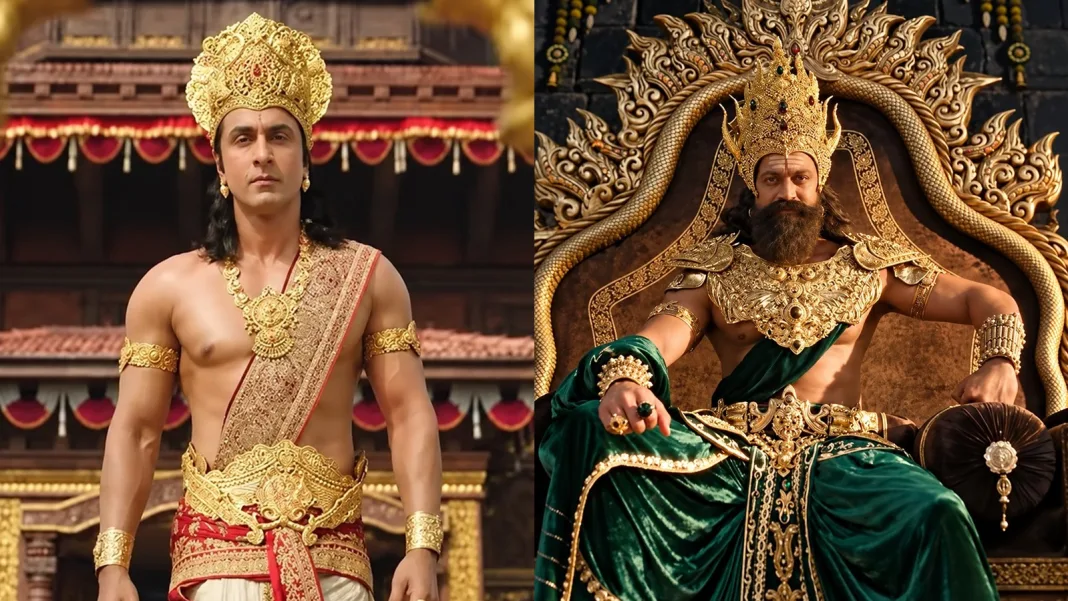
On the eve of Diwali, the Hindi film industry has released a new adaptation of the Ramayana, directed by Nitesh Tiwari. The film, titled Ramayana: Rise of a Legend, stars Ranbir Kapoor as Ram, Yash as Ravana, Sai Pallavi as Sita, and Arun Govil as King Dashrath. This release follows the 2021 film Adipurush, which faced significant criticism for its use of colloquial language and its portrayal of the character of Ravana. The new production distinguishes itself from recent Bollywood trends that have been accused of incorporating partisan political narratives or divisive tropes into historical and mythological storytelling. Observers have noted that while recent films such as Padmaavat, Tanhaji, Panipat, and Chhava have been criticized for utilizing stereotypes or promoting specific nationalist agendas, Ramayana: Rise of a Legend focuses on a character-driven interpretation of the epic. The film introduces several narrative departures from traditional versions. It depicts the Asuras as an marginalized class, framing Ravana’s motivations through a lens of social grievance and personal pride. The character of Surpanakha is humanized as a spurned woman, and the film explores the internal conflict of Ravana through a dramatic sequence where his ten heads offer conflicting counsel. The protagonist, Ram, is portrayed as a compassionate and brooding warrior who remains detached from conflict until forced into it by circumstance. The film’s first installment concludes with the abduction of Sita and Ram’s vow to rescue her. By avoiding contemporary political dog whistles, the production seeks to present a nuanced take on the epic, portraying the antagonist with a complexity often compared to the character of Karna from the Mahabharata. This release invites comparisons to the 1980s television serial Ramayana, which aired on Doordarshan. While that series was broadcast during a period of significant political tension regarding the Ram Janmabhoomi movement, it was widely regarded as a faithful adaptation that avoided overt political messaging. Analysts suggest that both the 1980s serial and the current film attempt to capture the essence of the epic while distancing themselves from the polarized cinematic trends that have characterized much of the Hindi film industry’s output in recent years. Article source: Indian Express | Image credit: Indian Express
On the eve of Diwali, the Hindi film industry has released a new adaptation of the Ramayana, directed by Nitesh Tiwari. The film, titled Ramayana: Rise of a Legend, stars Ranbir Kapoor as Ram, Yash as Ravana, Sai Pallavi as Sita, and Arun Govil as King Dashrath. This release follows the 2021 film Adipurush, which faced significant criticism for its use of colloquial language and its portrayal of the character of Ravana. The new production distinguishes itself from recent Bollywood trends that have been accused of incorporating partisan political narratives or divisive tropes into historical and mythological storytelling. Observers have noted that while recent films such as Padmaavat, Tanhaji, Panipat, and Chhava have been criticized for utilizing stereotypes or promoting specific nationalist agendas, Ramayana: Rise of a Legend focuses on a character-driven interpretation of the epic. The film introduces several narrative departures from traditional versions. It depicts the Asuras as an marginalized class, framing Ravana’s motivations through a lens of social grievance and personal pride. The character of Surpanakha is humanized as a spurned woman, and the film explores the internal conflict of Ravana through a dramatic sequence where his ten heads offer conflicting counsel. The protagonist, Ram, is portrayed as a compassionate and brooding warrior who remains detached from conflict until forced into it by circumstance. The film’s first installment concludes with the abduction of Sita and Ram’s vow to rescue her. By avoiding contemporary political dog whistles, the production seeks to present a nuanced take on the epic, portraying the antagonist with a complexity often compared to the character of Karna from the Mahabharata. This release invites comparisons to the 1980s television serial Ramayana, which aired on Doordarshan. While that series was broadcast during a period of significant political tension regarding the Ram Janmabhoomi movement, it was widely regarded as a faithful adaptation that avoided overt political messaging. Analysts suggest that both the 1980s serial and the current film attempt to capture the essence of the epic while distancing themselves from the polarized cinematic trends that have characterized much of the Hindi film industry’s output in recent years.
News Desk is the editorial publishing account for Tringlobe Media News, covering breaking news, public affairs, entertainment, community developments and regional stories across Trinidad and Tobago, the Caribbean and internationally.