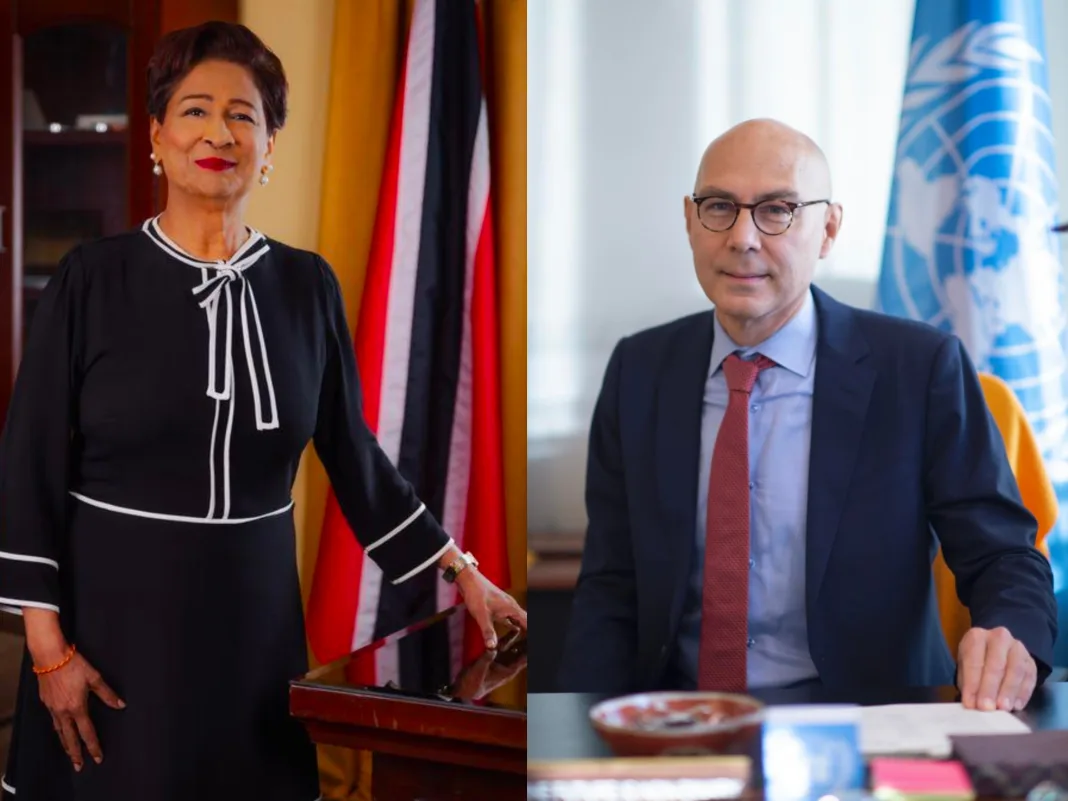
Trinidad and Tobago has made a notable shift in its diplomatic stance by voting against the reappointment of Volker Türk as the United Nations High Commissioner for Human Rights. The vote, which took place during a United Nations General Assembly session on July 24, 2026, saw 144 member states supporting Türk, while 10 countries, including Trinidad and Tobago, opposed his reappointment.
Volker Türk has been a prominent advocate for human rights, particularly in relation to the ongoing conflict in Gaza. He has called for a ceasefire, protection of civilians, and accountability under international law. His office has documented alleged violations of international humanitarian and human rights law, drawing attention from various global actors.
Historically, Trinidad and Tobago aligned with the majority of CARICOM and Non-Aligned Movement member states on Israel-Palestine issues, supporting a two-state solution. The country’s recent vote signifies a departure from this trend, coinciding with a series of diplomatic engagements with Israel. In recent months, the government has designated Iran’s Islamic Revolutionary Guard Corps, Hezbollah, and Hamas as terrorist organizations, a move welcomed by Israeli officials.
The relationship between Trinidad and Tobago and Israel appears to be strengthening. Israeli Foreign Minister Gideon Sa’ar expressed interest in expanding bilateral cooperation, inviting Trinidad and Tobago’s Foreign Minister Sean Sobers to visit Israel. Earlier in the year, Israeli Ambassador Mattanya Aharon Cohen presented his credentials, and discussions on collaboration in sectors such as agriculture and technology have been ongoing.
This vote marks a significant change in Trinidad and Tobago’s historical voting pattern at the United Nations, sparking discussions both locally and internationally. It reflects a broader shift in the country’s foreign policy and diplomatic alignments, potentially impacting its relationships within the region and beyond.