The key points are temporarily unavailable. You can still read the full Story below.
Main Points
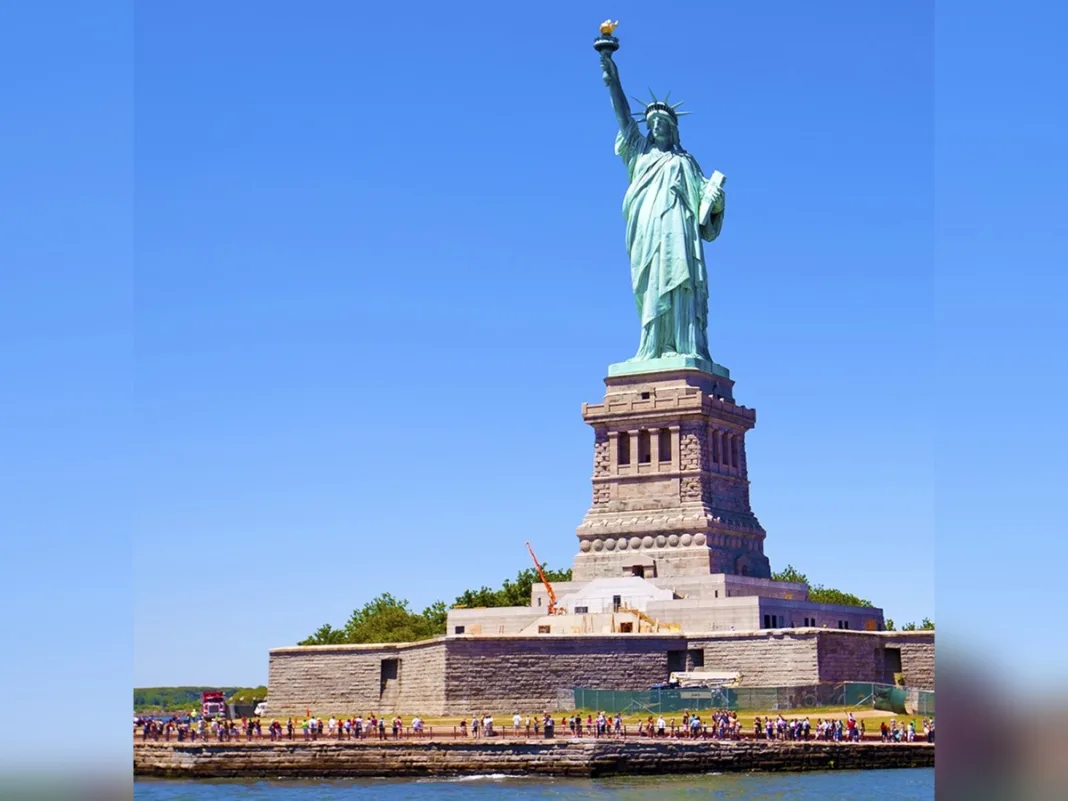
The Statue of Liberty is now one of the United States' most recognisable landmarks, but its origins lie in a specific political and diplomatic idea: a gift from France commemorating American independence and celebrating the relationship between the two countries. Its history also connects the monument to the abolition of slavery, public fundraising and a meaning that developed well after its dedication. According to the Statue of Liberty and Ellis Island Foundation, French political thinker Édouard de Laboulaye proposed the monumental gift in 1865. He wanted to commemorate the centennial of the Declaration of Independence and celebrate Franco-American ties. The recent abolition of slavery in the United States also informed his interest in the country's stated ideals of liberty and freedom. Sculptor Frédéric-Auguste Bartholdi developed the design, which became known as Liberty Enlightening the World. The project divided responsibility between the two countries. France would create the statue, while Americans would finance and construct its pedestal. Raising that money proved difficult, particularly on the American side. Organisers used benefit performances, exhibitions, auctions and other public fundraising events. Poet Emma Lazarus wrote her sonnet, later associated with the monument's welcome to immigrants, for an art and literary auction in 1883. A major fundraising drive followed in 1885, when publisher Joseph Pulitzer appealed to readers of his newspaper, the New York World, to contribute toward the pedestal. The foundation's historical account says 120,000 people donated more than $100,000, providing the remaining funds needed for its completion. The campaign demonstrated how individual contributions, rather than a single government appropriation, helped bring the monument to New York Harbor. The statue also required an engineering solution to a problem of scale. Bartholdi enlisted Alexandre Gustave Eiffel to design the iron pylon and supporting framework that would hold the copper exterior upright while allowing the skin to move independently. The completed sculpture was dismantled into 350 pieces and packed into 214 crates for its journey across the Atlantic aboard the French frigate Isère. The ship arrived in New York Harbor on June 17, 1885, according to the foundation. The pedestal was completed in April 1886. President Grover Cleveland presided over the statue's dedication on October 28 that year, before thousands of spectators. The monument's location also carried an older history: Bedloe's Island had served as a source of food for the Lenape and later Dutch settlers before the U.S. Army designated it a military post in 1807. Fort Wood, constructed there to protect New York Harbor, became the base for the statue's pedestal. Lady Liberty's association with immigration grew over time rather than being the only meaning attached to the original project. In 1903, a plaque bearing Lazarus's poem, “The New Colossus,” was installed on the pedestal. Its presence helped strengthen the statue's association with immigrants arriving by sea. That later significance sits alongside the original themes of independence, emancipation and friendship between France and the United States. The statue's history therefore offers more than a familiar image of a torch held above the harbor. Its construction depended on international cooperation, technical innovation and a large public fundraising effort. Its symbolism evolved as later generations connected it to new experiences and ideals, making the monument both a record of its nineteenth-century origins and a continuing focus for debates about American liberty and belonging.
The Statue of Liberty is now one of the United States’ most recognisable landmarks, but its origins lie in a specific political and diplomatic idea: a gift from France commemorating American independence and celebrating the relationship between the two countries. Its history also connects the monument to the abolition of slavery, public fundraising and a meaning that developed well after its dedication.
According to the Statue of Liberty and Ellis Island Foundation, French political thinker Édouard de Laboulaye proposed the monumental gift in 1865. He wanted to commemorate the centennial of the Declaration of Independence and celebrate Franco-American ties. The recent abolition of slavery in the United States also informed his interest in the country’s stated ideals of liberty and freedom. Sculptor Frédéric-Auguste Bartholdi developed the design, which became known as Liberty Enlightening the World.
The project divided responsibility between the two countries. France would create the statue, while Americans would finance and construct its pedestal. Raising that money proved difficult, particularly on the American side. Organisers used benefit performances, exhibitions, auctions and other public fundraising events. Poet Emma Lazarus wrote her sonnet, later associated with the monument’s welcome to immigrants, for an art and literary auction in 1883.
A major fundraising drive followed in 1885, when publisher Joseph Pulitzer appealed to readers of his newspaper, the New York World, to contribute toward the pedestal. The foundation’s historical account says 120,000 people donated more than $100,000, providing the remaining funds needed for its completion. The campaign demonstrated how individual contributions, rather than a single government appropriation, helped bring the monument to New York Harbor.
The statue also required an engineering solution to a problem of scale. Bartholdi enlisted Alexandre Gustave Eiffel to design the iron pylon and supporting framework that would hold the copper exterior upright while allowing the skin to move independently. The completed sculpture was dismantled into 350 pieces and packed into 214 crates for its journey across the Atlantic aboard the French frigate Isère. The ship arrived in New York Harbor on June 17, 1885, according to the foundation.
The pedestal was completed in April 1886. President Grover Cleveland presided over the statue’s dedication on October 28 that year, before thousands of spectators. The monument’s location also carried an older history: Bedloe’s Island had served as a source of food for the Lenape and later Dutch settlers before the U.S. Army designated it a military post in 1807. Fort Wood, constructed there to protect New York Harbor, became the base for the statue’s pedestal.
Lady Liberty’s association with immigration grew over time rather than being the only meaning attached to the original project. In 1903, a plaque bearing Lazarus’s poem, “The New Colossus,” was installed on the pedestal. Its presence helped strengthen the statue’s association with immigrants arriving by sea. That later significance sits alongside the original themes of independence, emancipation and friendship between France and the United States.
The statue’s history therefore offers more than a familiar image of a torch held above the harbor. Its construction depended on international cooperation, technical innovation and a large public fundraising effort. Its symbolism evolved as later generations connected it to new experiences and ideals, making the monument both a record of its nineteenth-century origins and a continuing focus for debates about American liberty and belonging.
News Desk is the editorial publishing account for Tringlobe Media News, covering breaking news, public affairs, entertainment, community developments and regional stories across Trinidad and Tobago, the Caribbean and internationally.