The key points are temporarily unavailable. You can still read the full Story below.
Main Points
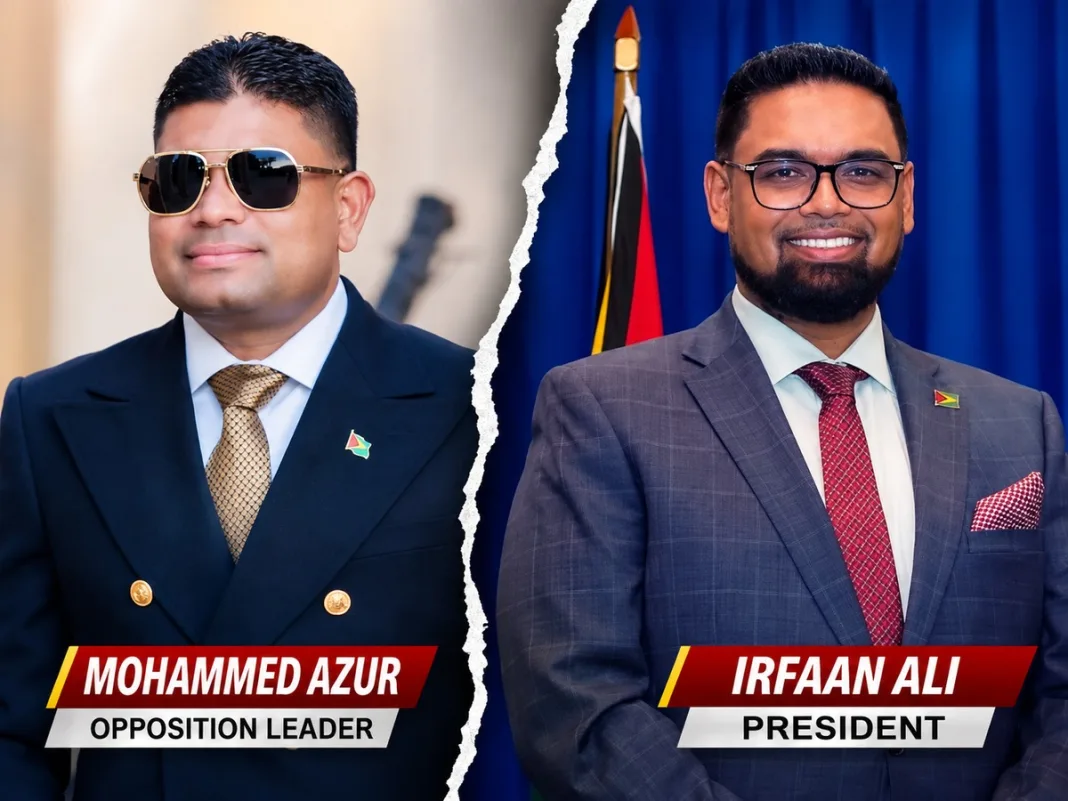
President Ali, the Opposition Leader and the troubling questions about state power in Guyana. At least six reported arrests. Seven encounters with police custody. Eight or more documented court dates. 81 hours detained in October. Nine days in custody since October 28. Still behind bars! What exactly is happening in President Irfaan Ali’s Guyana? Opposition Leader Azruddin Mohamed claims he once bankrolled Ali’s governing PPP/C, reportedly producing a G$20 million cheque as evidence. Today, Mohamed leads one of Guyana’s youngest political parties, We Invest in Nationhood (WIN), which captured 16 of 65 parliamentary seats in September 2025. Once a claimed political financier. Now a political enemy! But the controversy has taken an extraordinary turn. On October 12, 2026, Mohamed was involved in an armed confrontation with Senior Superintendent Prem Narine, Head of Guyana’s Special Branch, who is also a witness in Mohamed’s extradition proceedings. Mohamed alleges that five to seven shots were fired at his vehicle, three striking it, describing the incident as an attempted assassination. Police offer a different account. Narine reportedly said he fired after hearing what he believed was a gunshot. Mohamed subsequently released surveillance footage, claiming it contradicted the police account of the shooting. And here is where the story becomes politically explosive! Instead of public attention remaining on the circumstances in which the country’s intelligence chief fired at a vehicle carrying the Opposition Leader, Mohamed was arrested again. This time, the charge concerned how he allegedly obtained and disclosed the surveillance footage! Police allege he paid an officer G$800,000 for the recordings. Mohamed denies wrongdoing and maintains that the footage came from police sources. He remains imprisoned on remand in that case, despite holding bail in separate proceedings. So we must ask: Why is the possession of the alleged evidence producing another arrest while the circumstances of the shooting remain contested? Has the shooting been subjected to the same intensity of investigation as the alleged disclosure of the footage? And what responsibility does President Ali carry for ensuring that these investigations are independent, transparent and free from political influence? Ali maintains: “This is not about politics; this is about the law taking its course.” Indeed, the American sanctions against Mohamed predate his political candidacy. That fact must be acknowledged. But Ali is the President. Mohamed is the Opposition Leader. The greater responsibility for safeguarding public confidence in state institutions rests with those exercising executive power. If Mohamed was once an acceptable financial supporter of the PPP/C, what changed when he became its political opponent? Is this the impartial exercise of the law, or is Guyana witnessing a dangerous convergence of political power, policing and prosecution? The law must investigate Mohamed. Equally, it must investigate the shooting and the conduct of the officers involved. Because democracy is not tested by how a President treats his friends, but by how the institutions under his administration treat his political enemies.
President Ali, the Opposition Leader and the troubling questions about state power in Guyana.
At least six reported arrests. Seven encounters with police custody. Eight or more documented court dates. 81 hours detained in October. Nine days in custody since October 28. Still behind bars!
What exactly is happening in President Irfaan Ali’s Guyana?
Opposition Leader Azruddin Mohamed claims he once bankrolled Ali’s governing PPP/C, reportedly producing a G$20 million cheque as evidence.
Today, Mohamed leads one of Guyana’s youngest political parties, We Invest in Nationhood (WIN), which captured 16 of 65 parliamentary seats in September 2025.
Once a claimed political financier. Now a political enemy!
But the controversy has taken an extraordinary turn.
On October 12, 2026, Mohamed was involved in an armed confrontation with Senior Superintendent Prem Narine, Head of Guyana’s Special Branch, who is also a witness in Mohamed’s extradition proceedings.
Mohamed alleges that five to seven shots were fired at his vehicle, three striking it, describing the incident as an attempted assassination.
Police offer a different account. Narine reportedly said he fired after hearing what he believed was a gunshot.
Mohamed subsequently released surveillance footage, claiming it contradicted the police account of the shooting.
And here is where the story becomes politically explosive!
Instead of public attention remaining on the circumstances in which the country’s intelligence chief fired at a vehicle carrying the Opposition Leader, Mohamed was arrested again.
This time, the charge concerned how he allegedly obtained and disclosed the surveillance footage!
Police allege he paid an officer G$800,000 for the recordings. Mohamed denies wrongdoing and maintains that the footage came from police sources.
He remains imprisoned on remand in that case, despite holding bail in separate proceedings.
So we must ask:
Why is the possession of the alleged evidence producing another arrest while the circumstances of the shooting remain contested?
Has the shooting been subjected to the same intensity of investigation as the alleged disclosure of the footage?
And what responsibility does President Ali carry for ensuring that these investigations are independent, transparent and free from political influence?
Ali maintains:
“This is not about politics; this is about the law taking its course.”
Indeed, the American sanctions against Mohamed predate his political candidacy. That fact must be acknowledged.
But Ali is the President. Mohamed is the Opposition Leader. The greater responsibility for safeguarding public confidence in state institutions rests with those exercising executive power.
If Mohamed was once an acceptable financial supporter of the PPP/C, what changed when he became its political opponent?
Is this the impartial exercise of the law, or is Guyana witnessing a dangerous convergence of political power, policing and prosecution?
The law must investigate Mohamed. Equally, it must investigate the shooting and the conduct of the officers involved.
Because democracy is not tested by how a President treats his friends, but by how the institutions under his administration treat his political enemies.
News Desk is the editorial publishing account for Tringlobe Media News, covering breaking news, public affairs, entertainment, community developments and regional stories across Trinidad and Tobago, the Caribbean and internationally.