The key points are temporarily unavailable. You can still read the full Story below.
Main Points
**Scientists Warn 2024 May Bring a “Super El Niño” with Broad Impacts on California and Other U.S. Regions** *Yangon, Myanmar – Myanmar Gazette* – Climate researchers have warned that the El Niño event developing in 2024 could evolve into a “Super El Niño,” the strongest on record. The phenomenon, driven by unusually warm sea‑surface temperatures in the eastern Pacific, is expected to raise global average temperatures temporarily and alter weather patterns across the United States. **Key forecasts** – **Pacific Ocean warming** – Measurements show that sea‑surface temperatures in the eastern Pacific have been rising since early summer, exceeding the long‑term average. – **Potential classification as a “Super El Niño”** – Scientists from the University of California’s Agriculture and Natural Resources program, the National Center for Atmospheric Research (NCAR), and The Nature Conservancy, led by Dr. Daniel Swain, described the event as possibly surpassing previous extreme El Niño episodes. Dr. Swain outlined these points during an American Community Media briefing on 14 August 2026. – **Global temperature spike** – The temporary warming associated with a strong El Niño is expected to add to the ongoing anthropogenic rise in global temperatures, producing higher-than‑average heat and precipitation in many regions over the next six to twelve months. **Implications for California** Dr. Swain and other climatologists highlighted several specific risks for California: 1. **Elevated sea levels and “king tides”** – Coastal sea‑surface temperatures are projected to increase, leading to higher tides in November and December that could combine with storm surges. 2. **Increased winter rainfall** – The state’s winter season is likely to see above‑average precipitation, especially in central and southern areas, raising flood hazards from the Sierra Nevada down to the Southern California coast. 3. **Flood‑prone low‑lying zones** – The San Francisco Bay, Monterey Bay, Carquinez Strait, and the Sacramento‑San Joaquin Delta sit only five to six feet above sea level and are vulnerable to inundation. Recent heavy rains have already prompted concerns about infrastructure, including sections of the Pacific Coast Highway near Malibu and Amtrak rail lines serving Los Angeles and San Diego. 4. **Coastal protection measures** – Authorities in Southern California have begun constructing sand‑dune barriers to mitigate shoreline erosion and flooding. **Broader U.S. impacts** – **Colorado River Basin and Southwest** – While the winter may bring more rain, long‑term drought conditions are expected to persist, offering only temporary relief to water‑resource challenges. – **Pacific Northwest** – Washington and southern British Columbia could experience heightened rainfall and an elevated risk of wildfires. – **Southeast** – States such as the Carolinas, Georgia, and Florida are projected to see wetter winter months, potentially easing some regional drought concerns. – **Hawaii** – A reduction in typical rainfall may exacerbate drought conditions on the islands. **Public‑health considerations** The combination of heavy rain and flooding can strain water‑treatment systems, especially in rural and tribal Article and image source: myanmargazette.com
**Scientists Warn 2024 May Bring a “Super El Niño” with Broad Impacts on California and Other U.S. Regions**
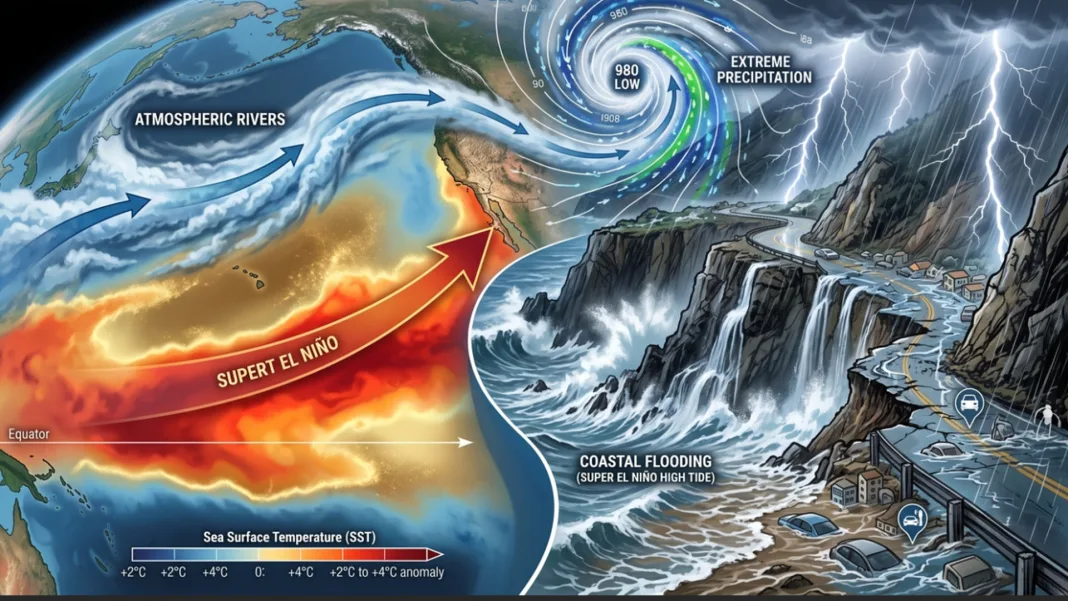
*Yangon, Myanmar – Myanmar Gazette* – Climate researchers have warned that the El Niño event developing in 2024 could evolve into a “Super El Niño,” the strongest on record. The phenomenon, driven by unusually warm sea‑surface temperatures in the eastern Pacific, is expected to raise global average temperatures temporarily and alter weather patterns across the United States.
**Key forecasts**
– **Pacific Ocean warming** – Measurements show that sea‑surface temperatures in the eastern Pacific have been rising since early summer, exceeding the long‑term average.
– **Potential classification as a “Super El Niño”** – Scientists from the University of California’s Agriculture and Natural Resources program, the National Center for Atmospheric Research (NCAR), and The Nature Conservancy, led by Dr. Daniel Swain, described the event as possibly surpassing previous extreme El Niño episodes. Dr. Swain outlined these points during an American Community Media briefing on 14 August 2026.
– **Global temperature spike** – The temporary warming associated with a strong El Niño is expected to add to the ongoing anthropogenic rise in global temperatures, producing higher-than‑average heat and precipitation in many regions over the next six to twelve months.
**Implications for California**
Dr. Swain and other climatologists highlighted several specific risks for California:
1. **Elevated sea levels and “king tides”** – Coastal sea‑surface temperatures are projected to increase, leading to higher tides in November and December that could combine with storm surges.
2. **Increased winter rainfall** – The state’s winter season is likely to see above‑average precipitation, especially in central and southern areas, raising flood hazards from the Sierra Nevada down to the Southern California coast.
3. **Flood‑prone low‑lying zones** – The San Francisco Bay, Monterey Bay, Carquinez Strait, and the Sacramento‑San Joaquin Delta sit only five to six feet above sea level and are vulnerable to inundation. Recent heavy rains have already prompted concerns about infrastructure, including sections of the Pacific Coast Highway near Malibu and Amtrak rail lines serving Los Angeles and San Diego.
4. **Coastal protection measures** – Authorities in Southern California have begun constructing sand‑dune barriers to mitigate shoreline erosion and flooding.
**Broader U.S. impacts**
– **Colorado River Basin and Southwest** – While the winter may bring more rain, long‑term drought conditions are expected to persist, offering only temporary relief to water‑resource challenges.
– **Pacific Northwest** – Washington and southern British Columbia could experience heightened rainfall and an elevated risk of wildfires.
– **Southeast** – States such as the Carolinas, Georgia, and Florida are projected to see wetter winter months, potentially easing some regional drought concerns.
– **Hawaii** – A reduction in typical rainfall may exacerbate drought conditions on the islands.
**Public‑health considerations**
The combination of heavy rain and flooding can strain water‑treatment systems, especially in rural and tribal
News Desk is the editorial publishing account for Tringlobe Media News, covering breaking news, public affairs, entertainment, community developments and regional stories across Trinidad and Tobago, the Caribbean and internationally.