The key points are temporarily unavailable. You can still read the full Story below.
Main Points
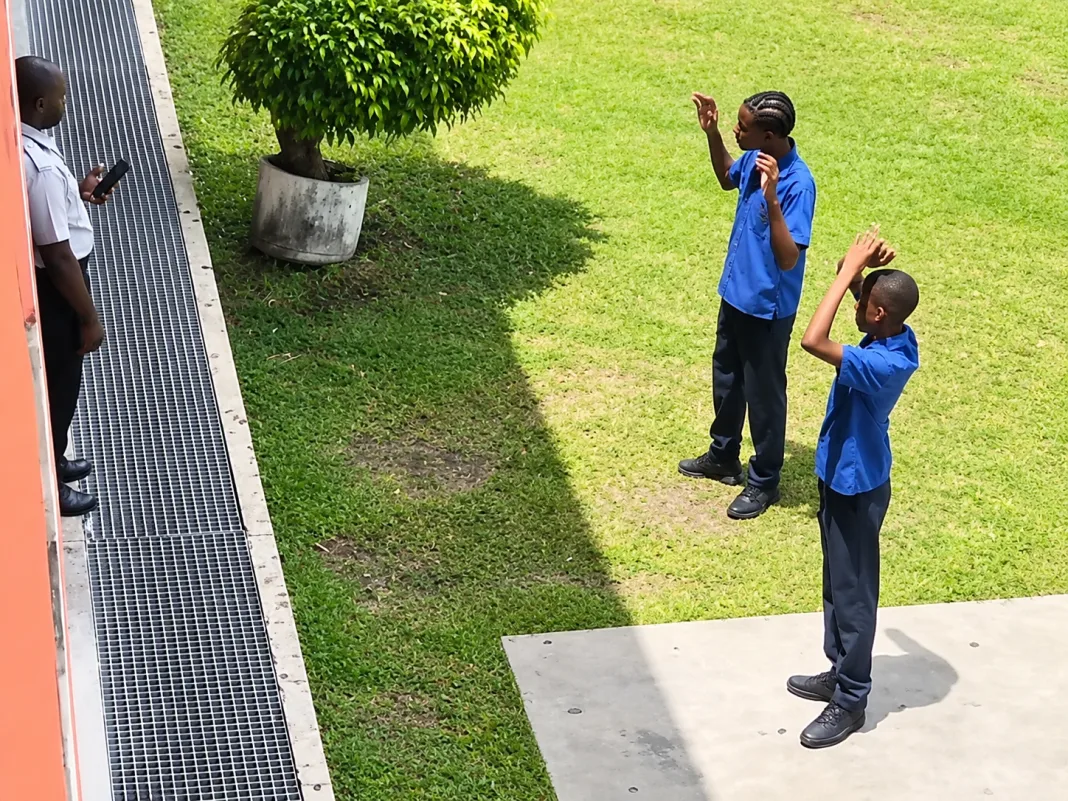
A video showing two school-aged boys apparently being made to stand outdoors with their hands raised as a form of punishment has sparked questions about where schools should draw the line when disciplining students.
In the footage, the boys can be seen standing on an exposed concrete area beside a grassy compound while holding their hands above their heads. The circumstances surrounding the incident, including the school involved, how long the students were required to stand there and what led to the punishment, have not been independently verified.
While schools are expected to maintain discipline, deliberately exposing children to prolonged heat raises a separate question about student welfare.
Children can be particularly vulnerable to high temperatures. Health guidance warns that excessive heat exposure can contribute to dehydration, dizziness, nausea and heat-related illness.
The issue is especially relevant in Trinidad and Tobago, where schools have previously been advised to take precautions during periods of unusually high temperatures. During a 2023 hot spell, the Ministry of Education advised schools to keep students hydrated, use shaded outdoor areas and adjust normal operations where necessary.
Trinidad and Tobago’s approach to school discipline has also increasingly emphasised proportionality, restorative practices and child protection. The revised 2026 National School Code of Conduct describes a framework combining disciplinary consequences with restorative and supportive interventions.
The video therefore raises a wider debate about discipline.
Some may argue that standing for a limited period is a relatively mild consequence compared with suspension or other penalties and can reinforce boundaries without removing students from the classroom.
Others may question whether requiring children to stand under direct sunlight, particularly with their arms raised, is necessary or appropriate when alternative disciplinary measures are available.
The image alone does not establish how hot conditions were, how long the boys were outside or whether they were permitted water or breaks. Those details would be important before conclusions are drawn about this particular incident.
But the broader question remains: Should making children stand in the hot sun ever be used as punishment at school?