The key points are temporarily unavailable. You can still read the full Story below.
Main Points
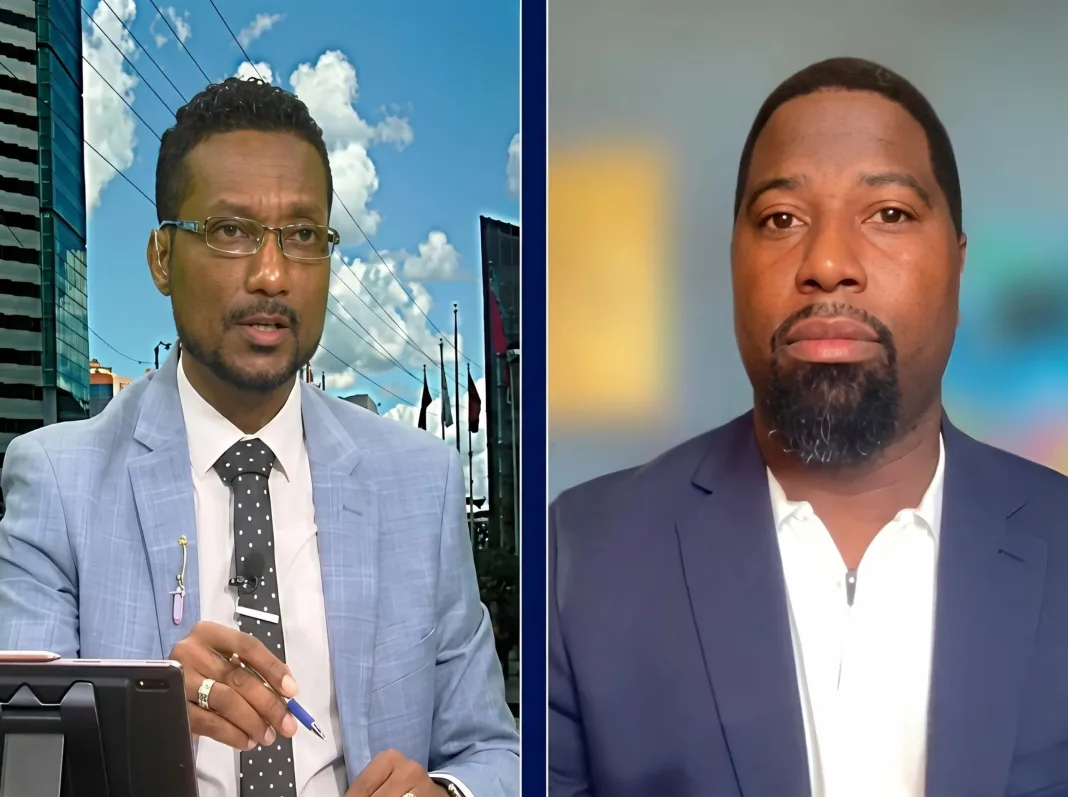
Fresh from earning his Doctor of Philosophy (PhD) in Sociology from The University of the West Indies, St. Augustine, sociologist and international relations expert Dr. Mwale Henry has warned that declining voter participation could eventually result in a minority of eligible voters determining who governs Trinidad and Tobago.
Speaking on CNC3’s The Morning Brew on Wednesday, Henry said falling voter turnout should be viewed as a warning sign that many citizens are becoming increasingly disillusioned with politics and are disengaging from the democratic process.
“If this trend continues, then you might definitely have a minority of the society electing a Prime Minister or populating the Parliament,” he said.
Henry argued that the trend reflects growing fatigue with political rhetoric and called on leaders to shift the national conversation towards issues that directly affect citizens’ lives.
The discussion came as he addressed the controversy surrounding Prime Minister Kamla Persad-Bissessar’s absence from the Emancipation Support Committee’s African Emancipation Day celebrations and the political reaction that followed.
Drawing on his sociological research, Henry rejected the notion that Trinidad and Tobago is inherently racist.
“Our historical underpinnings… former colonial masters would have used race as a form of control,” he said. “Are we racist inherently? The key answer is no. However, politicians use some of these historical references to create divisions to their advantage.”
He also defended activist Olabasi’s remarks during the Emancipation Day celebrations, saying the protest should be viewed as an expression of resistance over economic hardship rather than an act of racism.
According to Henry, the focus should remain on the economic realities facing many citizens rather than allowing the conversation to become centred on race.
Throughout the interview, Henry criticised both the Government and the Opposition, arguing that political leaders must do more to address the country’s economic and social challenges instead of engaging in divisive political battles.
He questioned recent budget priorities and suggested that decisions affecting local government funding and employment programmes have had disproportionate effects on poorer communities.
Henry also called for a shift away from politics centred on race, gender or identity.
“We have to move away from black leader, Indian leader, female leader, to normal, competent leader,” he said. “Who is the most competent leader to lead society?”
He added that the responsibility for changing the national discourse begins with those in positions of leadership.
“Leaders set the tone. They set the agenda,” Henry said, urging both Government and Opposition to promote unity, responsible governance and practical solutions to the country’s challenges.
During the interview, Henry also reflected on his own journey after recently graduating with his PhD, paying tribute to his late mother, Judith Bernice Kaines Henry, whom he described as his “first scholar” despite her never completing primary school.
“The degree bears my name, but the scholarship clearly bears hers,” he said, crediting her with inspiring his lifelong pursuit of knowledge.
Henry’s interview combined personal reflection with political analysis, but his warning about declining voter participation stood out as one of his strongest messages—one that he believes should concern all those invested in the future of Trinidad and Tobago’s democracy.