The key points are temporarily unavailable. You can still read the full Story below.
Main Points
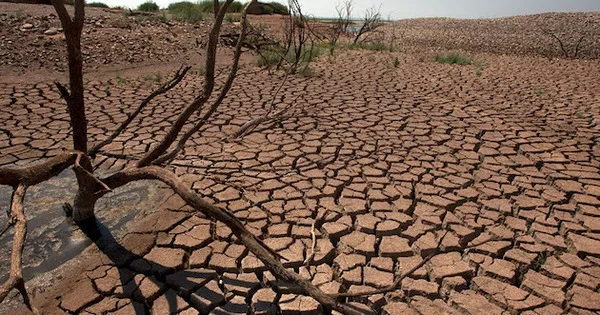
Puerto Rico’s water crisis, long a persistent problem, has resurfaced with new urgency after the Puerto Rico Aqueduct and Sewer Authority (PRASA) began a water‑rationing program on August 7, 2026. The program was intended to address an anticipated drought linked to the El Niño weather pattern, but it was suspended after temporary relief from cloud‑seeding efforts. By September 21, reservoir levels had fallen again, underscoring that the crisis is not solely a climate issue. PRASA has struggled with deteriorating infrastructure for years. Two failed privatization attempts between 1995 and 2004 left the agency with a debt of roughly $5 billion by 2017. The federally appointed fiscal control board, La Junta, created in 2016 to manage Puerto Rico’s $70 billion debt and $50 billion pension liabilities, has imposed austerity measures on PRASA. These measures included cutting $30 million from the 2026‑27 budget for equipment replacement and renovation, raising rates for the 95 percent of customers who are residential, and encouraging private investment in infrastructure. Between 2019 and 2025, PRASA received about $9 billion in federal funding, largely from the Federal Emergency Management Agency and the U.S. Department of Housing and Urban Development in response to Hurricane María, Hurricane Fiona, and the 2020 earthquakes. Of that amount, $6.6 billion was obligated and $773 million disbursed. Critics argue that the agency’s management of these funds has been opaque, citing procurement scandals during Governor Pedro P. González Colón’s administration, including allegations of conflicts of interest involving former secretary of government Francisco Domenech and his lobbying firm Politank. The rationing program affected an estimated 500,000 residents in San Juan, Trujillo Alto, Loíza, Canóvanas, Juncos, Gurabo, and Carolina. Many continue to experience interruptions and low water pressure. In Loíza, 43 percent of the population lives in poverty and 32 percent identify as Black or African American; residents have endured unreliable water access for nearly six months. Canóvanas has similar demographics, with 32 percent in poverty and 15 percent identifying as Black or African American. Both municipalities have the highest poverty rates and largest proportions of Black residents among those affected. Governor González Colón declared a state of emergency through Executive Order 2026‑035, citing insufficient rainfall and prioritizing potable water. The order also authorized exemptions from standard procurement procedures. In response, PRASA threatened fines for “misuse of water,” and the Department of Natural and Environmental Resources deployed personnel in enforcement operations that some residents described as resembling police raids to identify residential and community wells deemed illegal. Sociologists José Atiles Osoria and Naomi Klein have noted that Puerto Rico’s reliance on executive orders creates a “double state of exception,” one rooted in U.S. colonial rule and another in the island’s executive branch. Residents recall the post‑Hurricane María period, when private firms profited from widespread destruction, and express that the current crisis feels similar. One resident told reporters, “This whole situation is not the result of insufficient rainfall. It is the result of the inefficiency of the people in charge.” Community responses have been swift. In rural areas, local organizations have built their own aqueducts, though these efforts cannot match the scale of the structural problems. In the San Juan metropolitan area, neighborhood activists and agroecological projects have mobilized to provide water and support. However, many community leaders report burnout and frustration at being expected to fill gaps left by state institutions. One unnamed activist said, “Sometimes I feel like, all of a sudden, I have another responsibility. Now I have to ‘save the people,’ many of whom don't even care about what is happening around them.” Another organizer warned that “the urgent always comes before the important,” highlighting the tension between immediate needs and long‑term solutions. The crisis has also raised questions about the distribution of burden along lines of race, class, and gender. In municipalities with high poverty and large Black populations, residents have faced the most severe water shortages. The government’s call for community action, while well‑intentioned, risks placing disproportionate responsibility on already overburdened local leaders, many of whom are women and older adults. In summary, Puerto Rico’s water crisis is a multifaceted problem rooted in aging infrastructure, fiscal austerity, and governance challenges. While community organizing provides essential support, it cannot replace the need for transparent, accountable management of PRASA and the broader fiscal and political reforms required to ensure reliable water access for all residents. Article source: Jamaican Times | Image credit: Jamaican Times
Puerto Rico’s water crisis, long a persistent problem, has resurfaced with new urgency after the Puerto Rico Aqueduct and Sewer Authority (PRASA) began a water‑rationing program on August 7, 2026. The program was intended to address an anticipated drought linked to the El Niño weather pattern, but it was suspended after temporary relief from cloud‑seeding efforts. By September 21, reservoir levels had fallen again, underscoring that the crisis is not solely a climate issue. PRASA has struggled with deteriorating infrastructure for years. Two failed privatization attempts between 1995 and 2004 left the agency with a debt of roughly $5 billion by 2017. The federally appointed fiscal control board, La Junta, created in 2016 to manage Puerto Rico’s $70 billion debt and $50 billion pension liabilities, has imposed austerity measures on PRASA. These measures included cutting $30 million from the 2026‑27 budget for equipment replacement and renovation, raising rates for the 95 percent of customers who are residential, and encouraging private investment in infrastructure. Between 2019 and 2025, PRASA received about $9 billion in federal funding, largely from the Federal Emergency Management Agency and the U.S. Department of Housing and Urban Development in response to Hurricane María, Hurricane Fiona, and the 2020 earthquakes. Of that amount, $6.6 billion was obligated and $773 million disbursed. Critics argue that the agency’s management of these funds has been opaque, citing procurement scandals during Governor Pedro P. González Colón’s administration, including allegations of conflicts of interest involving former secretary of government Francisco Domenech and his lobbying firm Politank. The rationing program affected an estimated 500,000 residents in San Juan, Trujillo Alto, Loíza, Canóvanas, Juncos, Gurabo, and Carolina. Many continue to experience interruptions and low water pressure. In Loíza, 43 percent of the population lives in poverty and 32 percent identify as Black or African American; residents have endured unreliable water access for nearly six months. Canóvanas has similar demographics, with 32 percent in poverty and 15 percent identifying as Black or African American. Both municipalities have the highest poverty rates and largest proportions of Black residents among those affected. Governor González Colón declared a state of emergency through Executive Order 2026‑035, citing insufficient rainfall and prioritizing potable water. The order also authorized exemptions from standard procurement procedures. In response, PRASA threatened fines for “misuse of water,” and the Department of Natural and Environmental Resources deployed personnel in enforcement operations that some residents described as resembling police raids to identify residential and community wells deemed illegal. Sociologists José Atiles Osoria and Naomi Klein have noted that Puerto Rico’s reliance on executive orders creates a “double state of exception,” one rooted in U.S. colonial rule and another in the island’s executive branch. Residents recall the post‑Hurricane María period, when private firms profited from widespread destruction, and express that the current crisis feels similar. One resident told reporters, “This whole situation is not the result of insufficient rainfall. It is the result of the inefficiency of the people in charge.” Community responses have been swift. In rural areas, local organizations have built their own aqueducts, though these efforts cannot match the scale of the structural problems. In the San Juan metropolitan area, neighborhood activists and agroecological projects have mobilized to provide water and support. However, many community leaders report burnout and frustration at being expected to fill gaps left by state institutions. One unnamed activist said, “Sometimes I feel like, all of a sudden, I have another responsibility. Now I have to ‘save the people,’ many of whom don’t even care about what is happening around them.” Another organizer warned that “the urgent always comes before the important,” highlighting the tension between immediate needs and long‑term solutions. The crisis has also raised questions about the distribution of burden along lines of race, class, and gender. In municipalities with high poverty and large Black populations, residents have faced the most severe water shortages. The government’s call for community action, while well‑intentioned, risks placing disproportionate responsibility on already overburdened local leaders, many of whom are women and older adults. In summary, Puerto Rico’s water crisis is a multifaceted problem rooted in aging infrastructure, fiscal austerity, and governance challenges. While community organizing provides essential support, it cannot replace the need for transparent, accountable management of PRASA and the broader fiscal and political reforms required to ensure reliable water access for all residents.
News Desk is the editorial publishing account for Tringlobe Media News, covering breaking news, public affairs, entertainment, community developments and regional stories across Trinidad and Tobago, the Caribbean and internationally.