The key points are temporarily unavailable. You can still read the full Story below.
Main Points
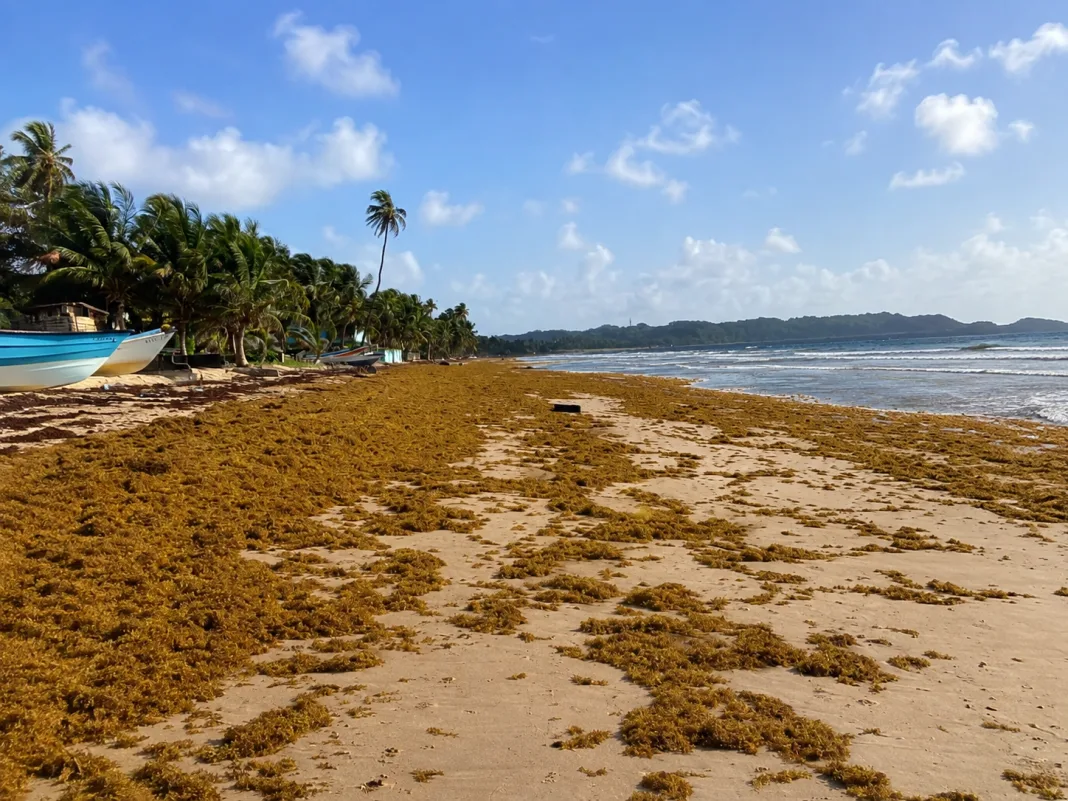
Large quantities of Sargassum seaweed have accumulated along sections of the Mayaro coastline, covering parts of the beach with the distinctive brown seaweed. A photo from the area on Monday shows Sargassum scattered extensively across the sand near the shoreline. Mayaro and other communities along Trinidad's eastern coastline have experienced recurring Sargassum influxes over the years because of their exposure to seaweed transported across the Atlantic by winds and ocean currents. The Institute of Marine Affairs (IMA) has previously explained that Sargassum is a naturally occurring floating brown seaweed that provides an important habitat for marine organisms while at sea. However, problems can arise when large quantities reach the coastline and begin accumulating and decomposing. Heavy Sargassum deposits can affect beach use, fishing activities and nearshore marine environments. Decomposing Sargassum can also release hydrogen sulphide, producing the distinctive rotten-egg smell often associated with large buildups. Mayaro has experienced significant Sargassum events before, with areas including Plaisance, Church Road, Ortoire, Indian Bay and Grand Lagoon among locations previously affected. Authorities have also been strengthening their response to the recurring problem. In June 2026, equipment was handed over to the Mayaro/Rio Claro and Sangre Grande Regional Corporations as part of a wider Sargassum management initiative funded by Japan in cooperation with the United Nations Development Programme. The equipment is intended to improve the ability of local authorities to remove Sargassum and respond when significant quantities reach Trinidad's coastline. While the latest photograph clearly shows an accumulation along a section of Mayaro's shoreline, the total amount of Sargassum currently affecting the wider Mayaro coastline has not yet been independently established. Sargassum remains a recurring challenge throughout the Caribbean, particularly during periods when large quantities move westward across the Atlantic and enter Caribbean waters.
Large quantities of Sargassum seaweed have accumulated along sections of the Mayaro coastline, covering parts of the beach with the distinctive brown seaweed.
A photo from the area on Monday shows Sargassum scattered extensively across the sand near the shoreline.
Mayaro and other communities along Trinidad’s eastern coastline have experienced recurring Sargassum influxes over the years because of their exposure to seaweed transported across the Atlantic by winds and ocean currents.
The Institute of Marine Affairs (IMA) has previously explained that Sargassum is a naturally occurring floating brown seaweed that provides an important habitat for marine organisms while at sea.
However, problems can arise when large quantities reach the coastline and begin accumulating and decomposing.
Heavy Sargassum deposits can affect beach use, fishing activities and nearshore marine environments. Decomposing Sargassum can also release hydrogen sulphide, producing the distinctive rotten-egg smell often associated with large buildups.
Mayaro has experienced significant Sargassum events before, with areas including Plaisance, Church Road, Ortoire, Indian Bay and Grand Lagoon among locations previously affected.
Authorities have also been strengthening their response to the recurring problem. In June 2026, equipment was handed over to the Mayaro/Rio Claro and Sangre Grande Regional Corporations as part of a wider Sargassum management initiative funded by Japan in cooperation with the United Nations Development Programme.
The equipment is intended to improve the ability of local authorities to remove Sargassum and respond when significant quantities reach Trinidad’s coastline.
While the latest photograph clearly shows an accumulation along a section of Mayaro’s shoreline, the total amount of Sargassum currently affecting the wider Mayaro coastline has not yet been independently established.
Sargassum remains a recurring challenge throughout the Caribbean, particularly during periods when large quantities move westward across the Atlantic and enter Caribbean waters.
News Desk is the editorial publishing account for Tringlobe Media News, covering breaking news, public affairs, entertainment, community developments and regional stories across Trinidad and Tobago, the Caribbean and internationally.