The key points are temporarily unavailable. You can still read the full Story below.
Main Points
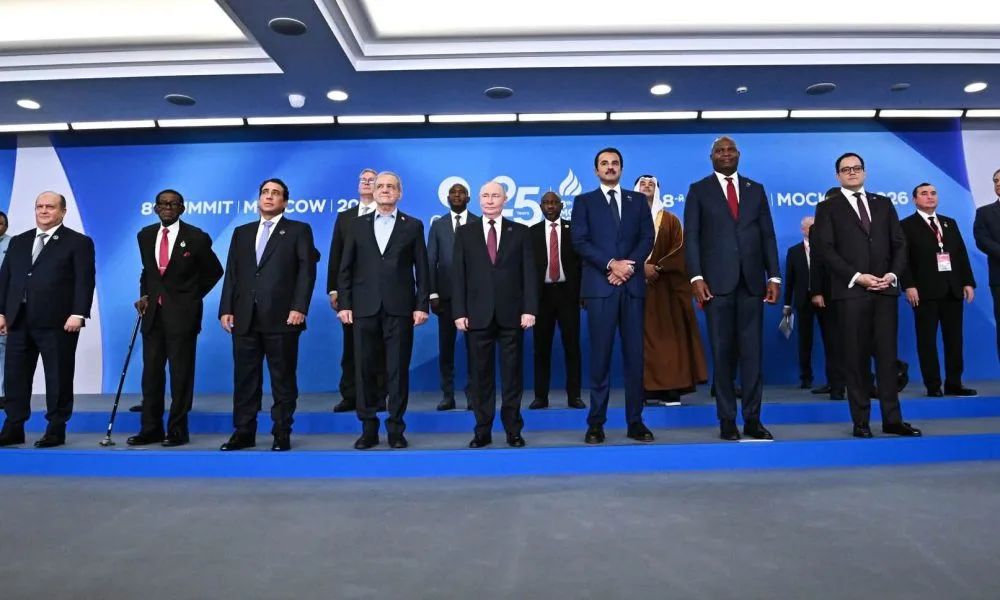
Russia’s influence among African youth rises as concerns about foreign involvement grow Johannesburg, 28 October 2026 – While President Vladimir Putin opened the Russia‑Africa Summit in Moscow, a new survey of African youth revealed a sharp increase in the perception that Russia wields influence on the continent. The 2026 African Youth Survey, conducted by PSB Insights for the Ichikowitz Family Foundation, interviewed 4,901 respondents aged 18‑24 in 16 African countries during March. Key findings Perceived influence of Russia – 54 % of respondents say Russia has some or a great deal of influence in their country, up from 44 % in 2024. Russia now ranks ahead of France, whose perceived influence fell to 47 %. Positive view of Russia – Among those who recognise Russian influence, 83 % describe it as largely positive. A further 86 % consider Russia a strong ally or at least a useful partner. Regional variation – The perception of Russian influence is highest in Burkina Faso (95 %), Congo‑Brazzaville (69 %) and Chad (65 %). In contrast, only 24 % of Liberian and 26 % of Somali youth see Russia as influential. Concern about foreign influence – 80 % of respondents express worry that foreign powers are exerting influence in their countries, an increase from 72 % in 2024. The concern is most acute in Mozambique (91 %), South Africa (88 %) and Liberia (85 %). Criteria for choosing partners – When asked what matters most in selecting an international partner, 43 % cited the ability to invest in infrastructure and the economy, 39 % the respect for natural resources, and 34 % sovereignty and non‑interference. Broader attitudes – 70 % believe the world is becoming more divided and dangerous. 81 % see the United States as influential, 79 % China, 54 % Russia and 47 % France. 73 % say democracy is always preferable, and 80 % support reform of the UN Security Council to give Africa permanent representation. Context The survey’s methodology involved face‑to‑face interviews in local languages, with an equal gender split and no incentives for participation. It is the fourth wave of a longitudinal study that began in 2020 and has covered 28 African countries to date. The 2026 wave included respondents from Burkina Faso, Chad, Congo‑Brazzaville, Democratic Republic of the Congo, Ethiopia, Ghana, Kenya, Liberia, Mozambique, Nigeria, Rwanda, Somalia, South Africa, Togo, Zambia and Zimbabwe. The findings do not probe the motives behind Russia’s engagement. Independent analyses by the Swedish Defence Research Agency and the European Parliament’s research service note that Russia’s military presence in Africa serves both strategic ambitions and practical interests, including access to natural resources. The survey itself simply records how young Africans perceive Russia’s role. Statements “Ivor Ichikowitz, founder of the African Youth Survey, said, “Russia has achieved something that would have seemed unlikely a few years ago. It has surpassed France in perceived influence and many young Africans now view it as an ally. These numbers are real and deserve serious attention. Young Africans welcome partners who help build their future, not powers that seek to control it.”” Implications The data suggest that while Russian influence is growing in the eyes of African youth, it is accompanied by heightened scepticism about foreign involvement. Youth respondents emphasise tangible benefits—investment, infrastructure, respect for resources and sovereignty—over ideological alignment. The Russia‑Africa Summit, scheduled for 28‑29 October, therefore faces a complex reception: a generation that is both open to Russian partnership and vigilant about the terms of that partnership. Article source: Téla Nón | Image credit: Téla Nón
Russia’s influence among African youth rises as concerns about foreign involvement grow Johannesburg, 28 October 2026 – While President Vladimir Putin opened the Russia‑Africa Summit in Moscow, a new survey of African youth revealed a sharp increase in the perception that Russia wields influence on the continent. The 2026 African Youth Survey, conducted by PSB Insights for the Ichikowitz Family Foundation, interviewed 4,901 respondents aged 18‑24 in 16 African countries during March. Key findings Perceived influence of Russia – 54 % of respondents say Russia has some or a great deal of influence in their country, up from 44 % in 2024. Russia now ranks ahead of France, whose perceived influence fell to 47 %. Positive view of Russia – Among those who recognise Russian influence, 83 % describe it as largely positive. A further 86 % consider Russia a strong ally or at least a useful partner. Regional variation – The perception of Russian influence is highest in Burkina Faso (95 %), Congo‑Brazzaville (69 %) and Chad (65 %). In contrast, only 24 % of Liberian and 26 % of Somali youth see Russia as influential. Concern about foreign influence – 80 % of respondents express worry that foreign powers are exerting influence in their countries, an increase from 72 % in 2024. The concern is most acute in Mozambique (91 %), South Africa (88 %) and Liberia (85 %). Criteria for choosing partners – When asked what matters most in selecting an international partner, 43 % cited the ability to invest in infrastructure and the economy, 39 % the respect for natural resources, and 34 % sovereignty and non‑interference. Broader attitudes – 70 % believe the world is becoming more divided and dangerous. 81 % see the United States as influential, 79 % China, 54 % Russia and 47 % France. 73 % say democracy is always preferable, and 80 % support reform of the UN Security Council to give Africa permanent representation. Context The survey’s methodology involved face‑to‑face interviews in local languages, with an equal gender split and no incentives for participation. It is the fourth wave of a longitudinal study that began in 2020 and has covered 28 African countries to date. The 2026 wave included respondents from Burkina Faso, Chad, Congo‑Brazzaville, Democratic Republic of the Congo, Ethiopia, Ghana, Kenya, Liberia, Mozambique, Nigeria, Rwanda, Somalia, South Africa, Togo, Zambia and Zimbabwe. The findings do not probe the motives behind Russia’s engagement. Independent analyses by the Swedish Defence Research Agency and the European Parliament’s research service note that Russia’s military presence in Africa serves both strategic ambitions and practical interests, including access to natural resources. The survey itself simply records how young Africans perceive Russia’s role. Statements “Ivor Ichikowitz, founder of the African Youth Survey, said, “Russia has achieved something that would have seemed unlikely a few years ago. It has surpassed France in perceived influence and many young Africans now view it as an ally. These numbers are real and deserve serious attention. Young Africans welcome partners who help build their future, not powers that seek to control it.”” Implications The data suggest that while Russian influence is growing in the eyes of African youth, it is accompanied by heightened scepticism about foreign involvement. Youth respondents emphasise tangible benefits—investment, infrastructure, respect for resources and sovereignty—over ideological alignment. The Russia‑Africa Summit, scheduled for 28‑29 October, therefore faces a complex reception: a generation that is both open to Russian partnership and vigilant about the terms of that partnership.
News Desk is the editorial publishing account for Tringlobe Media News, covering breaking news, public affairs, entertainment, community developments and regional stories across Trinidad and Tobago, the Caribbean and internationally.