The key points are temporarily unavailable. You can still read the full Story below.
Main Points
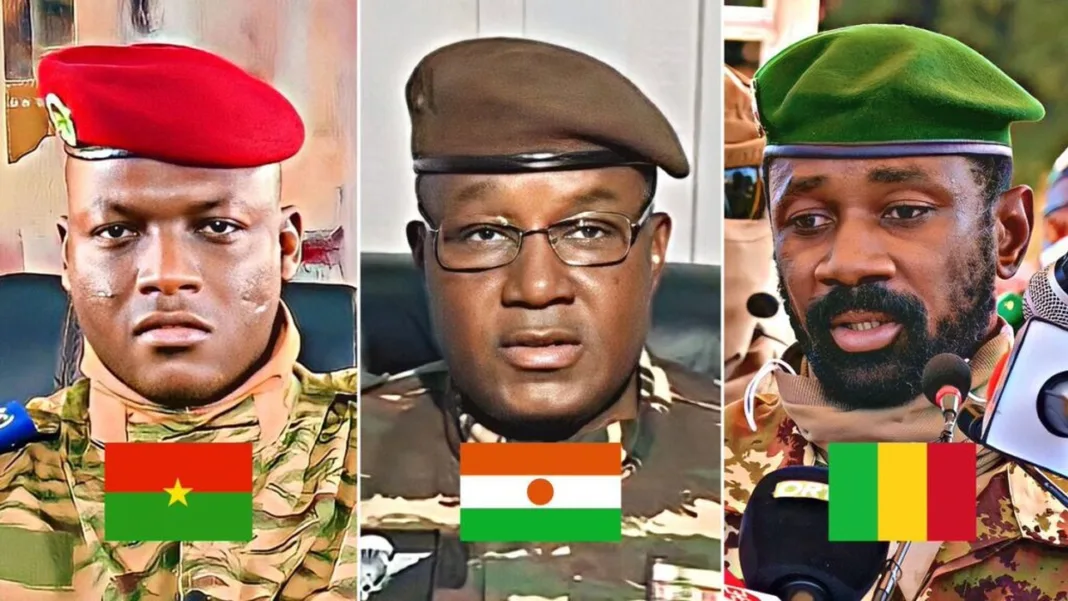
**Government Officials Address Regional Integration and Border Security at Policy Colloquium** ABUJA — The Special Adviser to President Bola Tinubu on Media and Public Communications, Sunday Dare, stated that the 2025 withdrawal of Niger, Burkina Faso, and Mali from the Economic Community of West African States (ECOWAS) has significantly hindered regional integration protocols. Speaking at a policy colloquium on border management and regional cooperation, Dare noted that the departure of these nations disrupted mechanisms designed to facilitate the free movement of goods and services. He further observed that the subsequent formation of the Alliance of Sahel States (AES) as a counter-regional body has challenged existing frameworks for cooperation. "The rupture that came in 2025 when the countries pulled out of ECOWAS created a major regional crisis," Dare said. "That pullout from ECOWAS simply blunted the ECOWAS protocol that promoted integration, free movement of goods and services." Dare emphasized that effective border management is essential for both economic stability and regional security. Addressing recent political discourse regarding the status of Nigeria’s borders, he dismissed claims that the borders are closed. He cautioned against using border security as a platform for electoral campaigning ahead of the 2027 elections, specifically referencing comments made by the African Democratic Congress (ADC) presidential candidate, Atiku Abubakar. "The Interior Minister has stated the facts. Nigeria's borders are open," Dare said. He clarified that "open borders" does not imply a lack of regulation, noting that customs, immigration, and security agencies continue to manage and control movement across the country’s frontiers. Also speaking at the event, the Minister of Defence, Gen. Christopher Musa (retd.), outlined the Tinubu administration’s focus on strengthening national security to protect sovereignty and democratic institutions. Musa highlighted the need for an integrated defense posture that utilizes intelligence coordination and joint operations across land, maritime, air, and cyber domains. The Minister emphasized the growing role of technology in modern warfare, stating that Nigeria must invest in artificial intelligence, unmanned systems, and surveillance capabilities to remain effective in the current security environment. The colloquium, described by the Special Adviser to the Minister on Media, Leah Katung-Babatunde, as a non-partisan initiative, aimed to bring together defense strategists, policymakers, and civil society leaders to develop actionable strategies for national resilience. Article source: allafrica.com | Image credit: horn review
**Government Officials Address Regional Integration and Border Security at Policy Colloquium**
ABUJA — The Special Adviser to President Bola Tinubu on Media and Public Communications, Sunday Dare, stated that the 2025 withdrawal of Niger, Burkina Faso, and Mali from the Economic Community of West African States (ECOWAS) has significantly hindered regional integration protocols.
Speaking at a policy colloquium on border management and regional cooperation, Dare noted that the departure of these nations disrupted mechanisms designed to facilitate the free movement of goods and services. He further observed that the subsequent formation of the Alliance of Sahel States (AES) as a counter-regional body has challenged existing frameworks for cooperation.
“The rupture that came in 2025 when the countries pulled out of ECOWAS created a major regional crisis,” Dare said. “That pullout from ECOWAS simply blunted the ECOWAS protocol that promoted integration, free movement of goods and services.”
Dare emphasized that effective border management is essential for both economic stability and regional security. Addressing recent political discourse regarding the status of Nigeria’s borders, he dismissed claims that the borders are closed. He cautioned against using border security as a platform for electoral campaigning ahead of the 2027 elections, specifically referencing comments made by the African Democratic Congress (ADC) presidential candidate, Atiku Abubakar.
“The Interior Minister has stated the facts. Nigeria’s borders are open,” Dare said. He clarified that “open borders” does not imply a lack of regulation, noting that customs, immigration, and security agencies continue to manage and control movement across the country’s frontiers.
Also speaking at the event, the Minister of Defence, Gen. Christopher Musa (retd.), outlined the Tinubu administration’s focus on strengthening national security to protect sovereignty and democratic institutions. Musa highlighted the need for an integrated defense posture that utilizes intelligence coordination and joint operations across land, maritime, air, and cyber domains.
The Minister emphasized the growing role of technology in modern warfare, stating that Nigeria must invest in artificial intelligence, unmanned systems, and surveillance capabilities to remain effective in the current security environment.
The colloquium, described by the Special Adviser to the Minister on Media, Leah Katung-Babatunde, as a non-partisan initiative, aimed to bring together defense strategists, policymakers, and civil society leaders to develop actionable strategies for national resilience.
News Desk is the editorial publishing account for Tringlobe Media News, covering breaking news, public affairs, entertainment, community developments and regional stories across Trinidad and Tobago, the Caribbean and internationally.