The key points are temporarily unavailable. You can still read the full Story below.
Main Points
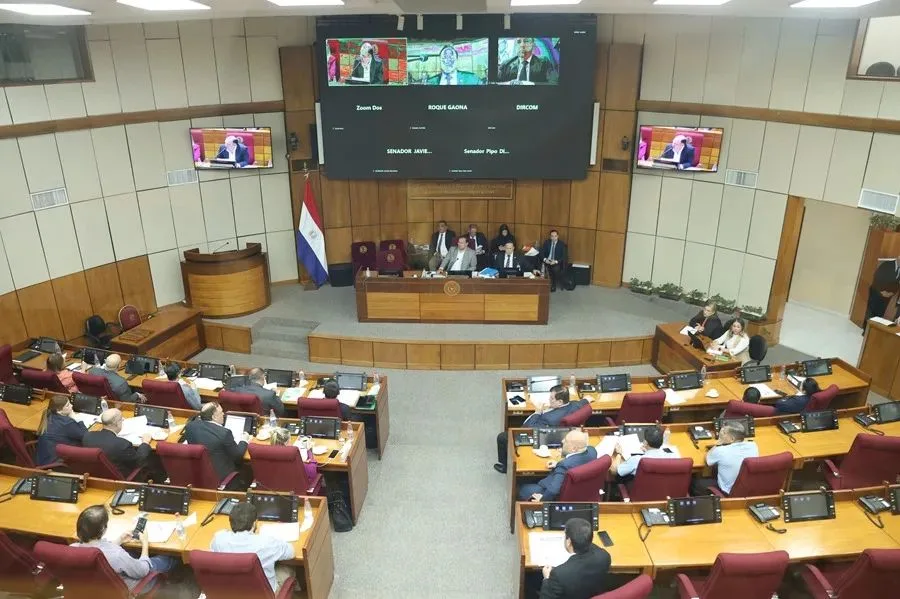
Paraguay’s government said on Saturday that the country had emerged “strengthened by this brief crisis” following the impeachment that removed former President Santiago Peña after the collapse of Ueno Bank, a financial institution linked to the former leader. In a statement from the Ministry of Foreign Affairs, officials said the institutional response demonstrated that the rule of law prevails, that the country has a solid financial system, and that mechanisms exist to detect irregularities, correct them, protect those affected and hold officials accountable. The crisis began when the Central Bank of Paraguay (BCP) ordered a resolution or dissolution of Ueno Bank on Tuesday. The bank, which had 2.94 million customers, had received millions of public funds during Peña’s administration. The bank’s sudden failure froze the assets of thousands of savers, including 32,000 pensioners from the Instituto de Previsión Social (IPS), one of the country’s main pension funds, as well as the accounts and investments of various state institutions. According to the ministry, the country had gone through a period of tension that tested institutional resilience. As a result, a congressional impeachment proceeding was held against Peña. On Friday, the National Congress found him guilty of “mal desempeño de funciones” (misconduct in the performance of his duties) and removed him from office. The removal triggered the presidential succession mechanism, which called on then‑Vice President Pedro Alliana to be sworn in as head of state and complete Peña’s term, which ends on 15 August 2028. Alliana was sworn in by then‑senator Antonio Barrios. The foreign ministry thanked the international community for the solidarity shown during the difficult period and reiterated that Paraguay had come out of the crisis stronger. Article source: El Nuevo Diario | Image credit: El Nuevo Diario
Paraguay’s government said on Saturday that the country had emerged “strengthened by this brief crisis” following the impeachment that removed former President Santiago Peña after the collapse of Ueno Bank, a financial institution linked to the former leader. In a statement from the Ministry of Foreign Affairs, officials said the institutional response demonstrated that the rule of law prevails, that the country has a solid financial system, and that mechanisms exist to detect irregularities, correct them, protect those affected and hold officials accountable. The crisis began when the Central Bank of Paraguay (BCP) ordered a resolution or dissolution of Ueno Bank on Tuesday. The bank, which had 2.94 million customers, had received millions of public funds during Peña’s administration. The bank’s sudden failure froze the assets of thousands of savers, including 32,000 pensioners from the Instituto de Previsión Social (IPS), one of the country’s main pension funds, as well as the accounts and investments of various state institutions. According to the ministry, the country had gone through a period of tension that tested institutional resilience. As a result, a congressional impeachment proceeding was held against Peña. On Friday, the National Congress found him guilty of “mal desempeño de funciones” (misconduct in the performance of his duties) and removed him from office. The removal triggered the presidential succession mechanism, which called on then‑Vice President Pedro Alliana to be sworn in as head of state and complete Peña’s term, which ends on 15 August 2028. Alliana was sworn in by then‑senator Antonio Barrios. The foreign ministry thanked the international community for the solidarity shown during the difficult period and reiterated that Paraguay had come out of the crisis stronger.
News Desk is the editorial publishing account for Tringlobe Media News, covering breaking news, public affairs, entertainment, community developments and regional stories across Trinidad and Tobago, the Caribbean and internationally.