The key points are temporarily unavailable. You can still read the full Story below.
Main Points
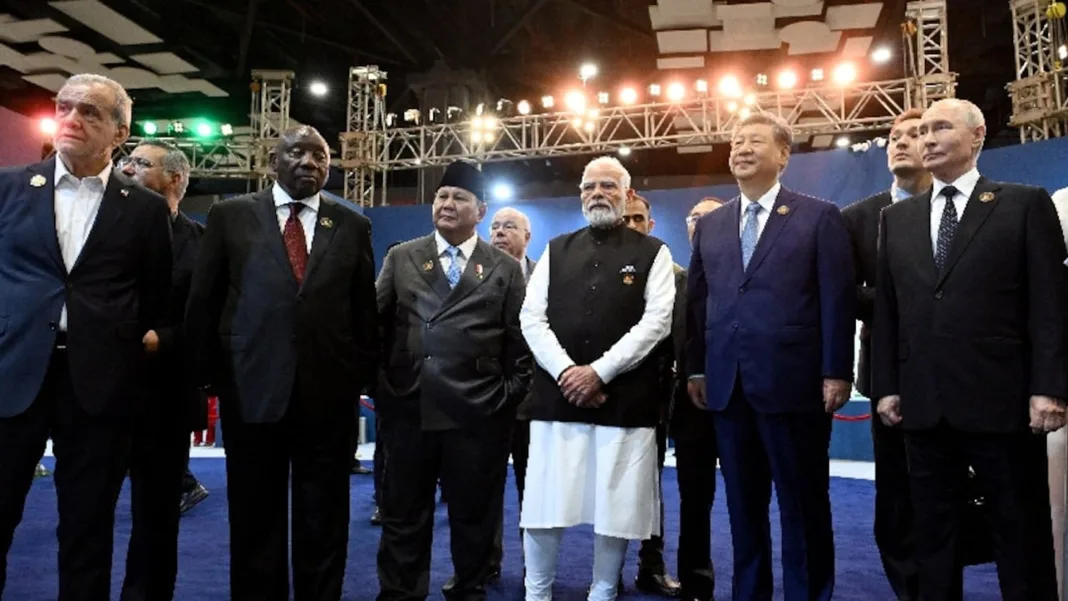
The 18th BRICS Summit concluded in New Delhi with the unanimous adoption of the New Delhi Declaration 2026, a 140-point document outlining the bloc’s collective stance on global governance, security, and economic cooperation.
Indian Prime Minister Narendra Modi announced the adoption of the declaration, noting that no member nation raised objections. The summit, held under India’s 2026 chairmanship, focused on the theme of building resilience, innovation, cooperation, and sustainability, with specific emphasis on fair competition in renewable energy markets.
In his opening remarks, Prime Minister Modi proposed a 10-point roadmap for reforming global governance systems. He criticized the current international architecture as a “pyramid of privilege” and advocated for increased representation of the Global South in decision-making processes. As part of the declaration, China and Russia reaffirmed their support for Brazil and India to play greater roles within the United Nations, including the Security Council.
The declaration addressed several international security and economic issues. Member nations condemned terrorism in all its forms, including cross-border activities and the financing of terror networks. The document specifically cited the April 22, 2025, attack in Jammu and Kashmir, calling for zero tolerance toward terrorism and the rejection of double standards.
Regarding regional conflicts, the bloc called for a ceasefire in Gaza, the delivery of humanitarian aid, and a two-state solution based on 1967 borders. The declaration also expressed concern over unilateral tariff measures, which the members argued distort trade and contradict World Trade Organization (WTO) rules. The group called for the revival of the WTO’s binding dispute settlement mechanism and denounced unilateral economic sanctions.
On energy policy, the declaration acknowledged the continued role of fossil fuels for emerging markets while promoting a technology-neutral approach to energy transitions, including nuclear, hydropower, and renewable sources. Additionally, the bloc endorsed the use of local currencies for cross-border trade settlements and highlighted the importance of women’s participation in economic and governance sectors.
Li Jingjing, a journalist for CGTN, attended the summit and characterized the declaration as a commitment to amplifying the interests of developing nations. She noted that the event served as a platform for cultural exchange, emphasizing the importance of people-to-people cooperation alongside trade and governance reforms.
Article and image source: indiagazette.com