The key points are temporarily unavailable. You can still read the full Story below.
Main Points
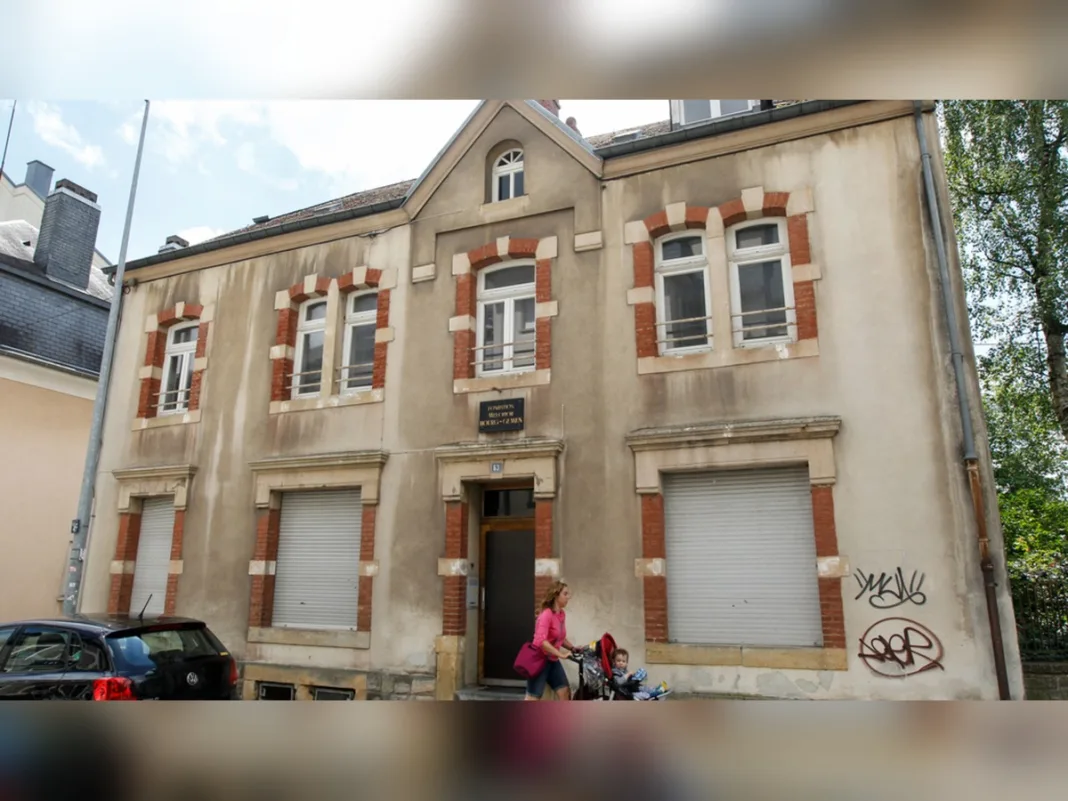
A partially demolished façade in Limpertsberg illustrates a central concern raised by Luxembourg’s Heritage Movement: whether decisions about historic buildings come early enough to preserve what makes them valuable. In a report by RTL, the association’s president, Paul Ewen, described a building whose classification as a historic monument had been under consideration. According to the report, the Ministry of Culture had planned to shelve the application. By the time that decision was reviewed, demolition of the façade was already under way. Ewen argues that buildings are too often treated primarily as functional assets or investments, with their cultural significance receiving less attention. RTL presents this as the association’s criticism, rather than an independently established explanation for demolition decisions across Luxembourg. His proposed response would reverse the sequence of protection decisions. Buildings would initially receive broad protection, followed by rapid removal of restrictions where preservation was not justified. The purpose, he says, would be to bring the Ministry of Culture into demolition and conversion decisions earlier. A second case concerns a house in Kehlen. RTL reports that it housed a Jewish family who were deported during the Second World War and subsequently became the headquarters of the Volksdeutsche Bewegung, a Nazi movement in occupied Luxembourg. Ewen said the association had applied for its preservation but had received no update on the application. These examples raise questions about timing and historical significance. They do not establish how ownership, maintenance costs or housing requirements weighed in the individual decisions: the report supplies no detailed comparison of those factors or a ministry response explaining the cases. The evidence therefore supports a focused conclusion. The Heritage Movement wants cultural assessment to happen before physical changes become irreversible. Whether its proposed system would deliver better decisions remains an open question, rather than a demonstrated outcome.
A partially demolished façade in Limpertsberg illustrates a central concern raised by Luxembourg’s Heritage Movement: whether decisions about historic buildings come early enough to preserve what makes them valuable.
In a report by RTL, the association’s president, Paul Ewen, described a building whose classification as a historic monument had been under consideration. According to the report, the Ministry of Culture had planned to shelve the application. By the time that decision was reviewed, demolition of the façade was already under way.
Ewen argues that buildings are too often treated primarily as functional assets or investments, with their cultural significance receiving less attention. RTL presents this as the association’s criticism, rather than an independently established explanation for demolition decisions across Luxembourg.
His proposed response would reverse the sequence of protection decisions. Buildings would initially receive broad protection, followed by rapid removal of restrictions where preservation was not justified. The purpose, he says, would be to bring the Ministry of Culture into demolition and conversion decisions earlier.
A second case concerns a house in Kehlen. RTL reports that it housed a Jewish family who were deported during the Second World War and subsequently became the headquarters of the Volksdeutsche Bewegung, a Nazi movement in occupied Luxembourg. Ewen said the association had applied for its preservation but had received no update on the application.
These examples raise questions about timing and historical significance. They do not establish how ownership, maintenance costs or housing requirements weighed in the individual decisions: the report supplies no detailed comparison of those factors or a ministry response explaining the cases.
The evidence therefore supports a focused conclusion. The Heritage Movement wants cultural assessment to happen before physical changes become irreversible. Whether its proposed system would deliver better decisions remains an open question, rather than a demonstrated outcome.
News Desk is the editorial publishing account for Tringlobe Media News, covering breaking news, public affairs, entertainment, community developments and regional stories across Trinidad and Tobago, the Caribbean and internationally.