The key points are temporarily unavailable. You can still read the full Story below.
Main Points
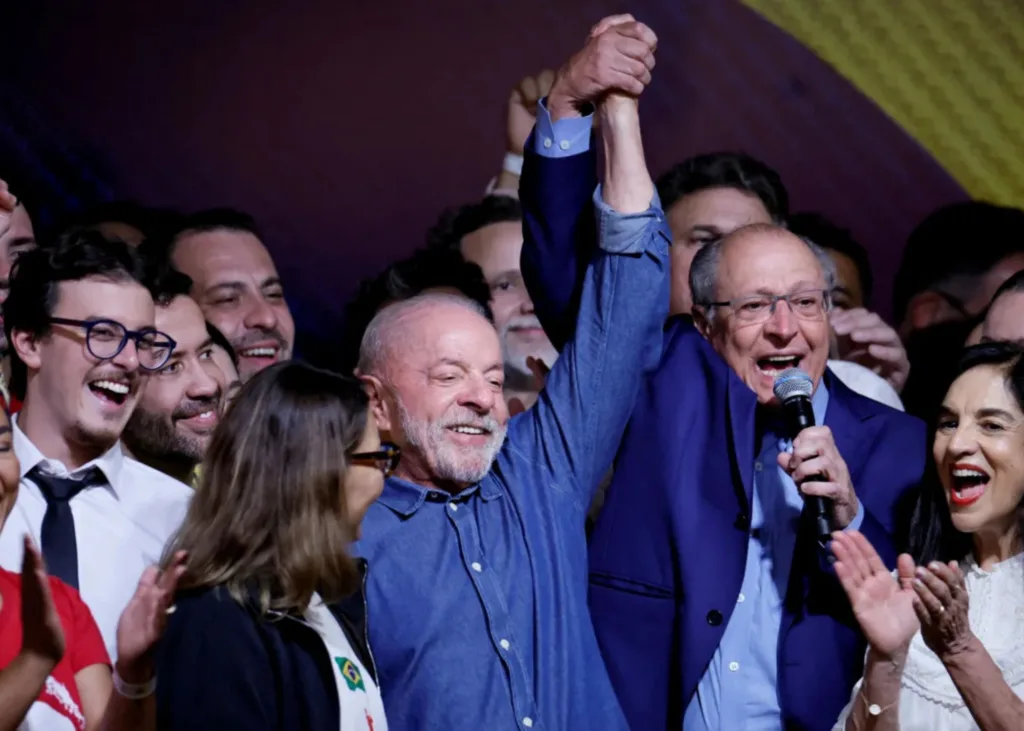
Luiz Inácio Lula da Silva has been elected to a fourth term as president of Brazil, securing 51.79% of the vote in a runoff election against his challenger, Flávio Bolsonaro. The result marks a significant political comeback, as Lula becomes the first president since the restoration of democracy in 1988 to win an election after trailing in the first round of voting. Lula defeated Bolsonaro by a margin of 4.4 million votes, with Bolsonaro receiving 48.21%. The outcome followed a competitive campaign that saw a notable increase in voter turnout; Sunday’s election recorded the largest drop in abstention between the first and second rounds of a presidential race since 1989. In the first round held on October 4, Bolsonaro had led with 47% of the vote compared to Lula’s 45%. Addressing supporters in São Paulo, Lula described the victory as a triumph over "negativity" and "lies," declaring, "Long live democracy." He added, "This, my fourth term, will be the best of any president in the history of this country. It will be the one in which I listen most to the Brazilian people." His running mate, Vice-President Geraldo Alckmin, stated that Lula had "saved Brazilian democracy." Flávio Bolsonaro, the son of former president Jair Bolsonaro, has refused to concede the election and has called for the results to be annulled, labeling the outcome "inexplicable" and "impossible." However, legal experts have characterized the likelihood of such an annulment as remote. Fernando Neisser of the Institute of Lawyers of São Paulo noted that a legal challenge would be difficult given the margin of victory, while expert Alberto Rollo pointed out that Brazil’s constitution sets fixed dates for presidential elections, creating significant procedural hurdles for any attempt to invalidate the results. The election day was marked by an unusual extension of polling hours. The Supreme Court granted a two-hour extension after both campaigns requested more time, citing different logistical challenges: Lula’s team reported a lack of bus transportation in São Paulo and Bahia, while Bolsonaro’s campaign cited heavy rain in the south and parts of São Paulo. Supreme Court President Kassio Nunes Marques, who confirmed the final results, stated that the extension did not negatively impact the electoral process or the vote count. Article source: Daily Nation | Image credit: Daily Nation
Luiz Inácio Lula da Silva has been elected to a fourth term as president of Brazil, securing 51.79% of the vote in a runoff election against his challenger, Flávio Bolsonaro. The result marks a significant political comeback, as Lula becomes the first president since the restoration of democracy in 1988 to win an election after trailing in the first round of voting. Lula defeated Bolsonaro by a margin of 4.4 million votes, with Bolsonaro receiving 48.21%. The outcome followed a competitive campaign that saw a notable increase in voter turnout; Sunday’s election recorded the largest drop in abstention between the first and second rounds of a presidential race since 1989. In the first round held on October 4, Bolsonaro had led with 47% of the vote compared to Lula’s 45%. Addressing supporters in São Paulo, Lula described the victory as a triumph over “negativity” and “lies,” declaring, “Long live democracy.” He added, “This, my fourth term, will be the best of any president in the history of this country. It will be the one in which I listen most to the Brazilian people.” His running mate, Vice-President Geraldo Alckmin, stated that Lula had “saved Brazilian democracy.” Flávio Bolsonaro, the son of former president Jair Bolsonaro, has refused to concede the election and has called for the results to be annulled, labeling the outcome “inexplicable” and “impossible.” However, legal experts have characterized the likelihood of such an annulment as remote. Fernando Neisser of the Institute of Lawyers of São Paulo noted that a legal challenge would be difficult given the margin of victory, while expert Alberto Rollo pointed out that Brazil’s constitution sets fixed dates for presidential elections, creating significant procedural hurdles for any attempt to invalidate the results. The election day was marked by an unusual extension of polling hours. The Supreme Court granted a two-hour extension after both campaigns requested more time, citing different logistical challenges: Lula’s team reported a lack of bus transportation in São Paulo and Bahia, while Bolsonaro’s campaign cited heavy rain in the south and parts of São Paulo. Supreme Court President Kassio Nunes Marques, who confirmed the final results, stated that the extension did not negatively impact the electoral process or the vote count.
News Desk is the editorial publishing account for Tringlobe Media News, covering breaking news, public affairs, entertainment, community developments and regional stories across Trinidad and Tobago, the Caribbean and internationally.