The key points are temporarily unavailable. You can still read the full Story below.
Main Points
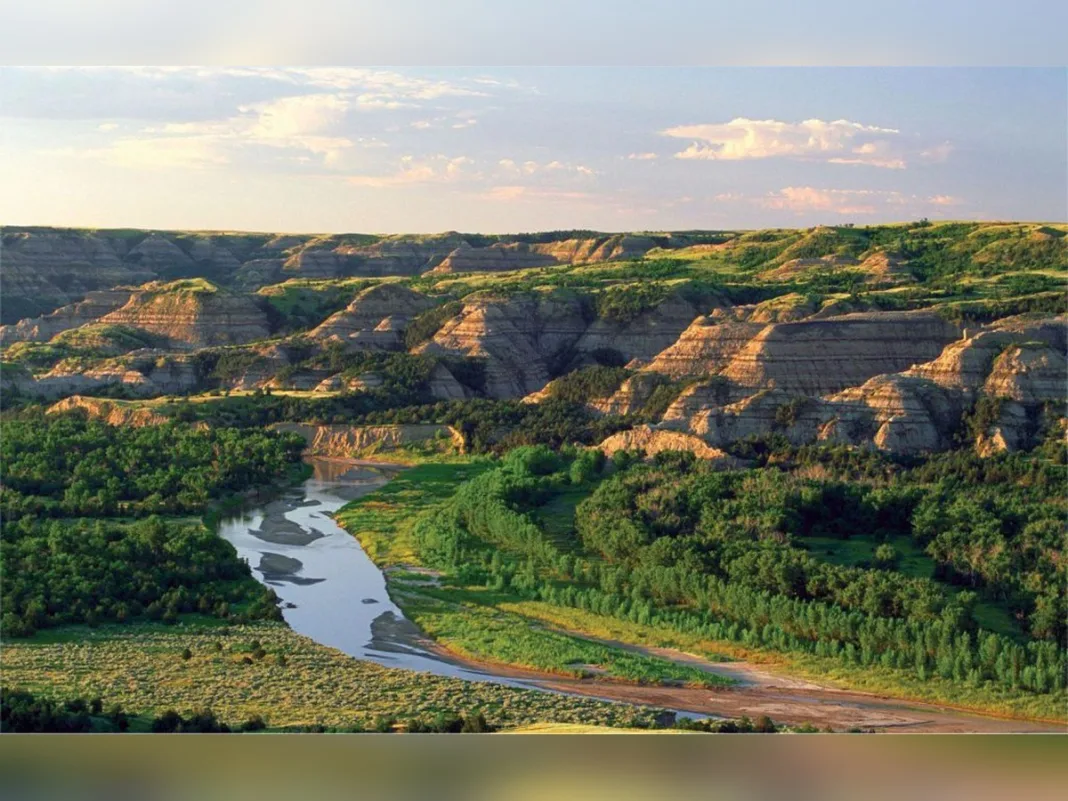
Theodore Roosevelt first traveled to the North Dakota Badlands in September 1883 seeking a chance to hunt North American big game before it disappeared. His experiences there also helped develop the concerns that would become central to his conservation record as president. The National Park Service’s account describes a lifelong sportsman whose writings combined successful hunts with grief over declining species and habitat. The destruction of bison populations and the loss of elk, bighorn sheep, deer and other game troubled him. He also witnessed the effects of overgrazing. For Roosevelt, these losses raised questions about how Americans treated resources that many still considered inexhaustible. Conservation increasingly became one of his principal concerns, and after becoming president in 1901 he used federal authority to protect wildlife and public lands. The Park Service credits his presidency with protecting approximately 230 million acres of public land. Its account lists 150 national forests, 51 federal bird reserves, four national game preserves, five national parks and 18 national monuments among his conservation achievements. Much of this legacy involved continued resource use. About 150 million acres were set aside as national forests. Roosevelt created the present-day United States Forest Service within the Department of Agriculture in 1905, supporting the idea that forests should be conserved so their resources could remain available. Wildlife protection took another institutional form. Roosevelt was the first president to create a Federal Bird Reserve and established 51 during his administration. Those reserves later became part of the national wildlife refuge system managed by the United States Fish and Wildlife Service. His work also preceded the agency now most closely associated with national parks. The National Park Service was established in 1916, seven years after Roosevelt left office. According to the account, Roosevelt had helped create 23 of the 35 sites that the new organization initially managed. Different protections required different routes. National parks were established through acts of Congress, while the Antiquities Act, signed on June 8, 1906, gave presidents authority to proclaim national monuments. Roosevelt’s legacy therefore extends beyond an acreage total. It encompasses forests managed for continued use, reserves established for wildlife and sites preserved through park and monument designations. The Badlands, where his hunting ambitions met evidence of ecological loss, remain central to the Park Service’s explanation of how that legacy began.
Theodore Roosevelt first traveled to the North Dakota Badlands in September 1883 seeking a chance to hunt North American big game before it disappeared. His experiences there also helped develop the concerns that would become central to his conservation record as president.
The National Park Service’s account describes a lifelong sportsman whose writings combined successful hunts with grief over declining species and habitat. The destruction of bison populations and the loss of elk, bighorn sheep, deer and other game troubled him. He also witnessed the effects of overgrazing.
For Roosevelt, these losses raised questions about how Americans treated resources that many still considered inexhaustible. Conservation increasingly became one of his principal concerns, and after becoming president in 1901 he used federal authority to protect wildlife and public lands.
The Park Service credits his presidency with protecting approximately 230 million acres of public land. Its account lists 150 national forests, 51 federal bird reserves, four national game preserves, five national parks and 18 national monuments among his conservation achievements.
Much of this legacy involved continued resource use. About 150 million acres were set aside as national forests. Roosevelt created the present-day United States Forest Service within the Department of Agriculture in 1905, supporting the idea that forests should be conserved so their resources could remain available.
Wildlife protection took another institutional form. Roosevelt was the first president to create a Federal Bird Reserve and established 51 during his administration. Those reserves later became part of the national wildlife refuge system managed by the United States Fish and Wildlife Service.
His work also preceded the agency now most closely associated with national parks. The National Park Service was established in 1916, seven years after Roosevelt left office. According to the account, Roosevelt had helped create 23 of the 35 sites that the new organization initially managed.
Different protections required different routes. National parks were established through acts of Congress, while the Antiquities Act, signed on June 8, 1906, gave presidents authority to proclaim national monuments.
Roosevelt’s legacy therefore extends beyond an acreage total. It encompasses forests managed for continued use, reserves established for wildlife and sites preserved through park and monument designations. The Badlands, where his hunting ambitions met evidence of ecological loss, remain central to the Park Service’s explanation of how that legacy began.
News Desk is the editorial publishing account for Tringlobe Media News, covering breaking news, public affairs, entertainment, community developments and regional stories across Trinidad and Tobago, the Caribbean and internationally.