The key points are temporarily unavailable. You can still read the full Story below.
Main Points
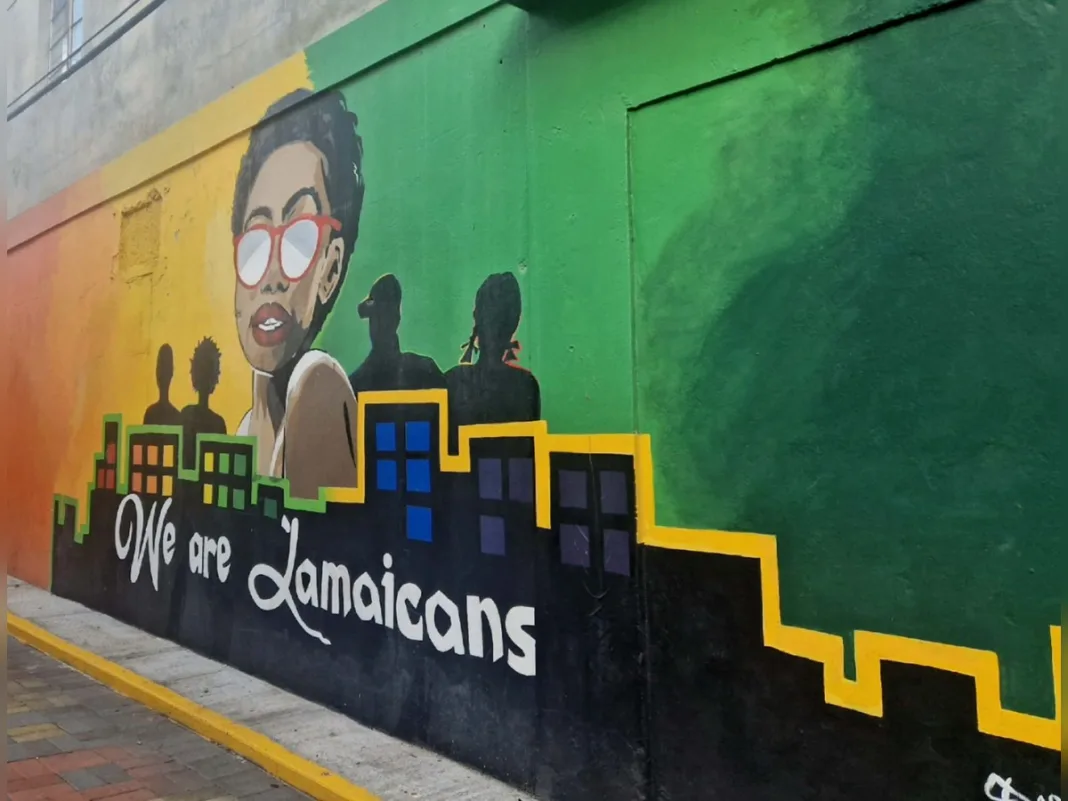
Laura Facey’s Redemption Song in Emancipation Park is more than a Kingston landmark. Unveiled in 2003 as Jamaica’s de facto Emancipation monument, it became controversial, placing public sculpture at the centre of a wider question: how should Jamaica represent its history in shared spaces? The National Gallery of Jamaica’s 2016 essay, Kingston: Art on the Streets, identifies the work as an example of the aesthetic and technical achievements involved in public monuments. Written by exhibition curator Monique Barnett-Davidson, the essay also places its reception within a longer history of disagreement over public commemoration. That history includes a proposed National Monument intended to commemorate the first anniversary of Independence in 1963. Initiated by art patron A.D. Scott, it was to be executed by sculptor Alvin Marriott and erected at the Harbour View Roundabout. According to the gallery’s account, controversy prevented its completion. The excerpt does not explain the particular objections, so it cannot establish why the proposal failed to win acceptance. Another dispute concerned Christopher Gonzalez’s Bob Marley statue. The gallery records that negative public reaction led to its removal before its planned unveiling near the National Stadium in 1983. A more conventional statue by Marriott replaced it in 1985. Writing in 2016, the gallery said the Gonzalez work was then on view at Island Village in Ocho Rios. These examples suggest that agreement about whom or what to commemorate does not necessarily produce agreement about artistic representation. The gallery describes such disputes as expressions of the passions surrounding public memory; its account does not establish that every controversy had the same cause. The essay also looks beyond official monuments. Kingston’s murals commemorate community members, musicians, national heroes and other figures. Some honour people who died violently. The gallery notes that police removal of murals considered associated with gang violence has sometimes brought another tension into view: the relationship between official intervention and communities’ mourning. Seen in this context, Redemption Song belongs to a broader public conversation conducted through sculptures, monuments and painted walls. The evidence does not show how many passers-by know its history. It does show why learning that history matters: Kingston’s public art records both acts of remembrance and disagreements over how remembrance should look.
Laura Facey’s Redemption Song in Emancipation Park is more than a Kingston landmark. Unveiled in 2003 as Jamaica’s de facto Emancipation monument, it became controversial, placing public sculpture at the centre of a wider question: how should Jamaica represent its history in shared spaces? The National Gallery of Jamaica’s 2016 essay, Kingston: Art on the Streets, identifies the work as an example of the aesthetic and technical achievements involved in public monuments. Written by exhibition curator Monique Barnett-Davidson, the essay also places its reception within a longer history of disagreement over public commemoration. That history includes a proposed National Monument intended to commemorate the first anniversary of Independence in 1963. Initiated by art patron A.D. Scott, it was to be executed by sculptor Alvin Marriott and erected at the Harbour View Roundabout. According to the gallery’s account, controversy prevented its completion. The excerpt does not explain the particular objections, so it cannot establish why the proposal failed to win acceptance. Another dispute concerned Christopher Gonzalez’s Bob Marley statue. The gallery records that negative public reaction led to its removal before its planned unveiling near the National Stadium in 1983. A more conventional statue by Marriott replaced it in 1985. Writing in 2016, the gallery said the Gonzalez work was then on view at Island Village in Ocho Rios. These examples suggest that agreement about whom or what to commemorate does not necessarily produce agreement about artistic representation. The gallery describes such disputes as expressions of the passions surrounding public memory; its account does not establish that every controversy had the same cause. The essay also looks beyond official monuments. Kingston’s murals commemorate community members, musicians, national heroes and other figures. Some honour people who died violently. The gallery notes that police removal of murals considered associated with gang violence has sometimes brought another tension into view: the relationship between official intervention and communities’ mourning. Seen in this context, Redemption Song belongs to a broader public conversation conducted through sculptures, monuments and painted walls. The evidence does not show how many passers-by know its history. It does show why learning that history matters: Kingston’s public art records both acts of remembrance and disagreements over how remembrance should look.
News Desk is the editorial publishing account for Tringlobe Media News, covering breaking news, public affairs, entertainment, community developments and regional stories across Trinidad and Tobago, the Caribbean and internationally.