The key points are temporarily unavailable. You can still read the full Story below.
Main Points
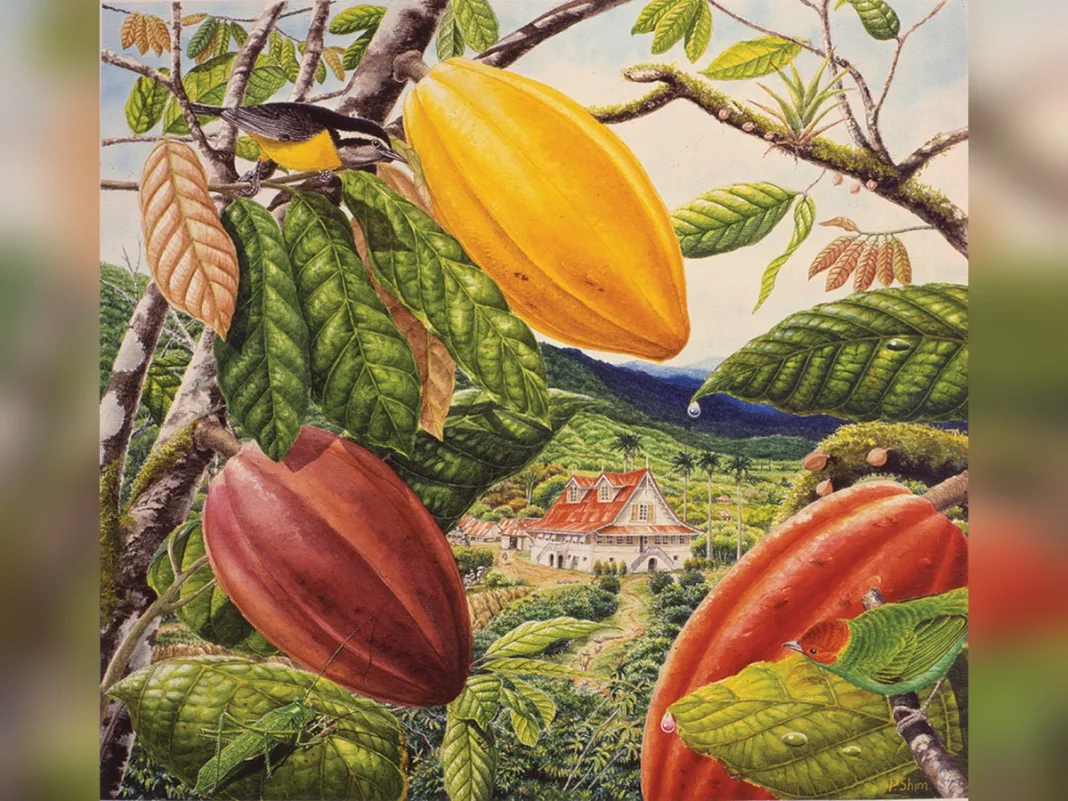
Count Charles Joseph de Lopinot was a French colonial planter who fled the Haitian Revolution in the late 1790s, seeking refuge in Trinidad. His story is one of survival, adaptation, and an unexpected legacy that still echoes in the island’s history today. Decades later, his former cacao plantation, La Reconnaissance in the Lopinot Valley, became the focus of a remarkable archaeological journey—one that uncovered not just colonial history, but evidence of Trinidad’s indigenous past. In 2003, Missouri State University professors emeriti Michael Lopinot and Kenneth Ray began their research at La Reconnaissance, drawn by Lopinot’s family connection to the estate. What started as a personal interest evolved into two decades of excavations, revealing layers of history buried beneath the plantation. But the most surprising discovery came in 2009, when a local Rastafarian named Moose approached Lopinot with artifacts unearthed during a grave dig. What Moose thought were remnants of slavery pottery turned out to be Amerindian—proof of a First Peoples presence in the Northern Range that had never been documented before. The team’s excavations uncovered five Amerindian sites in the Lopinot River Valley alone, with radiocarbon dating placing them between 1,500 and 1,300 years old. This was a groundbreaking find: prior to their research, no Amerindian sites had been recorded in the interior of the Northern Range. The discoveries didn’t stop there. In 2018, another artifact—a large spear point found in the Central Range—led to the excavation of Guaico Tamana, a flintknapping workshop where ancient spearheads were crafted. The site provided rare insight into the tools and techniques of Trinidad’s earliest inhabitants. The research wasn’t just about digging up artifacts. Lopinot and Ray ensured that all recovered items were returned to the University of the West Indies and the National Trust, where they can be studied and preserved for future generations. Their work also highlighted the importance of collaboration, with local communities, tourism organizations, and conservation groups playing key roles in protecting these sites. Why does this matter? The story of La Reconnaissance and Guaico Tamana reminds us that Trinidad’s history is far more complex than colonial plantations and Carnival. Beneath the surface lies a tapestry of indigenous cultures, resilience, and adaptation—one that continues to unfold with every new discovery.
Count Charles Joseph de Lopinot was a French colonial planter who fled the Haitian Revolution in the late 1790s, seeking refuge in Trinidad. His story is one of survival, adaptation, and an unexpected legacy that still echoes in the island’s history today. Decades later, his former cacao plantation, La Reconnaissance in the Lopinot Valley, became the focus of a remarkable archaeological journey—one that uncovered not just colonial history, but evidence of Trinidad’s indigenous past.
In 2003, Missouri State University professors emeriti Michael Lopinot and Kenneth Ray began their research at La Reconnaissance, drawn by Lopinot’s family connection to the estate. What started as a personal interest evolved into two decades of excavations, revealing layers of history buried beneath the plantation. But the most surprising discovery came in 2009, when a local Rastafarian named Moose approached Lopinot with artifacts unearthed during a grave dig. What Moose thought were remnants of slavery pottery turned out to be Amerindian—proof of a First Peoples presence in the Northern Range that had never been documented before.
The team’s excavations uncovered five Amerindian sites in the Lopinot River Valley alone, with radiocarbon dating placing them between 1,500 and 1,300 years old. This was a groundbreaking find: prior to their research, no Amerindian sites had been recorded in the interior of the Northern Range. The discoveries didn’t stop there. In 2018, another artifact—a large spear point found in the Central Range—led to the excavation of Guaico Tamana, a flintknapping workshop where ancient spearheads were crafted. The site provided rare insight into the tools and techniques of Trinidad’s earliest inhabitants.
The research wasn’t just about digging up artifacts. Lopinot and Ray ensured that all recovered items were returned to the University of the West Indies and the National Trust, where they can be studied and preserved for future generations. Their work also highlighted the importance of collaboration, with local communities, tourism organizations, and conservation groups playing key roles in protecting these sites.
Why does this matter? The story of La Reconnaissance and Guaico Tamana reminds us that Trinidad’s history is far more complex than colonial plantations and Carnival. Beneath the surface lies a tapestry of indigenous cultures, resilience, and adaptation—one that continues to unfold with every new discovery.
News Desk is the editorial publishing account for Tringlobe Media News, covering breaking news, public affairs, entertainment, community developments and regional stories across Trinidad and Tobago, the Caribbean and internationally.