The key points are temporarily unavailable. You can still read the full Story below.
Main Points
The Government of Guyana (GoG) has not disclosed the findings of a US$19.6 billion audit of ExxonMobil, which was completed over a year ago by VHE Consulting, a local consortium. In a recent letter to the editor, the Ministry of Natural Resources (MNR) justified its prolonged silence regarding the audit, stating, "Outcomes will be reported once they are final; that silence protects your interests, it does not hide anything from you." Minister of Natural Resources, Vickram Bharrat, emphasized that the government would refrain from making any announcements while a "dispute is still open," arguing that doing so could weaken their negotiating position and potentially cost the country money.The government has faced criticism for a lack of transparency in the oil sector, with updates on significant developments often provided only after ExxonMobil has informed its shareholders. For example, ExxonMobil recently announced that it had recovered all of its investments in Guyana, a milestone that was not immediately communicated to the public. Instead, the company shared this information during an earnings call, and the government took nearly three weeks to confirm the news at a press conference.In its letter, the MNR assured the public that it would continue to publish monthly figures related to oil production, cargoes lifted, royalties collected, and the calculations behind entitlement percentages, allowing citizens to verify the information independently. The ministry stated, "The oil belongs to the people of Guyana." This statement followed remarks from Opposition Member of Parliament (MP) Sharma Solomon of the A Partnership for National Unity (APNU), who expressed concerns about the government's handling of the audit results.Solomon referenced comments made by President Irfaan Ali regarding the US$55 billion recovered by Exxon and the 39.8% profit share that Guyana now receives. He argued that the government should not passively accept the amounts reported by ExxonMobil and emphasized the need for the state to verify the oil used by the operator for expenses. Solomon raised several questions regarding the production and sales of oil, the costs declared for recovery, and the government's acceptance or rejection of these costs.He highlighted the importance of these inquiries, particularly in light of previous audits that identified millions in disputed expenses. Solomon noted that the first audit, covering the years 1999 to 2017, found approximately US$214.4 million in disputed expenses, while the second audit for the period 2018 to 2020 examined around US$7.2 billion in declared expenses. The local audit team, VHE Consulting, flagged an additional US$65.1 million that was not accepted by the government.The third audit, which covers the years 2021 to 2023 and involves approximately US$19.6 billion, has yet to be made public, following a similar pattern of secrecy as previous audits. This lack of transparency has raised concerns among stakeholders, who question whether the government is attempting to protect ExxonMobil. Previous audits have revealed multiple violations of the 2016 contract with ExxonMobil, including the misuse of oil funds for unrelated activities.In his appeal, Solomon urged the government to release the audit findings and provide clarity on the total costs in dispute, as well as the amounts accepted and rejected. He stated, "Guyanese cannot simply be asked to accept ExxonMobil’s declaration of what has been spent and recovered. ExxonMobil has a commercial interest in its accounts. Your government has a national duty to verify them. This is not anti-investment, and it is not anti-ExxonMobil. It is about protecting Guyana’s interest." Source: kaieteurnewsonline.com
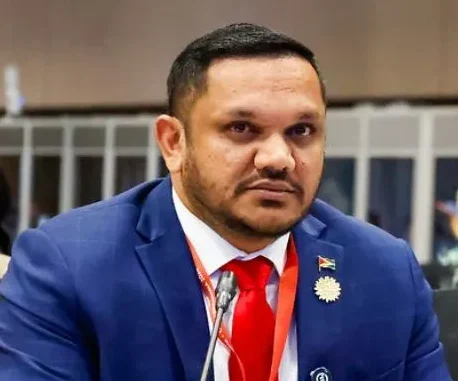
The Government of Guyana (GoG) has not disclosed the findings of a US$19.6 billion audit of ExxonMobil, which was completed over a year ago by VHE Consulting, a local consortium. In a recent letter to the editor, the Ministry of Natural Resources (MNR) justified its prolonged silence regarding the audit, stating, “Outcomes will be reported once they are final; that silence protects your interests, it does not hide anything from you.” Minister of Natural Resources, Vickram Bharrat, emphasized that the government would refrain from making any announcements while a “dispute is still open,” arguing that doing so could weaken their negotiating position and potentially cost the country money.
The government has faced criticism for a lack of transparency in the oil sector, with updates on significant developments often provided only after ExxonMobil has informed its shareholders. For example, ExxonMobil recently announced that it had recovered all of its investments in Guyana, a milestone that was not immediately communicated to the public. Instead, the company shared this information during an earnings call, and the government took nearly three weeks to confirm the news at a press conference.
In its letter, the MNR assured the public that it would continue to publish monthly figures related to oil production, cargoes lifted, royalties collected, and the calculations behind entitlement percentages, allowing citizens to verify the information independently. The ministry stated, “The oil belongs to the people of Guyana.” This statement followed remarks from Opposition Member of Parliament (MP) Sharma Solomon of the A Partnership for National Unity (APNU), who expressed concerns about the government’s handling of the audit results.
Solomon referenced comments made by President Irfaan Ali regarding the US$55 billion recovered by Exxon and the 39.8% profit share that Guyana now receives. He argued that the government should not passively accept the amounts reported by ExxonMobil and emphasized the need for the state to verify the oil used by the operator for expenses. Solomon raised several questions regarding the production and sales of oil, the costs declared for recovery, and the government’s acceptance or rejection of these costs.
He highlighted the importance of these inquiries, particularly in light of previous audits that identified millions in disputed expenses. Solomon noted that the first audit, covering the years 1999 to 2017, found approximately US$214.4 million in disputed expenses, while the second audit for the period 2018 to 2020 examined around US$7.2 billion in declared expenses. The local audit team, VHE Consulting, flagged an additional US$65.1 million that was not accepted by the government.
The third audit, which covers the years 2021 to 2023 and involves approximately US$19.6 billion, has yet to be made public, following a similar pattern of secrecy as previous audits. This lack of transparency has raised concerns among stakeholders, who question whether the government is attempting to protect ExxonMobil. Previous audits have revealed multiple violations of the 2016 contract with ExxonMobil, including the misuse of oil funds for unrelated activities.
In his appeal, Solomon urged the government to release the audit findings and provide clarity on the total costs in dispute, as well as the amounts accepted and rejected. He stated, “Guyanese cannot simply be asked to accept ExxonMobil’s declaration of what has been spent and recovered. ExxonMobil has a commercial interest in its accounts. Your government has a national duty to verify them. This is not anti-investment, and it is not anti-ExxonMobil. It is about protecting Guyana’s interest.”
News Desk is the editorial publishing account for Tringlobe Media News, covering breaking news, public affairs, entertainment, community developments and regional stories across Trinidad and Tobago, the Caribbean and internationally.