The key points are temporarily unavailable. You can still read the full Story below.
Main Points
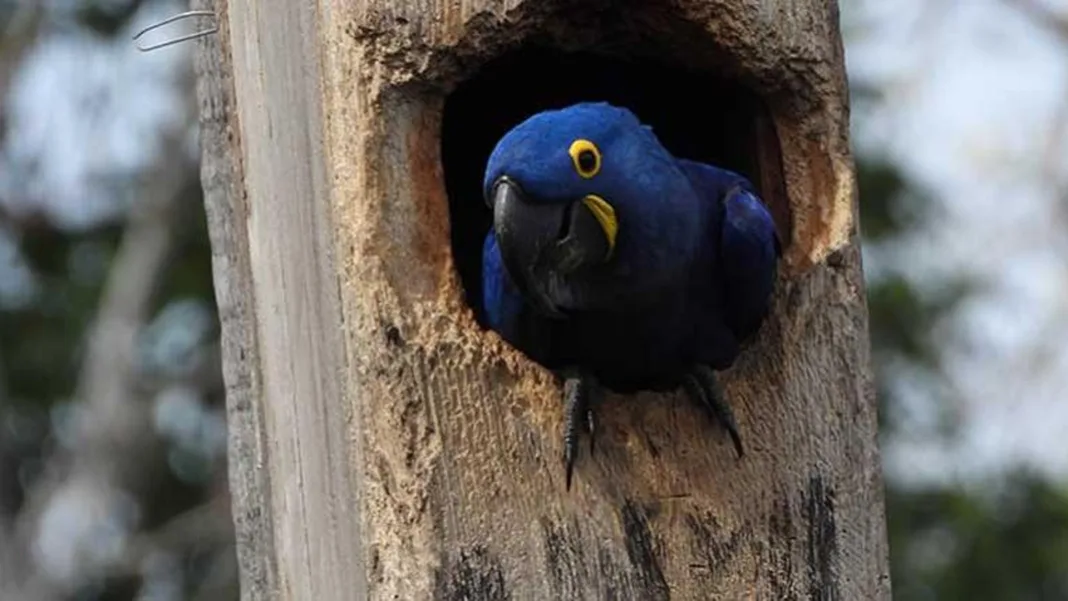
**Two Blue‑Parrot Chicks Born in a Nest Box in Bolivia’s Pantanal** *Santa Cruz, Bolivia – September 3, 2026* – Two blue‑parrot chicks, named Saturnina and Avelino, hatched for the first time inside a specially constructed nest box in the Bolivian Pantanal. The event marks a milestone for the conservation of the blue parrot (*Anodorhynchus hyacinthinus*), a species listed as endangered in Bolivia’s 2026 Red Book of Vertebrates. The nest box was installed in the community of Candelaria, within the San Matías Integrated Management Natural Area (ANMI San Matías) in eastern Santa Cruz. The ANMI covers 2,918,500 hectares and includes parts of the provinces Ángel Sandoval, Germán Busch, Chiquitos and Velasco, bordering Brazil. It is part of the Bolivian Pantanal and hosts a diverse array of flora and fauna. ### A First for the Region Saturnina and Avelino are the first blue‑parrot chicks to hatch in a nest box in the ANMI. The project, which began six months ago, was launched by the National Service of Protected Areas (Sernap), the ANMI San Matías park rangers, the Fundación Conservación de Loros en Bolivia (CLB), and the World Parrot Fund, with support from the Phoenix Zoo. “The success of this project is the result of a collaborative effort among Sernap, the park rangers, CLB, and the World Parrot Fund, with assistance from the Phoenix Zoo,” said Rafael Mounzón, director of CLB, to the Environmental Information Network (RAI). The nest boxes were designed based on the experience with smaller blue‑barred parrots (*Ara glaucogularis*). For the larger blue parrot, the boxes were made five centimeters larger and featured a thicker wooden entrance to accommodate the birds’ tendency to chew and modify the wood. So far, 30 nest boxes have been installed across the ANMI in locations such as Candelaria, Santo Rosario, Santo Corazón, San Fernando and Pozones. The distribution of boxes varies with site conditions and logistical challenges in transporting materials. ### Addressing Habitat Loss The initiative responds to the loss of large trees with natural cavities, which are essential nesting sites for blue parrots. Ricardo Barbery, a park ranger with 29 years of experience at ANMI San Matías, noted that many suitable trees were destroyed by fires that began in 2019. The 2024 fire burned approximately 75 % of the ANMI’s territory, also damaging palm species that provide food for various wildlife. “Six years of fires have eliminated their habitat,” Barbery said. “The parrots have begun to use smaller trees such as tarumá and totaí, but nesting attempts in these trees often fail.” The reduction of suitable nesting sites has also increased competition among species. Barbery observed that red parrots and toucans now occupy spaces previously used by blue parrots. He added that the expansion of Mennonite communities has further pressured natural resources. Antonio Tacuchaba, another park ranger, described the cumulative changes as a profound alteration of the ecosystem, citing fires, climate change and interspecies competition as key factors. ### Community Engagement and Future Plans The birth of Saturnina and Avelino has generated enthusiasm among local residents and park staff. CLB plans to expand community involvement by involving local school students in building nest boxes, training environmental monitors, and creating employment opportunities linked to conservation. “We want to build on this success to involve more local people and students in constructing nest boxes, training monitors, and creating jobs through conservation,” Mounz Article and image source: lostiempos.com
**Two Blue‑Parrot Chicks Born in a Nest Box in Bolivia’s Pantanal**
*Santa Cruz, Bolivia – September 3, 2026* – Two blue‑parrot chicks, named Saturnina and Avelino, hatched for the first time inside a specially constructed nest box in the Bolivian Pantanal. The event marks a milestone for the conservation of the blue parrot (*Anodorhynchus hyacinthinus*), a species listed as endangered in Bolivia’s 2026 Red Book of Vertebrates.
The nest box was installed in the community of Candelaria, within the San Matías Integrated Management Natural Area (ANMI San Matías) in eastern Santa Cruz. The ANMI covers 2,918,500 hectares and includes parts of the provinces Ángel Sandoval, Germán Busch, Chiquitos and Velasco, bordering Brazil. It is part of the Bolivian Pantanal and hosts a diverse array of flora and fauna.
### A First for the Region
Saturnina and Avelino are the first blue‑parrot chicks to hatch in a nest box in the ANMI. The project, which began six months ago, was launched by the National Service of Protected Areas (Sernap), the ANMI San Matías park rangers, the Fundación Conservación de Loros en Bolivia (CLB), and the World Parrot Fund, with support from the Phoenix Zoo.
“The success of this project is the result of a collaborative effort among Sernap, the park rangers, CLB, and the World Parrot Fund, with assistance from the Phoenix Zoo,” said Rafael Mounzón, director of CLB, to the Environmental Information Network (RAI).
The nest boxes were designed based on the experience with smaller blue‑barred parrots (*Ara glaucogularis*). For the larger blue parrot, the boxes were made five centimeters larger and featured a thicker wooden entrance to accommodate the birds’ tendency to chew and modify the wood.
So far, 30 nest boxes have been installed across the ANMI in locations such as Candelaria, Santo Rosario, Santo Corazón, San Fernando and Pozones. The distribution of boxes varies with site conditions and logistical challenges in transporting materials.
### Addressing Habitat Loss
The initiative responds to the loss of large trees with natural cavities, which are essential nesting sites for blue parrots. Ricardo Barbery, a park ranger with 29 years of experience at ANMI San Matías, noted that many suitable trees were destroyed by fires that began in 2019. The 2024 fire burned approximately 75 % of the ANMI’s territory, also damaging palm species that provide food for various wildlife.
“Six years of fires have eliminated their habitat,” Barbery said. “The parrots have begun to use smaller trees such as tarumá and totaí, but nesting attempts in these trees often fail.”
The reduction of suitable nesting sites has also increased competition among species. Barbery observed that red parrots and toucans now occupy spaces previously used by blue parrots. He added that the expansion of Mennonite communities has further pressured natural resources.
Antonio Tacuchaba, another park ranger, described the cumulative changes as a profound alteration of the ecosystem, citing fires, climate change and interspecies competition as key factors.
### Community Engagement and Future Plans
The birth of Saturnina and Avelino has generated enthusiasm among local residents and park staff. CLB plans to expand community involvement by involving local school students in building nest boxes, training environmental monitors, and creating employment opportunities linked to conservation.
“We want to build on this success to involve more local people and students in constructing nest boxes, training monitors, and creating jobs through conservation,” Mounz
News Desk is the editorial publishing account for Tringlobe Media News, covering breaking news, public affairs, entertainment, community developments and regional stories across Trinidad and Tobago, the Caribbean and internationally.