The key points are temporarily unavailable. You can still read the full Story below.
Main Points
**India’s AI Training Initiative Highlights Gaps in School Infrastructure** *New Delhi, September 2, 2026* – In his Independence Day address on August 15, 2026, Prime Minister Narendra Modi announced two programmes aimed at the nation’s youth: free online coaching for competitive examinations and a plan to train one crore (10 million) young Indians in artificial intelligence (AI) within the next year. The announcements came amid widespread student protests demanding basic improvements in school facilities across several states. **Student protests over school conditions** In July 2025, the roof of a government school in Jhalawar district, Rajasthan, collapsed, killing seven students and injuring others. A subsequent safety audit identified thousands of unsafe or dilapidated schools nationwide. In the months that followed, students in Uttar Pradesh, Bihar, Rajasthan, Madhya Pradesh and Maharashtra staged marches, sit‑ins and, in one instance, halted a minister’s convoy to press for better conditions. Their demands included the presence of teachers, paved roads, reliable electricity, drinking water, functional toilets, fans and safe classrooms. One high‑profile case involved a primary school in Rampura‑Kanwarpura village, Rajasthan. After the 2025 roof collapse, children were temporarily taught in a cowshed. The arrangement persisted for almost a year until a youth‑led group, the Cockroach Janta Party, intervened. According to local reports, the group faced resistance from villagers, but the pressure resulted in the relocation of the 18 children from the cowshed and a promise of a new school building. State officials have indicated that funds for the new structure have already been sanctioned. **Details of the AI training programme remain unclear** The government’s pledge to train one crore young Indians in AI has not yet been fully detailed. Questions remain about the curriculum, eligibility criteria, level of training, assessment methods and whether the goal is basic AI literacy or job‑ready technical skills. The Ministry of Education has previously launched “YUVA AI for ALL,” a foundational programme intended to help participants understand AI concepts and responsible usage. Officials have not clarified how the new initiative will differ from or build upon this existing effort. **Infrastructure and learning outcomes** A recent Niti Aayog report, citing data from the Annual Status of Education Report (ASER), noted that the proportion of Class‑3 children able to solve a basic subtraction problem increased from 25.4 percent in 2014 to 33.7 percent in 2024. The report highlighted that roughly two‑thirds of children in that grade still lack this fundamental skill. The same analysis underscored that while national averages show improvements in school infrastructure, significant local deficiencies persist. Data from the Unified District Information System for Education (UDISE+) indicate that many government school buildings, particularly in Rajasthan, require major repairs. **Broader implications for India’s technology ambitions** Commentators have drawn parallels with the education strategies of the United States and China, the two leading AI powers. The United States relies heavily on talent educated abroad, while China has pursued mass education alongside elite institutions to expand its scientific and technical base. Analysts argue that India’s ambition to become an AI leader cannot depend solely on a limited number of elite institutions such as the Indian Institutes of Technology (IITs) and the Indian Institute of Science (IISc). Instead, a robust foundation of primary and secondary education is deemed essential for sustaining long‑term technological development. **Conclusion** The juxtaposition of a national AI training pledge with ongoing student protests over basic school facilities raises questions about the readiness of India’s education system to support a large‑scale technological transformation. Stakeholders, including policymakers, educators and civil society groups, are calling for clearer implementation plans for the AI programme and accelerated investment in school infrastructure to ensure that all children have access to safe, well‑equipped learning environments. *Patralekha Chatterjee, a columnist focusing on development issues in India and emerging economies, can be reached at patralekha.chatterjee@gmail.com.* Article source: asianage.com | Image credit: Deccan Chronicle
**India’s AI Training Initiative Highlights Gaps in School Infrastructure**
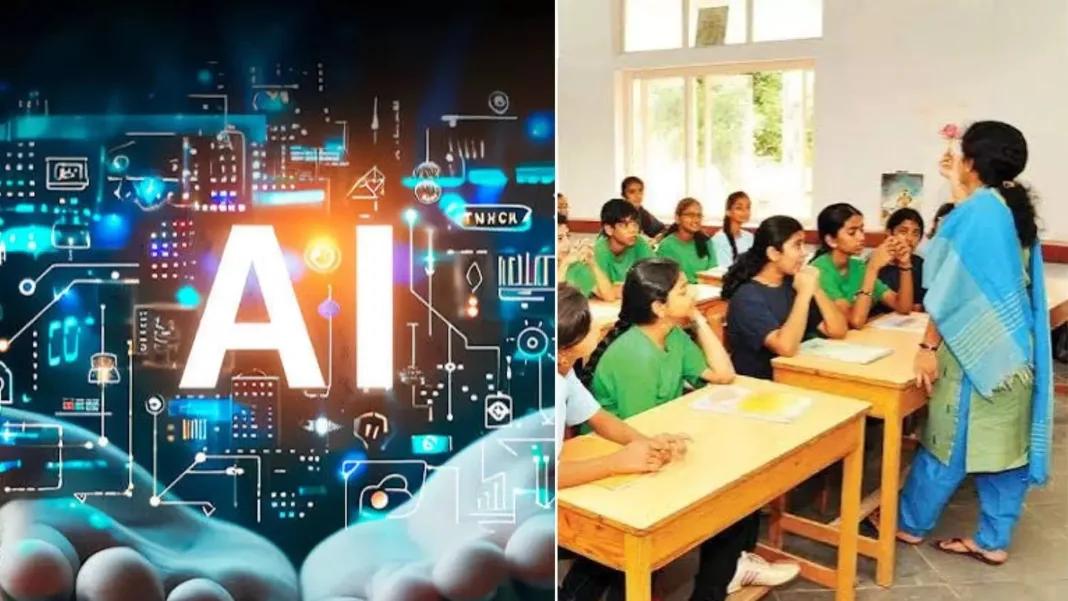
*New Delhi, September 2, 2026* – In his Independence Day address on August 15, 2026, Prime Minister Narendra Modi announced two programmes aimed at the nation’s youth: free online coaching for competitive examinations and a plan to train one crore (10 million) young Indians in artificial intelligence (AI) within the next year. The announcements came amid widespread student protests demanding basic improvements in school facilities across several states.
**Student protests over school conditions**
In July 2025, the roof of a government school in Jhalawar district, Rajasthan, collapsed, killing seven students and injuring others. A subsequent safety audit identified thousands of unsafe or dilapidated schools nationwide. In the months that followed, students in Uttar Pradesh, Bihar, Rajasthan, Madhya Pradesh and Maharashtra staged marches, sit‑ins and, in one instance, halted a minister’s convoy to press for better conditions. Their demands included the presence of teachers, paved roads, reliable electricity, drinking water, functional toilets, fans and safe classrooms.
One high‑profile case involved a primary school in Rampura‑Kanwarpura village, Rajasthan. After the 2025 roof collapse, children were temporarily taught in a cowshed. The arrangement persisted for almost a year until a youth‑led group, the Cockroach Janta Party, intervened. According to local reports, the group faced resistance from villagers, but the pressure resulted in the relocation of the 18 children from the cowshed and a promise of a new school building. State officials have indicated that funds for the new structure have already been sanctioned.
**Details of the AI training programme remain unclear**
The government’s pledge to train one crore young Indians in AI has not yet been fully detailed. Questions remain about the curriculum, eligibility criteria, level of training, assessment methods and whether the goal is basic AI literacy or job‑ready technical skills. The Ministry of Education has previously launched “YUVA AI for ALL,” a foundational programme intended to help participants understand AI concepts and responsible usage. Officials have not clarified how the new initiative will differ from or build upon this existing effort.
**Infrastructure and learning outcomes**
A recent Niti Aayog report, citing data from the Annual Status of Education Report (ASER), noted that the proportion of Class‑3 children able to solve a basic subtraction problem increased from 25.4 percent in 2014 to 33.7 percent in 2024. The report highlighted that roughly two‑thirds of children in that grade still lack this fundamental skill. The same analysis underscored that while national averages show improvements in school infrastructure, significant local deficiencies persist. Data from the Unified District Information System for Education (UDISE+) indicate that many government school buildings, particularly in Rajasthan, require major repairs.
**Broader implications for India’s technology ambitions**
Commentators have drawn parallels with the education strategies of the United States and China, the two leading AI powers. The United States relies heavily on talent educated abroad, while China has pursued mass education alongside elite institutions to expand its scientific and technical base. Analysts argue that India’s ambition to become an AI leader cannot depend solely on a limited number of elite institutions such as the Indian Institutes of Technology (IITs) and the Indian Institute of Science (IISc). Instead, a robust foundation of primary and secondary education is deemed essential for sustaining long‑term technological development.
**Conclusion**
The juxtaposition of a national AI training pledge with ongoing student protests over basic school facilities raises questions about the readiness of India’s education system to support a large‑scale technological transformation. Stakeholders, including policymakers, educators and civil society groups, are calling for clearer implementation plans for the AI programme and accelerated investment in school infrastructure to ensure that all children have access to safe, well‑equipped learning environments.
*Patralekha Chatterjee, a columnist focusing on development issues in India and emerging economies, can be reached at patralekha.chatterjee@gmail.com.*
News Desk is the editorial publishing account for Tringlobe Media News, covering breaking news, public affairs, entertainment, community developments and regional stories across Trinidad and Tobago, the Caribbean and internationally.